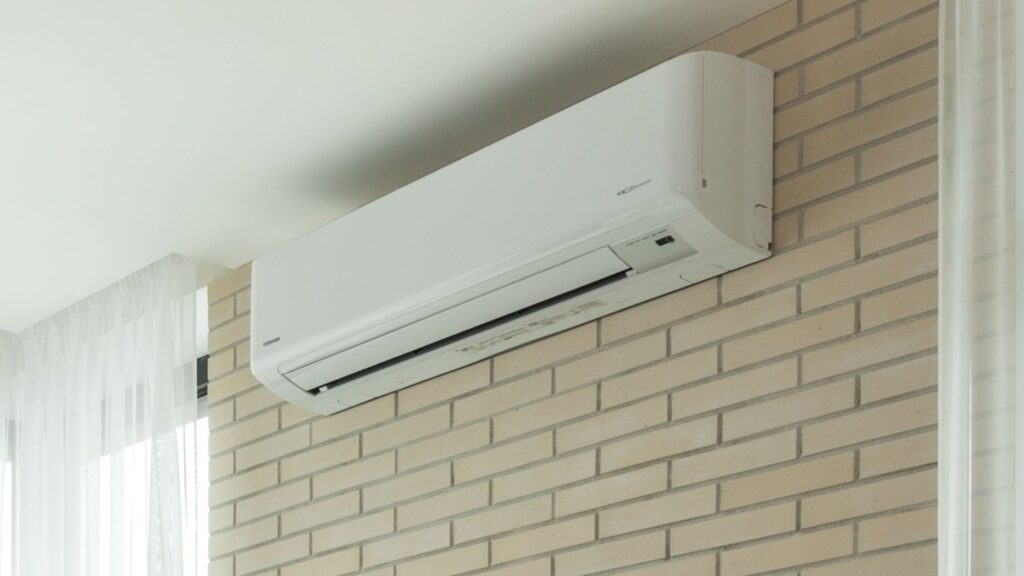
Until a few years ago, many Europeans saw air conditioning as a luxury rather than a necessity. The continent was built for long winters, not for weeks of temperatures above 35 °C. That is changing fast. But how does Europe’s growing need for cooling fit with the EU’s green agenda?
According to the World Health Organization, the latest heatwave killed more than 1,300 people across Europe. The extreme temperatures hit homes, hospitals and workplaces alike. “We are basically living the climate crisis at the moment. Last week’s inferno was probably just a parting shot for the rest of the summer,” European Commission spokesperson Anna-Kaisa Itkonen said.
The heat has revived a question that until recently sat on the fringes of political debate: Will air conditioning soon become as common in European homes as central heating or indoor plumbing?
Increasingly, the answer appears to be yes. And that is where Europe’s new paradox begins.
A technology that can save lives…
During extreme heat, cooling can make the difference between comfort and serious illness, especially for older people, the chronically ill and young children. Even the European Commission acknowledges this reality. In many cases, air conditioning is needed “to achieve some needed quality of the environment to be able to work, to be able to rest”.
The problem is that most European homes were never designed for such conditions. “Most residential buildings and apartments in the European Union do not have air conditioning. It’s not something that’s traditionally built,” Ms Itkonen noted.
… but one that also complicates the fight against climate change
A mass rollout of air conditioning would create another challenge. Air conditioners increase electricity demand just as power grids come under record strain. In extreme cases, that can even trigger blackouts. If the electricity comes from fossil fuels, greenhouse gas emissions rise as well.
The Commission therefore says Europe also needs to ask a basic question: “How is the electricity produced? Where does it come from?” Brussels promises answers soon. It plans to unveil an electrification action plan in the coming weeks.
Air conditioners also release waste heat into their surroundings. In large cities, they can worsen the urban heat island effect.
The result is a strange paradox. A technology that may help Europeans survive climate change can also contribute to the very problem Europe is trying to solve.
“Last week’s heat wave (…) reminds us of the importance of our climate policy, of the importance of the energy transition and all the policies that we have been putting forward, notably the transition away from fossil fuels,” Commission spokesperson Paula Pinho said.
Air conditioning is fast becoming more than a comfort issue in Europe. It increasingly touches on institutional resilience, working conditions — and also social inequality. Buying an air conditioner is costly and running one can significantly raise electricity bills, creating a potential divide between those who can afford to stay cool and those who cannot.
A new reality for European politics
For now, Brussels does not want to tell people whether they should buy an air conditioner or not. Instead, it focuses on energy-efficient appliances, building renovations and cleaner sources of electricity.
At the same time, the Commission admits that cooling homes is likely to become a much bigger political issue. “We don’t prepare only for natural disasters in terms of earthquakes or storms or whatever, but also for the heat wave,” Ms Itkonen said. She stressed, however, that much of the responsibility lies with individual member states.
Not long ago, Europe was asking how to reduce energy consumption. Now it faces another question as well: How can it protect people from deadly heat without undermining its own climate goals?