Some of the EU’s strictest artificial intelligence rules are set to be delayed by up to two years, giving companies more time to comply with key obligations they have warned are not yet fully workable. At the same time, the European Parliament has approved a ban on apps that use AI to create non-consensual nude images of real people, tightening rules on one of the technology’s most controversial abuses.
The European Parliament approved the AI Digital Omnibus in Strasbourg on Tuesday, adopting the package with 423 votes in favour, 57 against and 174 abstentions. Under the new timetable, requirements for stand-alone high-risk systems will apply from 2 December 2027. For AI systems used as safety components in products covered by EU legislation, the rules will apply from 2 August 2028. Such obligations were previously due to start this August.
The package follows an agreement reached between Parliament and member states in May. It was later approved by Parliament’s Internal Market and Civil Liberties committees with a large majority.
Supporters of the delay argue that companies still lack the technical standards and tools needed to demonstrate compliance. Critics warn that the postponement leaves some of the EU’s most sensitive AI safeguards inactive for longer than planned.
“We moved the clock, but we did not switch it off”
During the debate ahead of the vote, co-rapporteur MEP Michael McNamara (Renew/IRL) acknowledged that reopening the AI Act was not his preferred approach. “I’ve never been comfortable with the omnibus approach,” he told MEPs. According to Mr McNamara, legislative changes should normally involve “full parliamentary scrutiny”, a proper impact assessment, and detailed committee hearings.
However, he argued that delaying the high-risk provisions had become necessary. “Business could not reasonably be asked to comply with the framework when the tools to demonstrate that compliance did not yet exist,” he said.
Mr McNamara defended the final compromise as an effort to preserve the original ambition of the AI Act while providing actors more time to prepare. “We moved the clock, but we did not switch it off,” he said. “These systems, these high-risk annexes will come into effect when it is clear what companies are required to do”.
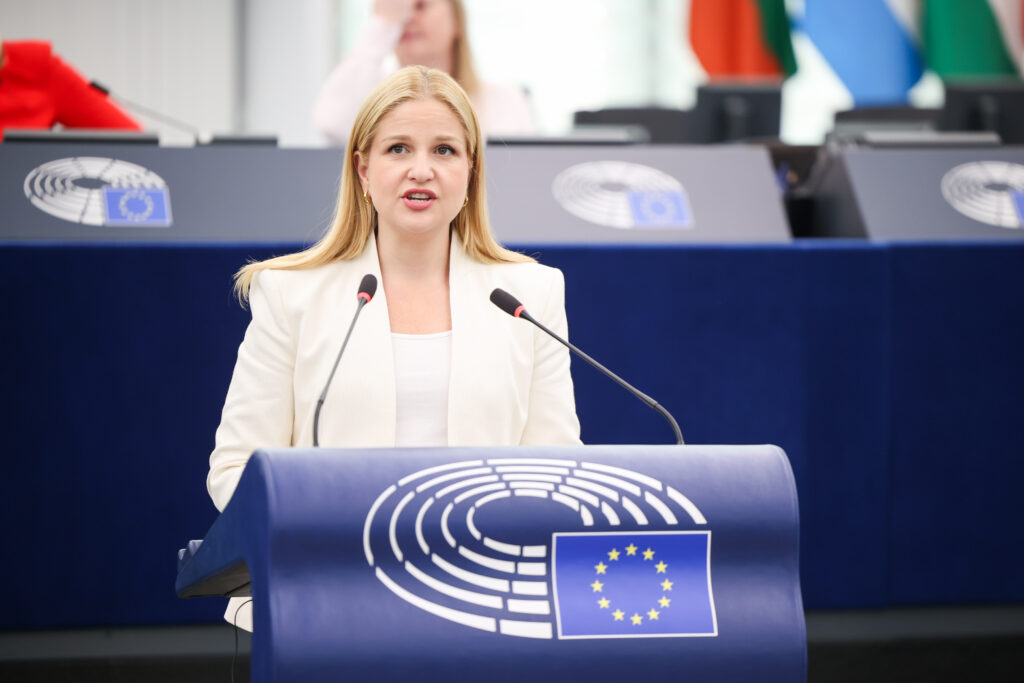
Co-rapporteur Arba Kokalari (EPP/SWE) described the agreement as a positive message to European entrepreneurs. “We are pressing the pause button on the AI Act, and we are reducing red tape. It must be simpler to build the future tech companies in Europe,” she told the Parliament. According to Ms Kokalari, Europe had spent too long trying to be “the best in the world at regulation” instead of competing to develop leading technologies.
“Double regulation”
Besides postponing the high-risk provisions, the agreement changes how the AI Act applies to certain machinery products. The Machinery Regulation will be moved from Section A to Section B of Annex I of the AI Act. In practice, AI systems embedded in machinery will primarily be addressed through sector-specific machinery legislation instead of being directly subject to the AI Act.
The move responds to long-standing industry complaints about “double regulation”. Manufacturers argued that products containing AI could be subject both to existing product-safety requirements and obligations under the AI Act.
Nudifier systems banned
Alongside removing and postponing obligations, the omnibus introduces new prohibited AI practices. From 2 December 2026, the prohibition includes tools, known as nudifier apps. These systems can digitally remove clothing or create sexualised images of real people without their consent.
According to the rapporteur MEP McNamara, existing EU legislation did not tackle the issue. “The problem is the speed and the scale at which such images can be created,” he said. “This ban now does that.”
Civil society appealed for the Omnibus rejection
Ahead of the vote, digital-rights and human-rights organisations urged lawmakers to reject the Omnibus. Several organisations, such as EDRi, Access Now, the European Center for Not-for-Profit Law and Amnesty International, argued: “The AI Omnibus should not have happened.”
The groups criticised the fact that several of the safeguards being amended had not yet begun to apply. They described it as a process marked by weak evidence, no proper impact assessment, insufficient consultation with public-interest organisations, and a rushed negotiating timetable.
They also warned that postponing high-risk requirements allows potentially harmful systems to remain on the market for longer without rules. Besides, they criticised that the reduction in information providers will have to publish when registering systems they have classified as not high-risk. They argue that less public information will make it harder for regulators, researchers, and affected people to challenge companies’ classifications.
Although the organisations recognised the severity of harms caused by nudifier systems, they cautioned against allowing the new prohibitions to overshadow the wider changes. “A headline ban should not distract from the wider reality”. The same agreement delays safeguards, weakens transparency, and creates new loopholes.