That question overshadowed the Irish presidency’s first appearance before European Parliament’s Health Committee. While Dublin promoted competitiveness, innovation and resilience, lawmakers repeatedly steered the debate back to one issue: the budget.
Ireland’s health minister Jennifer Carroll MacNeill presented the Irish presidency’s health priorities to Parliament’s Health Committee (SANT). The discussion quickly moved beyond the six-month legislative programme, the funding question dominated the exchanges.
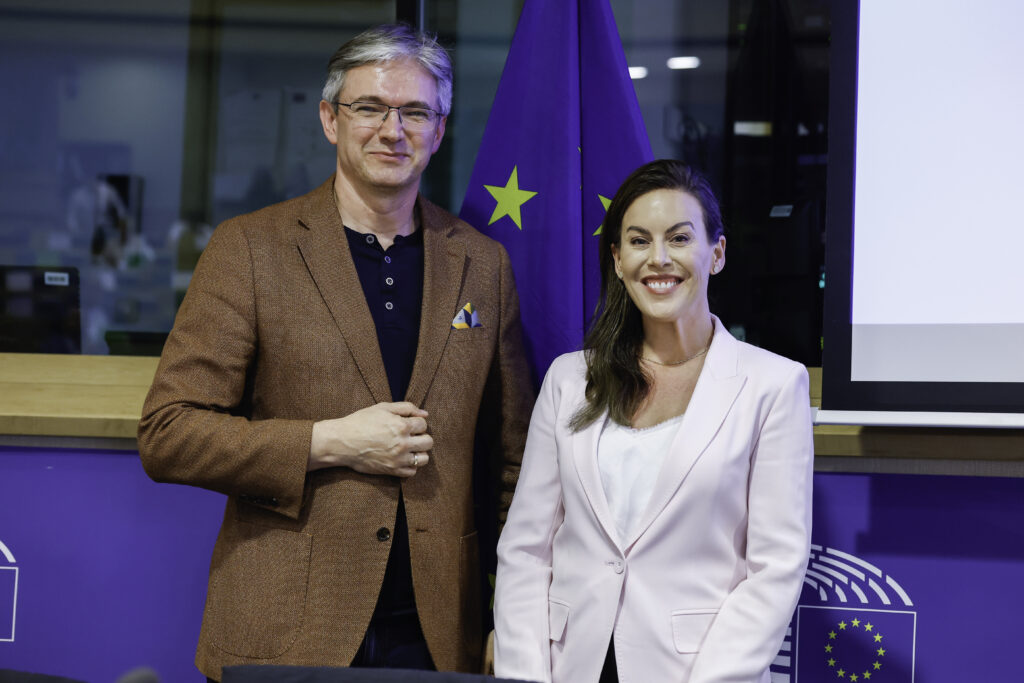
Questions from MEPs focused first on the 2027 annual budget. The committee had concerns about health funding, particularly the EU4Health Programme and its allocation. Then turned to the next Multiannual Financial Framework (MFF). “How do you plan to ensure sufficient funding for health in general?” Health Committee Chair Adam Jarubas (EPP/POL) asked.
Will you help us make sure that health care is not only spoken about but that the money is indeed available? — Kateřina Konečná (NI/CZE)
Kateřina Konečná (NI/CZE) sharpened the political challenge. Parliament, she said, had adopted a cross-party position on multi-annual financial framework and called for 10 billion euros to be set aside for healthcare. Yet “when we look at the budget as it is being negotiated by the member states it does not look very hopeful”.
She asked directly “whether the Irish presidency is going to take up this opportunity and have the responsibility to rectify what Cyprus did at the European Council,” and “whether you will help us make sure that health care is not only spoken about but that the money is indeed available.”
Competitiveness as health policy
Ms Carroll MacNeill declined to enter the budget negotiations. As “a domestic minister for health”, she said she would “always advocate for bigger and bigger budget for health specifically”. But that, she argued, was “not what the presidency of the Council of the European Union” is for. Budget negotiations were “subject to (…) more horizontal discussions that are happening at the general affairs council”. She did not want to “step across” colleagues responsible for those negotiations.
“We will take forward the theme of investing in health to enable competitiveness,” Carroll MacNeill said presenting the priorities. Health resilience and competitiveness, she said, “are not competing objectives in any way but very very much one and the same thing.”
Rather than treating health solely as a social policy, the presidency presents medicines, biotechnology and medical devices as strategic assets for Europe’s economic resilience and geopolitical autonomy. Europe, Carroll MacNeill argued, should become less dependent on external suppliers for essential medicines. This is “a geopolitical imperative that Europe can protect its own people”.
She repeatedly returned to the need for Europe to retain more of the value created by its own research base. “We want them to be funded in Europe. We want them to come to market in Europe,” she said. Innovations developed in European universities too often reach patients only after being commercialised elsewhere.
Medical devices and clinical trials
Those priorities are reflected in the presidency’s legislative programme. The clearest commitment concerns medical devices. Ireland wants to simplify the Medical Devices Regulation (MDR) and In Vitro Diagnostic Regulation (IVDR). The aim is to reach “a council general approach in December”.
The minister argued that regulatory reform is ultimately about patient access. “It’s just as big a problem for patients not to have access to medical devices as some of the changes that we need to make.”
Industry, she said, also needs greater predictability. Companies “need to know when how and how quickly their products will be registered.” She added Europe’s “attractiveness to the European market” has weakened over time.
Cardiovascular disease leads to 1.7 million deaths across the EU each year. — Jennifer Carroll MacNeill, Ireland’s health minister
The Biotech Act follows the same logic. The presidency will “initially focus on the amendments to the clinical trials regulations.” It will progress that work first before opening other chapters of the proposal.
Clinical trials emerged as one area where Parliament and the presidency largely shared the same objective. Several MEPs argued that Europe needs a simpler regulatory framework capable of attracting research investment. While also giving patients faster access to innovative therapies across all member states. The Irish presidency will initially focus on the amendments to the clinical trials regulations.
Prevention, women’s health and data
The presidency’s programme extends beyond legislation. Alongside the regulatory agenda, Ireland wants to advance a series of initiatives centred on prevention, early diagnosis and healthier ageing.
Carroll MacNeill pointed to cardiovascular disease, which “leads to 1.7 million deaths across the EU each year”. She said the presidency intends to progress the Council recommendation on health checks once the Commission publishes its proposal later this year, as part of the Safe Heart Plan.
Women’s health also features prominently. The presidency will host a dedicated conference on endometriosis, which the minister described as “a whole system disease” that “impacts potentially one in seven women”. Menstrual health and mental health also form part of the programme, including a dedicated mental health event led by Ireland’s Minister of State Mary Butler.
The wider prevention agenda includes early detection, integrated care, ageing and dementia, alongside implementation of the European Health Data Space (EHDS). Carroll MacNeill argued that sharing health data across Europe offers a “population health benefit” while also shaping “how we think about AI”.
The emphasis on prevention reinforces another theme running through the presidency’s programme: making health systems more sustainable by improving earlier intervention, digital innovation and access to new technologies before patients require acute care.
External pressures
Alongside its legislative priorities, the presidency also faces challenges beyond its direct control. One of them is the United States’ proposed “most favoured nation” pricing policy, which seeks to benchmark US medicine prices against the lowest paid in comparable countries. Several MEPs warned that the proposal could affect Europe’s pharmaceutical industry and future investment.
Carroll MacNeill described the issue as “a huge priority”. However, she stopped short of outlining a Council response, saying the Commission is expected to publish “a paper (…) over the next number of weeks”. Until then, the presidency is waiting for Brussels’ assessment.
The presidency also expects to work on a possible revision of the Tobacco Products Directive later this year, alongside negotiations on the PABS Annex to the WHO Pandemic Agreement and reform of the Union Civil Protection Mechanism.
A broader debate over Europe’s health future
The hearing ultimately revealed less disagreement over objectives than over how they should be achieved. Throughout the debate, MEPs repeatedly returned to the same concern. That Europe’s ambitions on preparedness, prevention and equitable access will be difficult to sustain if health loses a dedicated place in the EU’s future budget.
The call for a standalone health envelope reflected a broader concern that the political momentum created by EU4Health after the Covid-19 pandemic could weaken under the Commission’s proposed budget architecture.
The Irish presidency offered a different answer. Rather than focusing on funding negotiations, which Carroll McNeill repeatedly noted fall outside the presidency’s mandate, it argued that a stronger European life sciences ecosystem can itself strengthen healthcare. Faster clinical trials, more predictable regulation, simpler medical device rules and greater support for biotechnology were consistently presented as ways to improve both Europe’s competitiveness and patients’ access to innovation.
Patient access emerged as the point where both perspectives converged. Whether discussing orphan medicines, clinical trials, medical devices or health data, speakers from across the political spectrum shared the ambition of ensuring that innovation reaches patients more quickly and more equitably across the Union.
Whether Europe can achieve that ambition through industrial policy alone, or whether it also requires a dedicated political and financial commitment to health, is likely to become one of the defining questions of the negotiations on the EU’s next Multiannual Financial Framework.