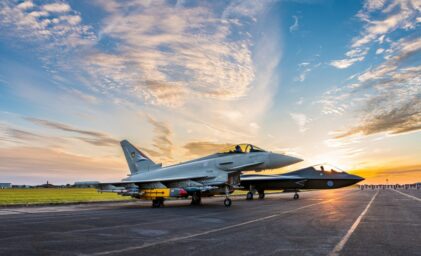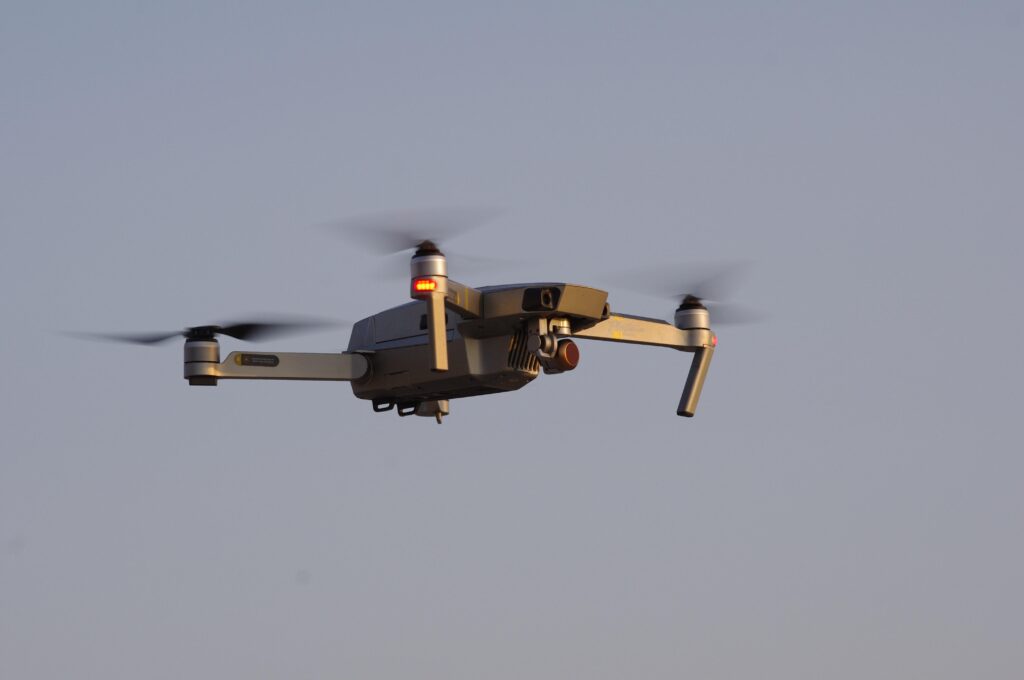
Effective, but woefully inefficient: an Alliance jet responds to a dirt-cheap drone incursion. Drone goes down, price goes up.
NATO jets shot down a drone that entered Latvian airspace on Friday, Latvia’s armed forces said. The ministry said the drone had flown in as a result of “Russian electromagnetic warfare”. The military lifted its airspace warning for eastern regions at 4:50am.
It was the second such episode in two months. Latvia has since deployed more air defence units on its eastern border and is buying new radars. That makes its response faster and more credible than it was when the previous government fell in May.
The price of a scramble
The previous government collapsed after the then prime minister criticised as inadequate the response to earlier drone incursions — Ukrainian drones that had veered off course, often because of signal jamming. The political cost was real. The security cost is still being counted.
The central problem remains unresolved. NATO reacted correctly, but a fighter jet scramble is not a cheap answer to a cheap drone. The cost imbalance is glaring, and the alliance has yet to find a neat solution.
The timing sharpened the regional sense of danger. On the same morning, Russian officials said a fire had broken out at the Baltic port of Ust-Luga after a drone attack in the Leningrad region. Governor Alexander Drozdenko confirmed the damage on Telegram. Ukraine has ramped up attacks on Russian infrastructure, and drones have repeatedly drifted across NATO’s eastern border as a result.
Latvia’s leaders struck a confident tone. Prime Minister Andris Kulbergs said: “This is proof that Latvian airspace is protected.” He also said: “At the same time, such incidents remind us that we must continue to strengthen the surveillance and anti-drone capabilities of Latvia’s eastern border so that we can detect, identify and neutralize any potential threat as quickly as possible.”
Better, but not solved
That is a fair assessment. Latvia is better protected than it was one or two months ago. Yet the larger problem survives — Europe’s eastern flank can detect more, scramble faster, and still be left spending far more to intercept a threat than the threat itself costs.
Such incidents remind us that we must continue to strengthen the surveillance and anti-drone capabilities of Latvia’s eastern border. — Andris Kulbergs, Latvia’s prime minister
Until the alliance finds a cheaper, dedicated counter-drone capability, every shoot-down will carry two price tags. One for the missile, and one for the question nobody has yet answered in full: how to do the job economically.