When EU governments sit down to negotiate the budget, farm and regional funding have plenty of defenders. Money for the bloc’s work around the world is easier to cut, says development policy expert Alexei Jones. He argues that the EU wants greater influence on the world stage but is unwilling to put money behind that ambition.
The Irish presidency’s latest proposal would cut the Global Europe heading by €33.064 billion, or 17.4 per cent, compared with the European Commission’s original proposal for the 2028–2034 budget (MFF). The instrument funds both development cooperation and projects that advance the EU’s strategic interests.
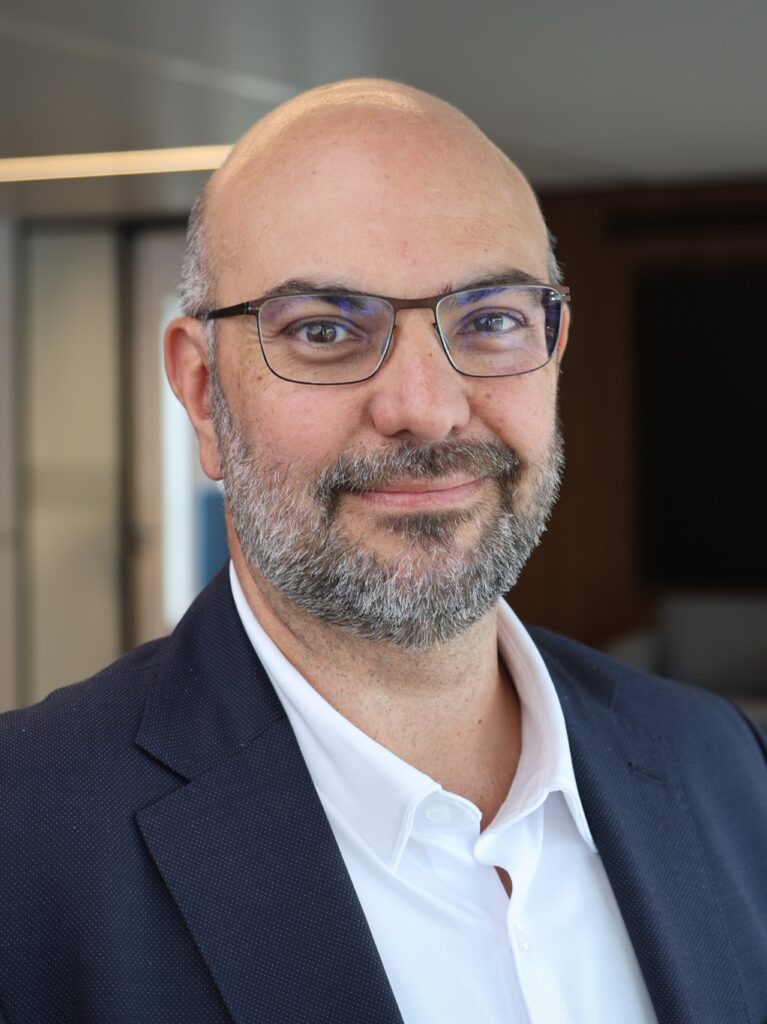
While cuts to agriculture and cohesion funding spark widespread political controversy, reducing the spending on external action remains relatively undisputed. That is not only remarkable, but also inconsistent with the EU’s wider calls for strategic autonomy and sustainable partnerships, argues Dr Alexei Jones of the European Centre for Development Policy Management (ECDPM). He tells EU Perspectives why the EU needs to rethink the role of its external budget in achieving those goals.
When you argue for a stronger Global Europe within the next MFF, are you thinking primarily about development cooperation or about advancing the EU’s strategic interests? Or both?
I think that question is at the heart of the debate, and of some of the controversy around Global Europe. Over the past ten years, we have seen an expansion of the scope of the EU’s external action and its traditional development goals towards a wider range of the EU’s strategic interests, including migration and economic interests. That brings a natural link to themes such as EU competitiveness and strategic autonomy.
You might be interested

External action accounts for around ten per cent of the budget, and has no comparable political constituency.
The fact that this more consolidated instrument exists is not something we are criticising. Those development goals and strategic interests are not necessarily obvious, but I don’t think they are incompatible. The question is how to reconcile them, what trade-offs need to be made, and how to maintain consistency.
Yet, despite the fact that we have this consolidated instrument that also includes those strategic interests, it is not reflected in the budget proposal.
The Irish Presidency’s proposal would cut Global Europe by around 17 per cent. Why don’t member states do more to defend external action when negotiating the EU’s long-term budget?
Typically, the external-action heading is not where the real battle is fought. The biggest political battles are over agriculture and cohesion, because member states have strong interests in defending the funding they receive.
You also have the traditional divide between the so-called frugal countries, which want to limit the overall budget, and the Friends of Cohesion, which want to protect agriculture and cohesion funding.
External action accounts for around ten per cent of the budget, and has no comparable political constituency. No one is particularly strongly defending it. It has therefore often been an easy place to find cuts when governments need a last-minute compromise.
You recently criticised the fact that Global Europe would face a substantial cut under the Irish proposal. But hearing you say this now, it sounds like your criticism in fact precedes the Irish Presidency?
Absolutely, the Irish presidency’s proposal has made the problem more visible, but it is not new. I think Global Europe has not been getting the attention it deserves.
Strategic partnerships cannot rest on infrastructure or trade alone; they need investment in governance, skills, dialogue and local institutions that makes projects sustainable and mutually beneficial.
This is the third MFF that I have analysed, and the external action heading has too often been treated primarily as the development part of the budget, rather than as an instrument through which the EU advances its own strategic interests.
Development and humanitarian assistance remain essential, but we need a broader rationale for why this spending matters to Europe itself.
The Irish proposal suggests a further cut, but the Commission’s proposal is also limited. Do you see a mismatch between much of the Commission’s discourse being about competitiveness and strategic autonomy, and its monetary commitment to those goals?
I think the Commission does try to live up to that discourse, but it seems like no one is really making the connection in the MFF.
We have really tried to raise awareness, to connect the dots and explain how external action also supports the EU’s priorities on security and competitiveness. For the moment, I think those linkages are recognised in the discourse, but they are not yet reflected in the negotiations, or in the system as a whole or the way institutions work together.
Elements such as competitiveness, partnerships and strategic autonomy are part of other policies, such as the Critical Raw Materials Act and the Industrial Accelerator Act. Don’t you think that the goals of Global Europe are already covered?
I don’t think these are goals that can be achieved solely through industrial policy or trade. These policies have their own specific objectives, but Global Europe is needed to establish sustainable partnerships and create environments conducive to those policies in partner countries. Global Europe cannot solve Europe’s competitiveness challenges alone, but competitiveness policy cannot ignore the international partnerships on which European industry depends.
This is also about having a 360-degree approach to ensure that investments deliver sustainable results. That means considering the enabling conditions for investment, including the social conditions and other factors that industrial or trade policy would not usually address.
Take critical raw materials for example, Europe needs more than access to supplies, it needs partnerships that support infrastructure and local processing. That strengthens European resilience while creating value for partner countries.
For many years, everyone has been working in silos, and I think that time has to be over. We need to break those silos.
There is also a question of credibility. The EU has global ambitions, and geopolitical competition is intensifying in Africa and elsewhere. External action is an important instrument for establishing relationships over the long term. At a time when governments are focused on one crisis after another, it helps sustain partnerships beyond immediate priorities.
That is what we want to highlight. The EU cannot advance its own competitiveness, security, strategic autonomy and global standing without a meaningful part of the budget dedicated to those objectives.
If the proposed cuts go ahead, where would the EU’s influence suffer most?
What risks being lost is the wider support that makes those priorities possible. Multilateralism is under pressure, and if the EU wants to defend it, it needs the resources to support and engage international institutions.
It would also affect the credibility of the Global Gateway. Strategic partnerships cannot rest on infrastructure or trade alone; they need investment in governance, skills, dialogue and local institutions that makes projects sustainable and mutually beneficial.
How do we realise that?
I don’t think it is realistic to expect a drastic U-turn in this MFF, but we do need a long-term change in mindset.
Just as we have the Friends of Cohesion, we should create a ‘Friends of Global Europe’ group to defend its importance. It should have a broader constituency that goes beyond the usual suspects, typically the humanitarian and development community and foreign affairs ministries.
We also need to include finance and economy ministries, industry, competitiveness policymakers and actors that do not work directly on foreign policy, but do see value in the external-action budget for those priorities.
What would it take to mobilise those actors?
The Parliament is an important actor in reaching broader constituencies. We see the DEVE and AFET committees, with MEPs such as Barry Andrews and others, being vocal about this.
The media is another route. Specialised outlets have a readership that understands the arguments, but we also need to reach people who are not already convinced of the value of external action.
This is why we are trying to better connect with economic think tanks and other organisations that work on domestic policy, through media and events.
For many years, everyone has been working in silos, and I think that time has to be over. We need to break those silos. It will take time, but we need to rethink the narrative.