Europe’s top life sciences investors have welcomed the EU’s new €5bn Scaleup Europe Fund. One of its own backers, Novo Holdings, has just put €500m into it. Yet the same investors told EU Perspectives the fund will barely touch their sector’s real funding problem.
The welcome comes from the European Life Sciences Coalition, a group of 15 life sciences investors and firms launched in February 2026, which called the fund “a welcome step in the right direction”.
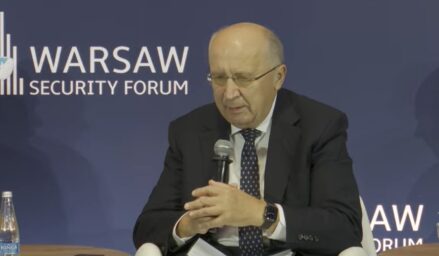
“It can provide much-needed growth capital to some of Europe’s most promising biotech companies, helping them scale in Europe rather than having to look elsewhere or become overly dependent on non-European capital,” said Sander Slootweg, Co-owner and Managing Partner of Forbion, speaking for the Coalition.
But Mr Slootweg’s welcome came with a qualifier. “At the same time, its direct impact on the sector will inevitably be limited. Biotechnology is part of the Fund’s mandate, but it covers several strategic technology sectors and is not an early-stage life sciences venture fund,” the Coalition said.
“Even if a significant share of the Fund were invested in biotech, it would reach only a relatively small number of companies over the coming years,” it added.
The verdict comes from inside the fund’s own investor base. Novo Holdings, which manages the assets of the Novo Nordisk Foundation, is a Coalition member. It committed €500m to the fund on 4 June 2026, the largest disclosed private commitment.
Not a solution to the sector’s wider funding gap. — Naveed Siddiqi, Senior Partner at Novo Holdings
“It is therefore an important addition to the European financing landscape, but not a solution to the sector’s wider funding gap,” said Naveed Siddiqi, Senior Partner at Novo Holdings, speaking for the Coalition.
What the Commission says biotech can get
The European Commission, in written answers to EU Perspectives, said health is fully part of it. “Biotechnology and medical technologies are fully within the fund’s mandate and can compete for the whole €5bn,” it said.
“There is no sector-specific allocation in either direction. Nothing ring-fenced, and equally nothing capped,” the Commission said. Health and life sciences companies are eligible “on exactly the same terms as any other strategic technology”. The fund’s scale, it added, will allow Europe’s most ambitious scaleups in these fields to raise the capital they need without leaving Europe.
What a biotech founder can do today
Companies do not need to wait for the investment guidelines, according to the Commission. They can contact the fund manager, the Swedish investment firm EQT, directly at sef@eqtpartners.com.
“We would advise founders to include their investor pitch deck in that first message, so that the investment team can look at the opportunity straight away,” the Commission said. The guidelines themselves “will be made available in the coming weeks”, and the fund’s website, scaleupeuropefund.eu, is “already under development”.
The fund invests “in the range of €100m and above, including follow-on investments”, at growth and scaleup stage.
Why €100m is the wrong size for most biotechs
That floor is where the Coalition’s argument bites. “For some companies, yes,” it said, asked whether the threshold suits biotech. “There is a subset of later-stage European biotech companies raising very substantial growth rounds for which an investment of €100m or more could be highly relevant. And the ability to anchor or strengthen those rounds in Europe is valuable.”
“But this is a relatively small part of the market,” said Cédric Moreau, Partner at Sofinnova Partners, speaking for the Coalition. “Most biotech companies require smaller investments at earlier stages, often across successive financing rounds, and Europe still lacks sufficient depth of capital and syndication capacity at those stages.”
“The €100m threshold therefore makes the Fund a useful scale-up instrument, but by design it cannot address the financing needs of the broader European biotech ecosystem,” the Coalition said.
The problem the fund does not touch
Does a fund of this kind address the problem the Coalition exists to fix? It “addresses part of it, but not the underlying structural problem,” the Coalition said.
Europe does not lack promising life sciences companies. It lacks a sufficiently deep and continuous financing ecosystem to allow them to grow. — Otello Stampacchia, Founder of Omega Funds
“The Coalition was established because Europe does not lack promising life sciences companies. It lacks a sufficiently deep and continuous financing ecosystem to allow them to grow and remain in Europe,” said Otello Stampacchia, Founder of Omega Funds, speaking for the Coalition.
The Coalition named three fixes. First, mobilising “significantly more private institutional capital, including from pension funds and insurers, into life sciences venture and growth investment, alongside public capital”. Second, improving “the conditions for European VC funds to raise and deploy capital”. Third, “developing deeper and more liquid European public markets so that successful companies can continue financing their growth here”.
“The Scaleup Europe Fund can help at one point in that financing journey. But we also need to strengthen the entire funding continuum from venture through growth capital to public markets,” the Coalition said.
Its own figures show what the last of those is about. The Coalition says 66 of the 67 EU biotechnology companies that went public over the past six years listed outside the EU. It also puts European life sciences venture capital at 7% of the global market, against 63% in the United States and 14% in China.
So far, biotech is losing to satellites
Because the fund ring-fences no funding, clinical-stage biotechs compete directly with artificial intelligence, quantum and space companies for the same money. On 5 August the fund co-led a €1bn round in ICEYE, a Finnish radar satellite company, at a valuation above €10bn. The fund has not announced any health investments.
The Commission would not say whether it expects a health company among the fund’s first ten investments. It described health and life sciences only as “a genuine strength of the European deep tech pipeline”. “The Commission is an investor in the fund and is not involved in any individual investment decision,” it said. “That is the prerogative of the fund manager, EQT, which selects companies on commercial merit.”
What to watch next
Two things are worth watching. Whether a health company appears among the next investments, which the Commission would not forecast. And when the guidelines arrive, which it puts a few weeks away.
For founders, the practical answer is already here. The door is an email address. The fund wants a pitch deck, and the fund neither reserves nor restricts funding for health. The Coalition’s warning is about everything either side of that door. A fund writing cheques of €100m and above cannot fix a market where most biotech companies need smaller sums, more often, over many years.