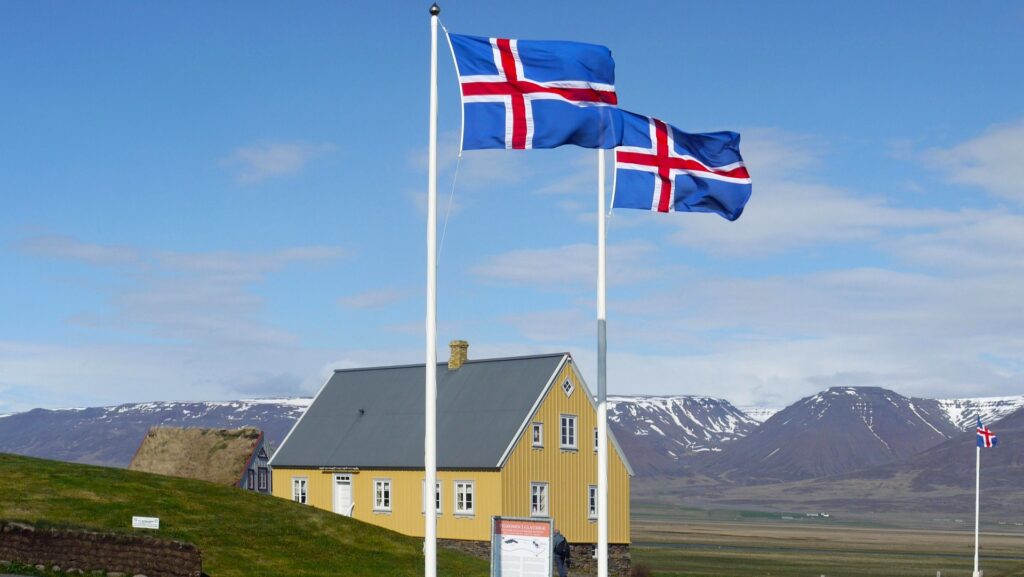
By a margin of 52,8 per cent, Icelanders have rejected reopening accession talks with the European Union in a crucial referendum.
It was a nail-biter right to the end. The first results, arriving within an hour of polling stations closing, pointed the other way. The “Yes” camp held its lead until 5am CEST.
Reykjavík was the quickest to report its results after voting ended at 10pm local time, or midnight CEST. Pro-EU sentiment is traditionally stronger in the capital than elsewhere on the island. In the city’s northern constituency, support for reopening talks topped 57 per cent. But as more districts reported, the numbers turned and they stayed that way until the end.
Around 11:30am CEST, the final results came in, with the tally settling at 47.16 per cent in favour and 52.84 per cent against. The gap between “No” and “Yes” was approximately 12,700 votes.
The “Yes” camp conceded defeat. “Naturally, we are disappointed,” with Snærós Sindradóttir, head of Evrópuhreyfingin (The European Movement), an organisation advocating European integration. She stressed, however, that nearly half of the nation had voted for closer ties with the EU. “It is very important to understand and respect the views of the 105,339 Icelanders who voted in favour,” she added.
The centre-left government, led by Prime Minister Kristrún Frostadóttir, has accepted the result and confirmed that the issue is now off the government’s agenda. “People need not worry that this result will not be respected,” Ms Frostadóttir said, making clear that her government would not resume negotiations with the European Union.
She stressed, however, that Iceland would continue to strengthen its ties with Europe and uphold its existing international commitments, including the EEA Agreement.
The referendum drew a record turnout of 82.5 per cent, the highest since the 2009 parliamentary election. Just over 270,000 Icelanders were eligible to vote. According to Iceland’s public broadcaster RÚV, one in five of them cast their ballot in early vote.
This was not a vote on joining the EU
The referendum did not decide whether Iceland should become an EU member. Voters were asked only whether the country should reopen accession talks with Brussels.
Had “Yes” won, Iceland would have returned to the negotiating table. Only after reaching a deal with the EU would Icelanders vote in a separate referendum on membership itself.
The island nation applied to join the EU in 2009 and opened accession talks a year later. By the time it suspended them in 2013, negotiators had opened 27 of the 33 chapters and provisionally closed 11.
Iceland remains firmly part of Europe
Any new talks would therefore not have started entirely from scratch. Nor is Iceland, a country of around 400,000 people, a stranger to close ties with the EU.
It is part of the European Economic Area (EEA), the European Free Trade Association (EFTA) and the Schengen area. Through the EEA, it has access to the EU single market and adopts much of its rulebook — without having a seat at the table when those rules are made.
Rejecting a return to accession talks therefore does not mean Iceland is turning its back on Europe. The country remains in the EEA, EFTA and Schengen. Its economic and political ties with the EU are not fundamentally changed by Saturday’s vote.
The difference is that Iceland has once again—and, for now, seemingly for good—chosen not to pursue full EU membership. It will remain closely integrated with the European market, but outside the EU’s institutions.