Fall ill on holiday in another EU country, and the bill is yours to pay first. Patients then wait an average of 69 days to get their money back from home. Lawmakers now want member states to settle up between themselves instead, so patients never have to pay at all
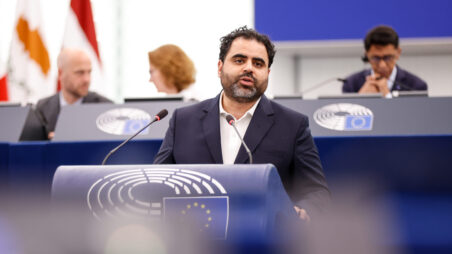
The demand comes from the European Parliament’s Committee on Public Health (SANT). It is drafting a report asking the European Commission to rewrite the rules by the end of 2027. The man behind it is Giorgos Georgiou, a Cypriot member of the Left group.
His draft is blunt about the scale of the problem. The current directive “has failed to eliminate structural barriers to access, including advance payment requirements, opaque prior authorisation procedures, inadequate reimbursement frameworks and the fragmented information”.
A right few patients use
An EU law lets any EU citizen seek healthcare in another EU country and claim the money back at home. Take-up has never come close to what was expected.
Roughly 330,000 to 350,000 cases a year were processed between 2016 and 2024. The Commission’s 2008 impact assessment had projected 780,000. Officials assumed one in ten patients on a waiting list would look abroad. Fewer than one in a hundred did.
Those figures come from a European Added Value Assessment. Parliament commissions one when it wants to force a law rather than wait for one. The European Parliamentary Research Service published this one on 31 August. Its finding: the problem is not a missing law. It is “the growing gap between the rights and mechanisms established under the Directive and their effective use in practice”.
The study also sizes the money involved. It estimates EU-wide spending on cross-border healthcare at €53m in 2024, against total health spending of €1,330bn. That is about 0.004 per cent of public health spending, which the study calls “financially marginal at system level”.
Eight policy options
The assessment sets out eight policy options in three pillars. They include minimum procedural standards for reimbursement, an EU-level one-stop-shop for information, mechanisms to reduce upfront payment barriers for vulnerable patients, and a clearer EU framework for cross-border telemedicine.
First, the money. Patients pay the foreign hospital and claim afterwards, capped at home rates. Member states may reimburse travel, accommodation and translation, but the directive does not oblige them to. The European Court of Auditors already flagged the upfront payment problem back in 2019. Mr Georgiou now told the committee that “problems still persist”.
Second, the information. Only 20 per cent of respondents to the Commission’s 2022 consultation felt well informed about their rights. Two parallel EU routes to treatment abroad exist, and the study calls that “parallel system” a source of “confusion and uneven application in practice.” The Commission’s own 2023 paper on how the two systems interact found that fewer than half of national contact points carry that guidance on their websites. The Court of Auditors found the same in 2019.
Third, permission. Nine countries operate no prior authorisation system at all. Others list up to 180 treatments that need approval before a patient can travel. About a quarter of those requests are refused.
Fourth, the referral machinery. The European Reference Networks (ERNs) are 24 EU-wide virtual networks that let doctors pool expertise on rare and complex conditions. The report says their survival “is endangered by precarious funding, inadequate legal recognition and uneven participation across member states”.
If you ask the doctors, they are not really using it. — Tilly Metz, MEP (Greens/EFA/LUX)
Tilly Metz (Greens/EFA/LUX), a SANT vice-chair, says the networks are not reaching patients. “We need to advocate and boost and campaign for the European Reference Networks,” she said, “if you ask the doctors, they are not really using it.”
What the draft report demands
The report carries an annex with drafted amendments to six articles of the directive. The central demand is to take the money out of the patient’s hands. Member states would pay each other directly, using the settlement model that already exists under the social security coordination rules. The aim is to eliminate the need for patients to advance upfront payments for cross-border healthcare.
Reimbursement would follow public or contracted rates at home, whoever provided the care abroad. Countries could cover the full cost for patients who qualify on income grounds. Each would have to set up a mechanism for travel and accommodation.
Children get their own provisions. The report wants priority access to paediatric specialist care, faster authorisation, and mandatory reimbursement of travel and accommodation for the child and accompanying parents. Each country would run a national navigator service for families.
Patients with chronic or progressive conditions would get multiannual authorisations. Today they re-apply for every treatment episode. Countries could no longer demand sworn or certified translations of medical documents. Contact points would have to publish detailed lists of treatments needing prior authorisation.
The reference networks would get a distinct legal status, letting them apply for EU funding and sign contracts in their own name. Doctors would be paid for time spent on cross-border virtual consultation panels.
Two gaps would close. Reimbursement could not be refused simply because care was delivered by telemedicine. And the scope would extend to clinical trials for rare and complex diseases, including early-phase trials.
Four organisations fed into the draft, according to the rapporteur’s declaration of input. They are SIOPE, the European Cancer Organisation, EURORDIS and EFN.
The Commission’s answer
Philippe Roux heads the health monitoring and cooperation unit at the Commission’s health department. He accepted the diagnosis. “The issues that have been mentioned exist, we know them, and we are working on how making them less burdensome,” he told lawmakers.
On the figures he was cautious. They “reflect also the difficulty of using them”, he said, and the question “has to probably be investigated more”. On prior authorisation he drew a line. “Under the directive, prior authorisation must remain an exception,” Mr Roux said.
He pointed to the Joint Action Jardin, which helps member states develop rare disease plan and patient pathway to access ERN expertise. “So that is also on its way, and it’s still to bear fruits even more. And this work is up to until 2027 and may inform future policy development.”
What happens next
Mr Georgiou told the committee the substance would arrive later. “We could not have a very long text so we will have to use the amendments in order to complete the text,” he said. He undertook to reflect points raised in the debate.
He was clear about who decides what comes next. “It is our political groups and our action that will tell the European Commission what has to be done in order to overcome the barriers.”
Acts should follow words. What remains to be done is to turn into reality what has been included in the study. — Giorgos Georgiou, MEP (The Left/CYP)
And clear about who should pay. “Ancient Greeks were really wise, and they said that acts should follow words,” he said in closing. “What remains to be done is to turn into reality what has been included in the study, and what we will include in the amendments. In order for this to become a reality, the European Commission will have to contribute and finance this effort.”