One of the Union’s defining dramas is to unfold tomorrow and Friday. Europe’s Ukraine loan faces a stern Brussels test. What are the odds?
The story has all the hallmarks of a historic clash of titans, minnows, and everybody in between. European Council President António Costa has put Ukraine’s financing on the agenda for the special summit on Thursday and Friday. Leaders will also discuss the 2028–2034 Multiannual Financial Framework, the EU’s long-term budget.
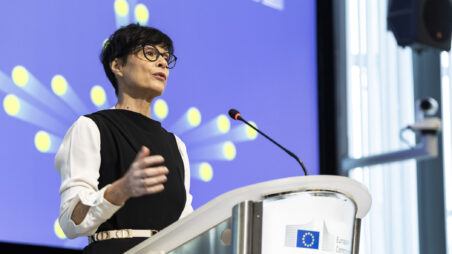
In Wednesday’s plenary debate, European Commission President Ursula von der Leyen introduced the Ukraine package. She said: “We call it the Instrument for Coordinated Support for Ukraine. (Thus) Europe is covering two thirds of Ukraine’s financing need.”
Let Moscow pay
The centrepiece is a Commission proposal for up to €45bn in additional support for Ukraine in 2027. Reports describe roughly €20bn for budget support and €25bn for military needs. The package would cover about two thirds of Ukraine’s estimated €70bn financing gap.
You might be interested

Who bears the borrowing costs is unsettled. Reporting says future interest payments remain unresolved and may affect the Ukraine allocation in the next budget.
Ms von der Leyen tied repayment to Russia: “Ukraine will only have to repay once Russia has paid for the damage of its war.” She then argued: “So Ukraine can go into peace talks with the strongest hand possible.”
The loan would supplement, not replace, the €90bn Ukraine Support Loan planned for 2026 and 2027. It relies on EU-level borrowing backed by the common budget. Changes to the multiannual budget require unanimity, which gives holdouts potential leverage.
Where the governments stand
Ms von der Leyen says she is very confident that all 27 members will agree. That must be seen as something of a wishful-thinking forecast, not evidence of public commitments. The Commission is publicly confident that Bulgaria and other dissenters can be brought into an arrangement.
German Chancellor Friedrich Merz has argued that all members should share the burden of Ukraine financing. He has reportedly threatened to block the next budget unless every member backs the loan. That creates a direct link between the loan and the budget talks.
Ukraine will only have to repay once Russia has paid for the damage of its war. — Ursula von der Leyen, European Commission president
Slovak Prime Minister Robert Fico has publicly rejected another loan, particularly its military aid. Hungary and Czechia are reported to be among the countries seeking not to participate. Bulgarian Prime Minister Rumen Radev is reported as critical of weapons deliveries.
Poland appears supportive of continued military and financial aid. It is also more favourable to using frozen Russian assets, but wary of merging the Ukraine dossier with budget bargaining. Reporting does not establish settled positions for all 27 members.
What the arguments are
Economy Commissioner Valdis Dombrovskis described the loan as limited recourse. Ukraine would repay the principal only once Russia pays reparations for the destruction it has caused, he said, echoing Ms von der Leyen’s words.
The Irish presidency took a different view. Charlie McConalogue (who bears the grand title of Minister of State at the Department of Culture, Communications and Sport with special responsibility for Sport and Postal Policy) spoke for Dublin. Reflecting both its unwillingness to spend and its neutrality, he stressed that the EU alone cannot carry the financial burden.
“We need to reach out to our international partners to step up their contributions because the EU alone cannot shoulder the financial burden,” the Irishman said. He did not care to mention why others should.
Also, an EU ambassador was quoted by Ukrainian media as saying that frozen Russian assets will stay off the table while the bloc negotiates its budget. That would effectively shut the door to a relatively easy and affordable solution.
Supporters and critics in Parliament
MEP Valérie Hayer (Renew/FRA) made the strongest case for continued funding. She warned of the coming elections. She said that “in 2027, there’ll be national elections in eight EU member states”, with anti-Ukraine leaders eyeing power (not least in France, Ms Hayer’s homeland). The Renew leader made the obvious point that stopping aid would help Vladimir Putin weaken Europe.
Some suggested a workaround. MEP Andrzej Halicki (EPP/POL) focused on frozen Russian assets rather than the loan. He argued that a trust fund could be created under Article 122 of the Treaty on the Functioning of the European Union. He acknowledged Belgian legal concerns, but said the political will is what is lacking.
We need to reach out to our international partners to step up their contributions because the EU alone cannot shoulder the financial burden. — Charlie McConalogue, Irish minister of state for sport
Other MEPs stressed accountability. MEP Michael Gahler (EPP/DEU) argued that Russia should not recover assets without paying reparations. His compatriot, MEP Tobias Cremer (S&D/DEU), called for the full financing of Ukraine’s peace and reconstruction.
Critics were not hard to find, either. Their arguments ranged from the sane (who would pay if reparations never arrive?) to the inane (this is not the way to achieve peace).
What will we hear on Friday?
Mr Costa says he will share the European Council’s conclusions on Friday. The base case is political agreement in principle. Leaders may endorse the need for 2027 support and try to keep the €45bn proposal intact. Some implementation details could be left to later work.
A likely compromise would split civilian and military aid. Hesitant governments could back budget support—the civilian side of the package—while avoiding direct involvement in the €25bn military element. But Germany may not accept such exemptions, given its demand for shared burdens.
A clean endorsement by all 27 looks less likely. Slovakia, Bulgaria, Czechia, and Hungary, as prospective non-participants, have resisted the package. Leaders may agree a timetable for the budget questions, presenting progress without claiming every detail is settled.
Bottom line: expect a qualified compromise rather than unanimous enthusiasm. The central question is how to keep EU-wide backing without forcing unwilling governments to fund weapons. A breakdown remains possible. It would more likely produce further talks than an abandonment of Ukrainian funding. The downside is clear. Now, when it matters, ‘further talks’ and ‘abandonment’ mean essentially the same thing: no money.