Poland funnels about five per cent of output into the armed forces, more than any European peer bar Greece; the three smaller Baltic countries follow suit. Their ambitions keep swelling, but so do the budget gaps. What to do?
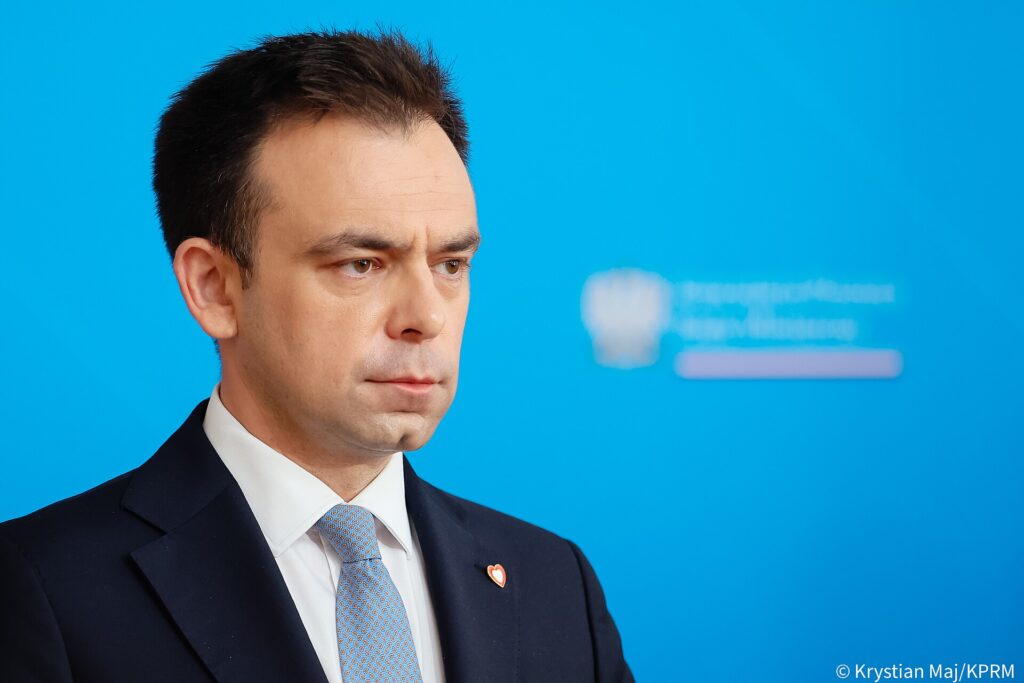
Poland’s Finance Minister Andrzej Domański wants Brussels to let defence outlays escape deficit rules and to expand the new Security Action for Europe (SAFE) loans. “We are building a big wide coalition because we need fresh money, new resources,” he said during last week’s gathering in Vilnius. “Our defense spending is massive. That’s why we need more European solidarity and new tools.”
The plea is urgent. Government borrowing touched an eye-watering seven point three per cent of GDP last year. “Of course, we can’t maintain a seven-per cent deficit,” Mr Domański conceded. He insists growth of roughly three and a half per cent will shrink the hole, but investors still fret.
Polish worries
SAFE already offers €150bn of subsidised loans for weapons. Warsaw has lined up €43.7bn—nearly a third of the pot—yet cries for more. “We need to do everything to maintain the tempo,” Mr Domański argued. The ministry also eyes the Netherlands-led Multilateral Defence Mechanism, a joint-procurement scheme involving Britain and Finland.
National newspapers echo both the urgency and the arithmetic. Conservative daily Rzeczpospolita hailed SAFE as a breakthrough, but warned that every cent still counts as debt. Business portal wnp.pl dwelt on accounting tweaks that might stop the loans from ballooning the headline deficit, a political weight the government desperately wants lifted.
Commentators drill into Poland’s awkward two-track budget. Core spending falls under EU rules, whereas vast arms orders sit in off-book funds. The trick galls Brussels, yet even that workaround now looks strained. Bond yields have climbed forty basis points this year, hinting at unease.
Vilnius cheers Warsaw on. Lithuania’s finance ministry last month signed a €300m credit line with the European Investment Bank, the first tranche tagged to SAFE. Newswire ELTA called the deal proof that small states can move fast. Business daily Verslo Žinios praised a wider mix of grants, war bonds and venture-capital cash, quoting officials who urge the country to “diversify so you don’t choke the budget.”
Baltic endorsements
Estonian outlets sound cooler but back the thrust. A strategy paper from Tallinn’s chancellery says the EU must “massively scale up defence-industry capacity” and weld SAFE to rising domestic outlays. The finance ministry’s website calls the instrument the main cushion against future deficit pain while Estonia edges towards its own five per cent target.
Riga, by contrast, trembles. Public broadcaster LSM.lv calculates that Latvia needs an extra €92 m as soon as 2027 and more than €1.1 bn by 2030 to meet the NATO benchmark. A finance-ministry memo obtained by Dienas Bizness warns that the goal “will not be possible without substantial funding growth” and frets that even SAFE may not spare fiscal discipline.
Taken together, the four countries form a hawkish bloc within the Union. All fear that American attention could drift after November’s election. Each wants fresh European muscle (and someone else to pay).
Budgetary tightropes
Yet the countries’ public debates betray different nerves. Poland and Latvia obsess about debt ceilings; Lithuania trumpets first-mover gains; Estonia files sober plans and keeps talking about factories.
Our defense spending is massive. That’s why we need more European solidarity and new tools.
—Andrzej Domański, Poland’s Finance Minister
SAFE alone will not please them. Mr Domański hopes to rope the European Investment Bank into issuing common bonds that spread risk across the Union. Dutch and British officials like the thought but large euro-area members hesitate. Germany insists that any new facility must sit inside the existing seven-year budget, not on top of it.
Still, political momentum is building. French President Emmanuel Macron now backs separate deficit rules for defence. The European Commission tests tweaks that could let every member shift military spending below the line without breaching the three per cent cap. That concession would hand Warsaw exactly what it wants, i.e., lower borrowing costs and cleaner books.
New tools
Poland may press the case as soon as the upcoming 5 May meeting of the ECOFIN council, comprising of ministers responsible for economic affairs. Baltic ministers will chime in. The four capitals already share procurement talks on artillery shells and air-defence missiles. If Brussels demurs, they threaten to borrow on markets together, copying the joint pandemic bonds of 2020.
For now, Mr Domański keeps touring capitals, waving spreadsheets. Berlin grumbles but listens. Paris eyes French shipyards. The smaller Balts watch to see whether Poland’s heft can turn sympathy into cash.
Europe frets that high deficits feed inflation, yet Russian bombs keep landing on Kharkiv. The dilemma is brutal. Mr Domański gives the blunt answer. “Our defense spending is massive. That’s why we need more European solidarity and new tools.”