The European Union’s ambassadors supported both the long-delayed 20th package of sanctions on Russia and a €90bn loan for Kyiv. Oil is central: restored Druzhba flows unlocked Hungary’s veto, yet Ukraine’s strikes on Russia’s shadow fleet off Libya supplied the real pressure.
Months of Brussels’ internal political wrangling appeared over this week as the European Union’s envoys recommended two pro-Ukraine decisions to the Council. “(These measures) will now go through a written procedure, for their final adoption by the Council. The written procedure is expected to conclude on Thursday afternoon,” said a spokesperson for the Cyprus Presidency of the EU Council.
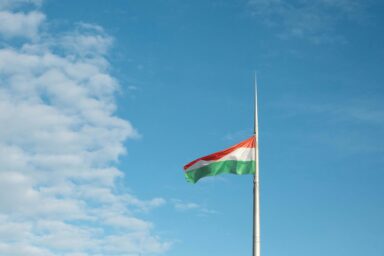
The sudden breakthrough owed much to a trickle of crude. Hungary and Slovakia had lifted their vetoes once Ukraine restored oil flows through the Druzhba pipeline, cut since January. Yet the broader driver lay elsewhere: a series of Ukrainian drone strikes in the Mediterranean that thrust the war into a new theatre and nudged Brussels to react. The Union now aims to ban maintenance services for Russian LNG tankers, blacklist dozens of ship-management firms and tighten enforcement against Moscow’s so-called shadow fleet.
Opening a second shore
In a closed-door briefing a day earlier, Ukraine’s Foreign Minister Andrii Sybiha argued that time had come for bigger steps. “Our understanding has deepened, as has the need to put pressure on Russia — its industry, shadow fleet, and maritime services,” Mr Sybiha said. Ukrainian officials point to the Libyan coast as proof that limited strikes can yield wide policy dividends.
The first wake-up call arrived in December 2025 when Ukrainian sea-drones crippled the Qendil, a Russian oil tanker sailing 250 km off Libya. A second blow followed in March 2026 against the Arctic Metagaz, an ageing LNG carrier now rusting adrift.
Intelligence leaks, quoted by Geopoliticalfutures.com, traced both attacks to a unit of some 200 Ukrainian officers operating from Misrata and Zawiya under a hush-hush deal with the Government of National Unity in Tripoli. The arrangement grants Kyiv access to Libyan runways and depots in return for drone expertise.
Those pinpricks look modest on a map. Yet they point to an awkward truth. If Ukrainian teams can target Russian gas ships in the Mediterranean, Moscow might strike back at Europe’s critical sea lanes. It was one of the reasons why Brussels bolstered Operation IRINI, its naval mission off Libya to include Maritime Situational Awareness. It is to track suspect tankers, map AIS blackouts (when a vessel stops transmitting its location, identity, and course data) and share data with customs desks from Piraeus to Gdańsk.
Adding drones to the toolbox
The Libyan exploits also coloured the EU’s new Drone and Counter-Drone Action Plan adopted earlier this year. Until then the strategy dwelt on quasi-hobby quadcopters near airports. Now it speaks of hardened radars around LNG terminals and emergency no-fly bubbles over subsea cables. Kyiv may get credit for the shift as commercial-grade unmanned aerial systems (UAS) adapted with sea-skimming profiles pose a rising threat to energy shipping.
The European Peace Facility, the bloc’s off-budget arms slush fund, has jumped aboard. A fresh ’out-of-area maritime-security tranche’ will finance coastal radars for Tripoli and electronic shelters that can eavesdrop on Russian chatter across Sirte bay. Greece and Italy, once reluctant to widen IRINI’s brief, now see value in containing spill-over before it reaches their own ports.
Western sanctions have already pushed Russian oil into older vessels bought through shell firms in Dubai or Hong Kong. London insurers will no longer touch them; so Moscow self-insures.
Shadow fleet, shrinking room
The Arctic Metagaz incident exposed a further weak spot. Brussels seized on it to call for a blanket ban on servicing such tankers in EU docks. Britain went further. “We should go after the shadow fleet even harder,” said Prime Minister Keir Starmer at a late-March Nordic security gathering before authorising Royal Navy boardings of suspect ships entering the Channel.
Kyiv applauded. In a video address to allies President Volodymyr Zelenskyy pleaded, “So please keep the pressure on Russia — its tankers and shadow fleet must not feel safe in European waters.” Market data suggest traders listened: Dutch TTF gas futures spiked six per cent on April 5 before easing back once the Council firmed up its plan.
Our understanding has deepened, as has the need to put pressure on Russia — its industry, shadow fleet, and maritime services.
—Andrii Sybiha, Ukraine’s Foreign Minister
Southern member states fear the next drone will hit closer to home. Italy, Greece and Malta lobbied to relax strategic-reserve rules so that cargoes could be rerouted via Spain’s Atlantic ports should the central Med become a war zone. The Commission folded the idea into a draft update of the Security of Supply Regulation, expanding it from pipelines to maritime chokepoints. Simultaneously ACER, the EU’s energy regulator, and ENTSOG, the European network of gas transmission operators, will publish risk dashboards tracing suspect tankers in real time.
Energy nerves, policy tweaks
Some policymakers sense opportunity. Brussels frames every flare-up as one more nudge toward decarbonisation. The mid-2026 REPowerEU review may well cite the Libyan strike to argue for front-loading hydrogen networks and biomethane subsidies. By branding Russian hydrocarbons a security hazard, the Commission hopes to speed up green spending while shielding it from fiscal hawks.
The Libyan precedent may matter soon. Ukrainian drones have not targeted the Greek-flagged giants that ferry most of Russia’s oil via the Suez Canal. Should they do so, Athens might flinch. But the Council could now isolate any hold-out. German diplomats already circulate talking points stressing that maritime loopholes “directly finance aggression” and thus threaten the Union’s security.
Russia’s own posture in Libya complicates matters. The Kremlin backs General Khalifa Haftar in the east and runs Africa Corps from the al-Khadim air base. From there Moscow ships matériel into the Sahel, props up juntas and dangles migration as leverage over Europe. Ukrainian strikes undermine that chain. Each damaged tanker raises insurance premia, delays cargoes and dents the myth that Russia shields its partners. A leaked French defence memo claims that the Qendil had ferried Russian military intelligence (GRU) operatives under cover as sailors.
Stretching Moscow, at low cost
Tripoli gains leverage too. By letting Ukrainians operate on its soil, the GNU secures Western goodwill and a hedge against Haftar. Türkiye, Italy and America, all present in western Libya, appear to tolerate the arrangement. That tacit nod reassures Kyiv that its teams may stay for the long haul.
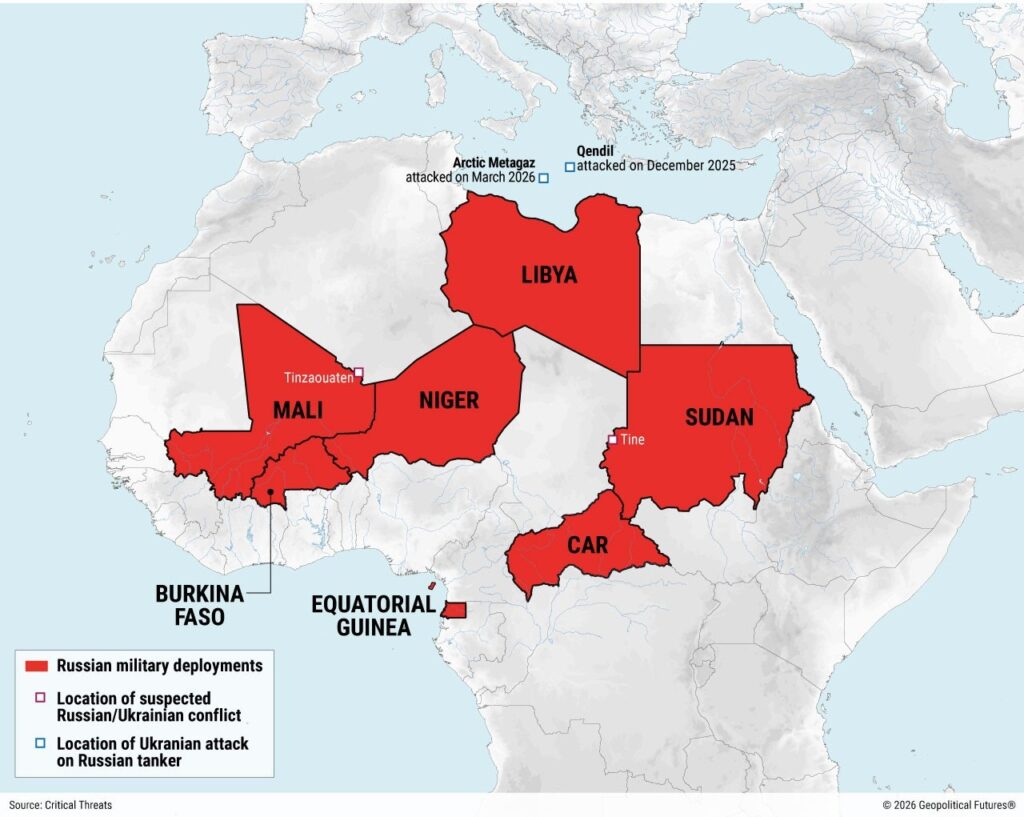
Ukraine’s African gambit mirrors earlier forays. In Sudan its special forces aided the army against Wagner mercenaries; in Mali Tuareg rebels received uncanny targeting data. The pattern is small, deniable, tech-heavy and cheap. Sea-drones cost peanuts next to Kalibr missiles. Each forces Moscow to spread air defences, hire escorts and insure old ships at punitive rates. Russian planners face a dilemma: beef up Africa and weaken the Black Sea—or accept further attrition.
For Brussels, that strategic harassment is both boon and risk. On the one hand it hastens the sanctions cycle: fresh strikes beget tougher lists, starve the Kremlin of petrodollars and reassure Ukraine that Europe still cares. On the other it widens escalation ladders. A Russian riposte against an EU-flagged LNG tanker would test NATO’s red lines.
From package to posture
The 20th sanctions round will not sink Russia’s fleet on its own. Yet it locks in a trend: each Ukrainian success abroad reshapes EU policy at home. Maritime sanctions enforcement, once a sleepy customs niche, now has its own task force, budget lines and naval screens. Counter-drone protocols have leapt from airports to offshore rigs. Energy security debates that once centred on Nord Stream now track ghost tankers off Benghazi.
Ministers are expected to sign off the package imminently. New vessel blacklists should follow within a month, alongside tighter rules on ship-to-ship transfers. Brussels believes that compressing the shadow fleet’s insurance and maintenance options could shave several billion euros from Moscow’s annual export haul. Kyiv hopes that will translate into fewer shells landing on Kharkiv.
We should go after the shadow fleet even harder.
—Keir Starmer, UK Prime Minister
Much will hinge on Tripoli. The GNU wants drones, training and cash; the EU prefers stability and migration control. A modest compromise seems plausible. Under the European Peace Facility, member states could gift coastal radars while Italy upgrades Libyan search-and-rescue stations. In return Tripoli would keep granting Ukraine quiet access. Such horse-trading suits everyone except Russia.
The balance sheet
For now the EU smiles on Ukraine’s African escapade. It weakens Russia, speeds up green plans and binds member states into ever stricter sanctions. Yet every action breeds reaction. A Russian-backed cyber-probe into European ports or a migrant surge from Libya could shift moods fast. The bloc’s strategists must therefore pair tougher measures with broader resilience. That means bulked-up naval patrols, diversified gas imports and a faster energy transition.
Even if the Mediterranean remains calm, the logic of escalation points south. Russian forces in Sudan, Mali and the Central African Republic sit on slender supply lines. Ukrainian teams—and their western backers—know it. EU policymakers may soon add the Red Sea and Gulf of Guinea to their sanctions maps. What began with a damaged tanker off Libya now shapes Europe’s foreign, security and energy policy all at once.