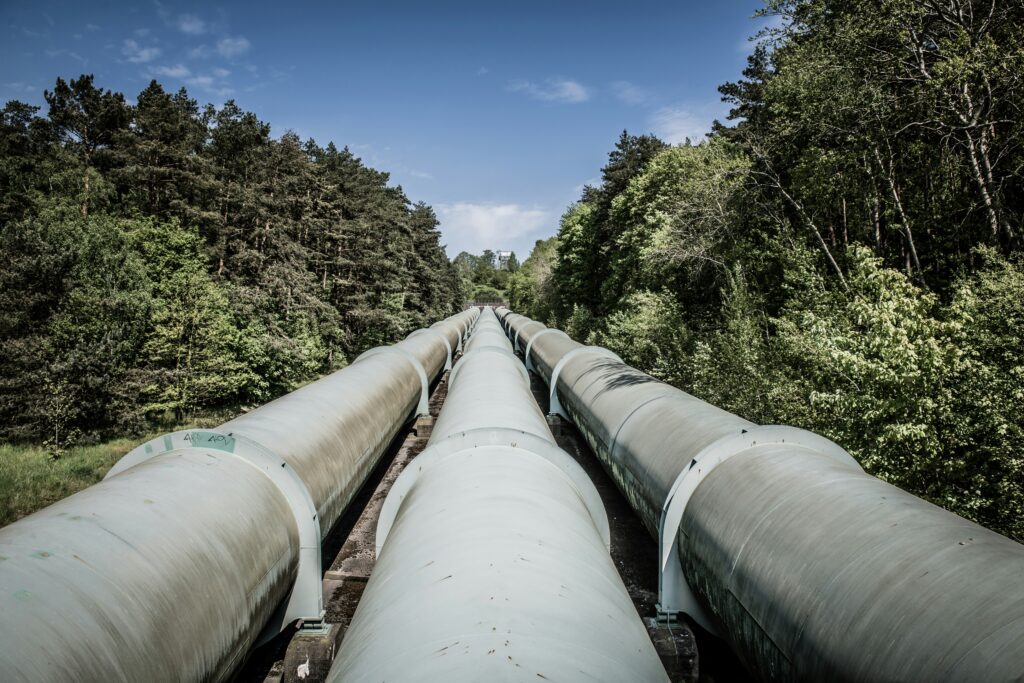
Hungary and Slovakia have broken months of deadlock, lifting their vetoes on EU sanctions against Russia and clearing the way for a €90 billion loan to Ukraine. The shift followed Kyiv’s repair of the Druzhba pipeline, shut since a Russian attack in January.
Since January, Slovak households and the Slovnaft refinery have relied on costlier alternative supplies via Croatia’s Adria pipeline. The restart of Druzhba brings cheaper Russian crude back online. For Ukraine, the €90 billion loan, approved by EU leaders in December but blocked by Budapest, means critical budget support as the war enters its fifth year. The episode shows how the energy dependence of two member states can quietly hold EU foreign policy hostage.
Pressurisation and filling of the Druzhba pipeline began in Ukraine on Wednesday, Slovak Economy Minister Denisa Sakova said, citing Ukrainian pipeline operator Ukrtransnafta. Oil deliveries to Slovakia are expected to resume on Thursday.
Pipeline politics
The pipeline has been out of service since late January, when Ukraine said it was damaged in a Russian attack. Slovakia and Hungary repeatedly accused Kyiv of deliberately delaying the restart for political reasons. The two countries were not simply acting out of frustration. Each had something specific to gain. Slovakia tied its veto on the 20th EU sanctions package directly to resumed oil deliveries. Hungary linked its block on the €90 billion loan to the pipeline dispute and to Orbán’s broader effort to position himself as a mediator between East and West ahead of elections he ultimately lost.
On Wednesday, EU member states backed the sanctions package. Hungary and Slovakia withdrew their objections and agreed to launch the written procedure for formal adoption. The timing depends on whether Russian oil actually reaches both countries. The package adds 43 vessels to the EU’s list of Russia’s shadow fleet, tankers Moscow uses to circumvent oil export sanctions, bringing the total to 640.
European Council President António Costa thanked Zelenskyy “for delivering, as agreed: repairing the Druzhba pipeline and restoring its operation.” EU foreign policy chief Kaja Kallas expected Hungary’s veto on the loan to be lifted within 24 hours.
The Orbán factor
Orbán lost elections earlier this month to opposition leader Péter Magyar, who signalled a different approach from the start. “If Druzhba is operational, Zelenskyy should open it,” Magyar said. The 20th sanctions package was originally due in late February, to mark the fourth anniversary of Russia’s full-scale invasion.
If Druzhba is operational, Zelenskyy should open it.
—Péter Magyar, incoming Hungarian Prime Minister
The two-month delay is a reminder that in the EU, energy and foreign policy are inseparable. When two member states control a critical supply route, they control the pace of collective decisions — until a change of government shifts the calculus overnight.