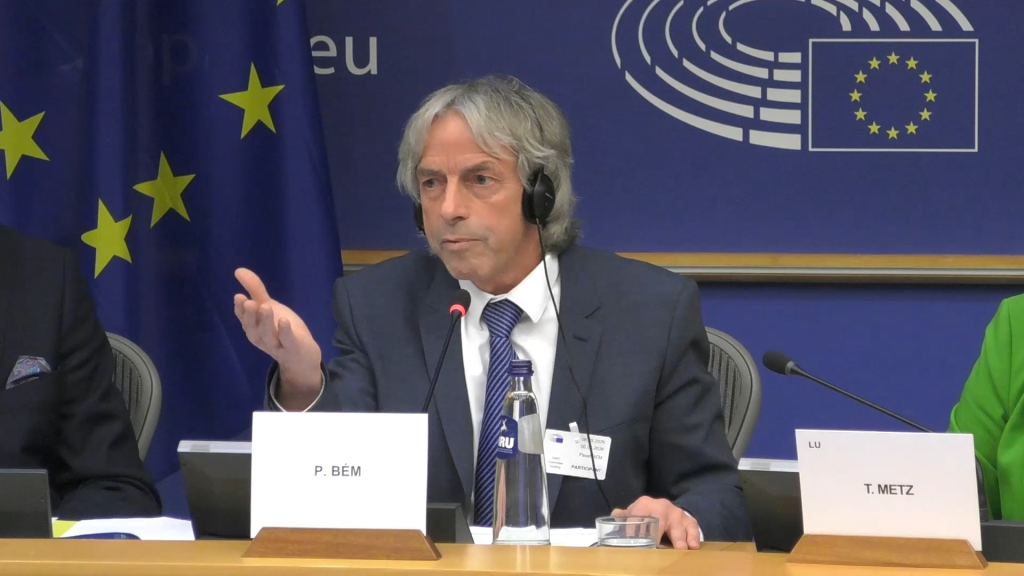
Scientific drug policy data clearly favour prevention and regulation. Yet the European Commission’s new strategies and practices in candidate countries are dangerously reverting to the repressive methods of the 20th century. Czech National Drugs Coordinator Pavel Bém warned members of the parliamentary health committee that the prevalence of repression over public health would have fatal consequences — for war-torn Ukraine and other aspiring EU members as well as the bloc itself.
Pavel Bém, physician and ex-Prague mayor, pointed out to the Committee on Public Health (SANT) the “missing public health dimension” in drug policy reforms. He challenged the myths that, in his view, continue to shape the debate on addictive substances. He emphasised that history has demonstrated the ineffectiveness of a purely repressive approach which often does more harm than good.
However, this trend is now returning in the form of the EU’s 2026–2030 drug strategy. Mr Bém says it focuses too heavily on law enforcement and border control at the expense of healthcare and harm reduction.
On the brink of psychological collapse
“Fighting drugs through purely repressive measures has never worked. Regulation has… Repressive drug policy has actually caused more harm than the drugs themselves: HIV and hepatitis C epidemics, police corruption, and disproportionate funding of law enforcement agencies,” Mr Bém said.
The most dramatic part of Mr Bém’s speech concerned Ukraine. The country, seeking EU membership, is facing an unprecedented mental health crisis, he claimed. War is acting as a catalyst for substance use. Both soldiers and civilians are turning to drugs as a trauma and pain coping mechanism.
Mr Bém drew MEPs’ attention to staggering data indicating that up to a quarter of Ukrainians are at risk of developing mental illness. Meanwhile, traditional care systems built on outdated models are unable to keep up. This opens the door to an out-of-control black market for synthetic drugs.
“It is estimated that more than 70 per cent of the Ukrainian population suffers from mental health issues and chronic stress. This is a clear message for us. We see a growing link between combat stress and substance use among soldiers. A third of them report using amphetamines, and the use of opioids and synthetic cannabinoids is also on the rise,” Mr Bém warned.
Help for PTSD patients
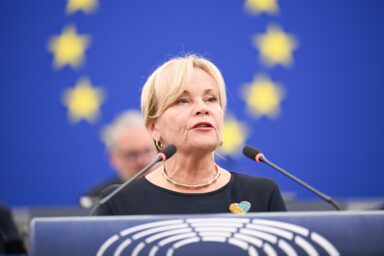
In this context, he also mentioned the need for innovative methods, such as psychedelics-assisted psychotherapy. It could help the patients with post-traumatic stress disorder (PTSD) for whom conventional treatment is ineffective. MEP Stine Bosse (Renew/DNK) reacted emotionally to this topic, sharing the personal story of her mother, who suffered from PTSD in London after WWII.
“She suffered from post-traumatic stress disorder, but back then we didn’t even know what it was called… She lost her battle at 54, when she took her own life. We must understand what is happening in Ukraine so that we can protect our own citizens as well,” Ms Bosse said.
Mr Bém also voiced pointed criticism of other candidate countries such as Serbia, Albania, and Georgia. The EU accession process should be a driver of reform, but as he sees it, the reality in these countries is the opposite. Repression reigns there; prisons are populated by drug users rather than dealers, and access to healthcare is minimal.
Holdouts of repression
“Approximately 10 per cent of prisoners in these countries are people who were in possession of only a small amount of the substance for personal use,” Mr Bém stated. MEP Tilly Metz (Greens-EFA/LUX) added that it is crucial for the EU to speak with one voice and support civil society in these regions.
The ensuing debate featured sceptical voices as well. MEP Aurelijus Veryga (ECR/LTU) expressed concern that the worldwide wave of legalisation creates a sense of “normalisation” of dangerous behaviour among young people.
Good regulation protects public health, including when it concerns illegal substances. — Pavel Bém, Czech National Drugs Coordinator
Mr Bém countered, however, that sensible regulation—modelled after tobacco or alcohol—better protects public health than prohibition. The latter merely lines the pockets of organised crime. According to UN estimates, organised crime generates $350bn annually from the illegal market.
“Good regulation protects public health, including when it concerns illegal substances. Investing in mental health and addiction treatment in Ukraine is not just a humanitarian challenge, but a strategic investment in the long-term stability and security of all of Europe,” Mr Bém concluded.