Europe’s drug problem is deepening. A new report from the European Union Drugs Agency paints a stark picture: substances are growing more potent, criminal networks more violent, and at least 7,600 people died of overdoses across the EU in 2024 alone. The bloc is now stepping up its response on both the health and security fronts.
Opioids, usually in combination with other substances, remain the leading cause of overdose deaths in Europe. New cannabis-based products continue to emerge, while the variety of opioids and stimulants on the market is growing. Europe’s role in the global drug market is shifting, and not for the better.
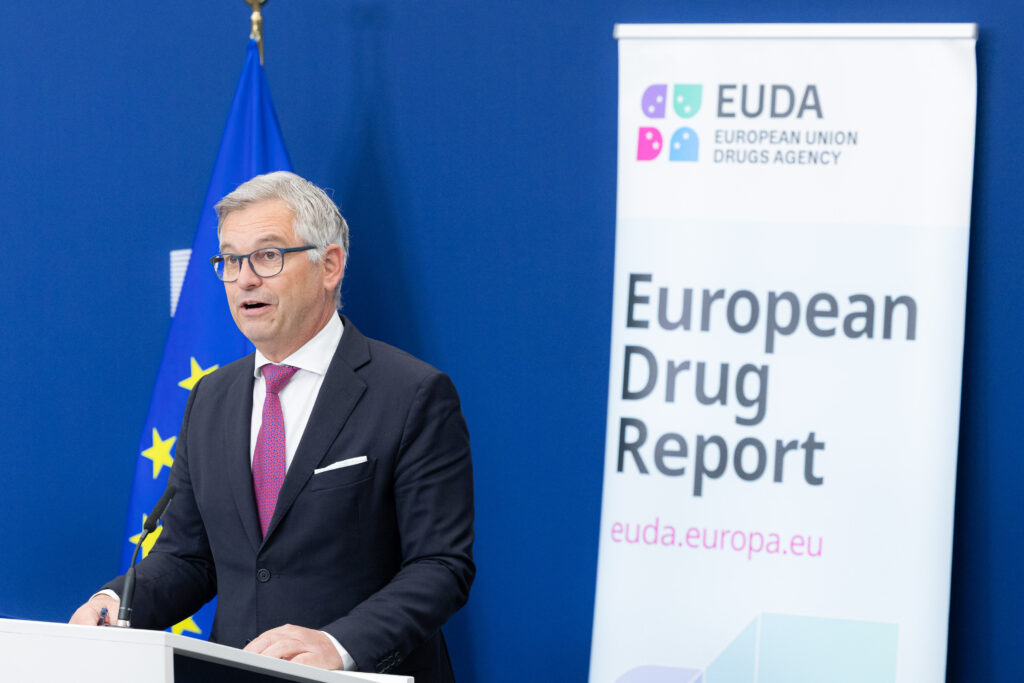
EUDA and the European Commission presented the findings on Tuesday in the European State of the Drug Situation report, drawing on data from member states as well as Norway and Türkiye. “The report reveals the human cost of drug use. We must do everything we can to prevent new, dangerous products from flooding the market,” said Commissioner for Internal Affairs and Migration Magnus Brunner. “Substances are becoming more potent. Criminal groups are becoming more active, more innovative, and more violent,” added EUDA Executive Director Lorraine Nolan.
Overdose crisis
Opioids remain the leading cause of overdose deaths in Europe, typically used in combination with other substances. The vast majority of the 7,600 deaths recorded in 2024 involved multiple drugs simultaneously. New cannabis-based products continue to emerge in the EU, while the variety of opioids and stimulants on the market is growing.
“The report reveals the human cost of drug use. We must do everything we can to prevent new, dangerous products from flooding the market,” said Commissioner for Internal Affairs and Migration Magnus Brunner. The drug market poses serious concerns “for European security as a whole, for organised crime, but also for health policies and social vulnerability,” Mr Brunner added.
Cocaine is now more readily available across Europe than ever before. The volume intercepted on the continent is expected to fall by more than 20 per cent in 2024, compared to 419 tonnes seized in 2023. The number of individual seizures, however, rose from 95,000 to 97,000, suggesting traffickers are shifting to smaller, more fragmented shipments.
Security crackdown
The EU’s drug strategy, launched last year, combines public health, prevention, and social treatment measures with a coherent security and crime prevention policy to “reduce both supply and demand.” Organised crime networks are diversifying their trafficking routes and methods following intensified police operations in major European ports, increasingly exploiting smaller ports and developing more sophisticated concealment methods. Intimidation and violence related to drug trafficking remain a serious concern, including the recruitment of vulnerable young people by criminal groups.
The Commission is working with member states, European ports, trade associations, and EU agencies through the European Ports Alliance to combat drug trafficking. Brunner stressed the need to tackle criminal networks across the entire supply chain: “from production countries, through transit routes, to European sales markets, with particular attention to port security.” The EU is also developing a port alliance with Latin American partners and sees closer cooperation with the United States as a priority.
What concerns me most is that Europe may now be facing a narrowing window of opportunity to strengthen preparedness before these substances become more entrenched.
— Lorraine Nolan, Executive Director, European Union Drugs Agency
The report highlights three substances as key challenges: synthetic opioids, ketamine, and cocaine. “What concerns me most,” said Ms Nolan, “is that Europe may now be facing a narrowing window of opportunity to strengthen preparedness before these substances become more entrenched.”