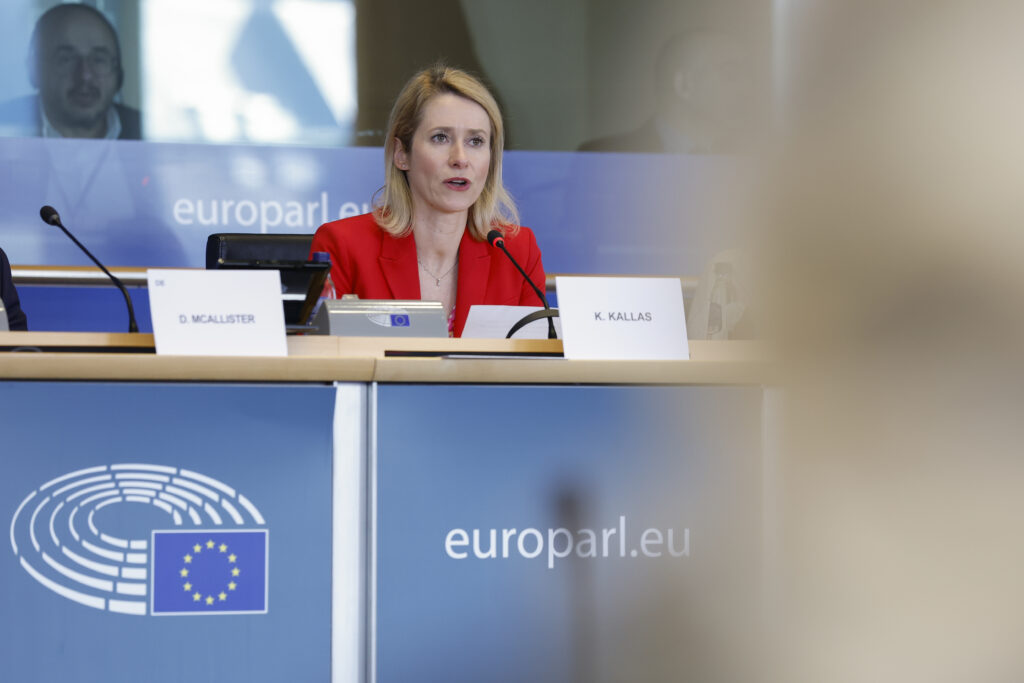
Kaja Kallas has built her reputation on plain speaking and firm positions. Then a leaked conversation from a Mexico City meeting suggested she reserves her plainest words for closed doors. Now Israel’s foreign minister has severed all contact with her, and she has yet to deny anything.
In March 2025, Kaja Kallas stood beside Israeli officials and declared that the EU stood “in solidarity with Israel and its people.” The security of Israel, she said, was extremely important to the European Union. It was the kind of statement that diplomats remember. So was what came next.
During a working visit to Mexico City in late May, Kallas reportedly told senior Mexican government officials about a trip she had made to South Africa the previous year. She described being moved by the apartheid museum in Johannesburg and drew a parallel between South Africa’s system of racial segregation and Israel’s rule over Palestinians in Gaza and the occupied West Bank. Officials and diplomats present at the meeting later spoke to Euractiv, which broke the story last week. Kallas’s office neither confirmed nor denied the remarks. That silence, it turned out, would prove costly.
Severing ties
Israeli Foreign Minister Gideon Sa’ar did not wait long. On Thursday he announced he was cutting all contact with Kallas, accusing her of acting “obsessively and with blatant unfairness toward the State of Israel.” He noted she had issued no denial, clarification or response regarding the reported remarks. “As the Foreign Minister of the State of Israel, I have no choice but to sever all contact with Ms. Kallas until she retracts the blood libel she directed at the world’s only Jewish state,” he wrote on X.
Even in your remarks here you refrain from denying or condemning what has been attributed to you and published publicly.
— Gideon Sa’ar, Foreign Minister of Israel
Kallas responded the same day. She told Sa’ar she valued their dialogue and was open to continuing it respectfully and constructively. She reaffirmed the EU’s commitment to a two state solution and condemned illegal Israeli settlements in the West Bank. What she did not do was address the apartheid comparison. Sa’ar noticed. “Even in your remarks here you refrain from denying or condemning what has been attributed to you and published publicly,” he replied. “If you did not make those statements, deny it.”
The exchange laid bare the central problem. Kallas is neither owning the remarks nor disowning them.
A comparison too far for Brussels
The comparison itself is not without precedent. Ireland and Spain have used similar language. The United Nations, the International Court of Justice, and major human rights organisations have described Israeli policies toward Palestinians in terms of apartheid. But within the EU, the comparison remains deeply divisive. Germany and France have firmly rejected it. Diplomats cited anonymously by Euractiv were blunt. “The comparison to apartheid is not EU policy and is unacceptable,” one said. “It is a serious problem when the person officially representing the EU makes statements of this kind.”
That is the crux of the crisis. Whether or not Kallas personally believes what she reportedly said, she is not speaking as a private individual. She is the EU’s chief diplomat, mandated under Article 18 of the Treaty on European Union to conduct the bloc’s foreign policy. A private remark that contradicts the public line does not stay private for long.
A weakened hand
The timing makes things worse. Just days before the Mexico leak surfaced, the Financial Times reported that France and Germany were discussing proposals to reduce the powers of the European External Action Service, the diplomatic body Kallas leads. Whether the two stories are connected or merely coincidental, they together paint a picture of a High Representative under pressure from multiple directions at once.
At Thursday’s midday briefing in Brussels, Commission spokesman Anwar al-Anuni defended Kallas’s track record of engagement with Israel and declined to address the substance of the leaked remarks. She remains in post and her mandate is unchanged. What remains less clear is how she conducts diplomacy with Israel from here.
Sa’ar has set a simple condition. Deny it or the freeze continues. Kallas has so far chosen a third path: say nothing about it at all, and hope that a public reaffirmation of EU values fills the gap. In diplomacy, silence rarely speaks in your favour.