The Alliance summit in Ankara concluded with a dramatic shift in tone from US President Donald Trump toward Ukraine, a fresh escalation against Tehran, and a European Union left defending its member states’ sovereignty and trade relationships from the sidelines.
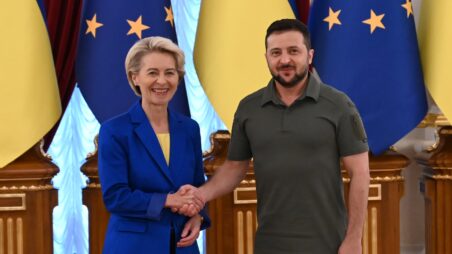
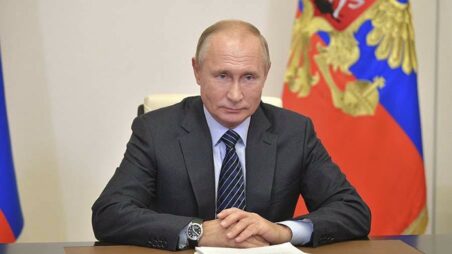
The headline from the final day was a striking reversal. Mr Trump, who spent much of his first year in office deriding Volodymyr Zelenskyy as ungrateful and accused him of “gambling with World War III”, sat alongside the Ukrainian president in Ankara on Wednesday, 8 July, and declared: “He’s done an amazing job. Look, he’s been very effective, and he’s had the best equipment because he’s had our equipment.” The two men met bilaterally on the summit’s margins, and the atmosphere, by the accounts of those present, was almost cordial.
More substantively, Mr Trump announced that the United States would grant Ukraine a licence to manufacture Patriot surface-to-air interceptor missiles. “We’re going to give a licence to you to make Patriot missiles,” he told Mr Zelenskyy. “That’s pretty cool. This way, you can’t complain that we’re not giving them enough. I said, ‘Make them yourself.’ We haven’t informed the company of that yet, but that’ll work out all right.” Mr Zelenskyy’s response was brief. “It’s a great idea,” he said. “We need it.”
A licence, not yet a solution
Any optimism on Kyiv’s part must be qualified. Given the mercurial nature of Mr Trump’s governing, he may easily embark on an entirely different course of action in the matter of hours. If it stands, however, the announcement addresses one of Kyiv’s longest-standing requests. Patriot interceptors have become Ukraine’s primary defence against Russian ballistic missiles, which can reach Ukrainian cities within minutes. On Monday, Ukraine failed to shoot down any of the 29 missiles Russia fired in an attack that killed 28 people in Kyiv and the surrounding region.
Mr Trump acknowledged that the US could not send more Patriots directly because “we don’t have that many,” a consequence of the munitions the US expended during its war on Iran. He also said Ukraine would need security guarantees in any eventual peace deal, without offering specifics. Mr Zelenskyy told the Financial Times that his country’s supply of PAC-3 interceptors was severely low. Missiles purchased by Ukraine and its partners sometimes arrived “literally the day before a massive attack”.
Experts welcomed the announcement but urged caution. Franz-Stefan Gady, a Vienna-based military analyst, said the deal signals a durable US commitment to Ukraine, but “it does not solve Ukraine’s immediate challenge, simply not having enough interceptors to protect its cities against Russian ballistic missiles.” The analyst added that building new production facilities would probably take years.
Michael Kofman, a senior fellow at the Carnegie Endowment for International Peace raised similar questions. “Will it be in time for this war or is it aimed at postwar sustainment?” he said. “The question is how long will it take to set up production, how would Ukraine defend such facilities in wartime, will US companies who are currently reluctant actually follow through with tech transfer and will the supply chain expand to allow increased output?”
Iran overshadows the room
Inside the summit’s closed session, Mr Trump spent the bulk of his address not on Ukraine but on Iran. According to people who heard his remarks, he complained at length about the lack of European support for his military campaign against the Islamic Republic and renewed warnings about migration. European officials had hoped to redirect his attention toward Ukraine; they got, in the words of those present, little more than a generic promise of support.
We’re going to give a licence to you to make Patriot missiles. That’s pretty cool. — Donald Trump, US president
The Iran situation deteriorated sharply during the summit itself. Mr Trump told reporters on the margins that the US had struck Iranian targets overnight with nearly 40 aircraft, including F-35s, F-15s, F-16s, F/A-18s, and drones. “We hit them very hard last night,” he said. “Probably hit them hard again tonight.” He threatened to reimpose a blockade on Iranian ports, bomb infrastructure including desalination and power plants, and said the ceasefire was effectively over. “I guess they can talk,” he said of negotiators. “But I’m not seeing it.”
Mr Trump also announced the removal of Syria from the US terrorism sanctions list, meeting Syrian President Ahmed al-Sharaa on the sidelines. On NATO’s spending targets, notably, he said nothing in the closed session about the alliance’s goal for members to reach five per cent of GDP on defence by 2035. That is the benchmark that had dominated the previous year’s summit in The Hague. He did, however, reaffirm that the United States would remain in the alliance and praised Poland, Germany, and the Baltic states for their spending progress.
Love in the air
Despite the turbulent course of the meeting, the mood inside the summit’s plenary session was described as constructive on Wednesday. The US president concluded by saying there was “a feeling of love in the air”. None of the allied leaders appeared inclined to dispute the assessment.
I regret nothing. — Giorgia Meloni, Italy’s prime minister
German Chancellor Friedrich Merz told journalists that Mr Trump “showed great attention and courtesy to all member states”. French President Emmanuel Macron played down concerns about American commitment to the alliance, arguing that Mr Trump’s very presence in Ankara settled the question. He described the US military rebalancing in Europe as “perfectly legitimate” and argued that Europeans should strengthen their own defences “for ourselves, not because someone asks us to”. Mr Macron confirmed that Ukraine’s allies would meet in Paris before Bastille Day on 13 July to unveil a new package of support for Kyiv.
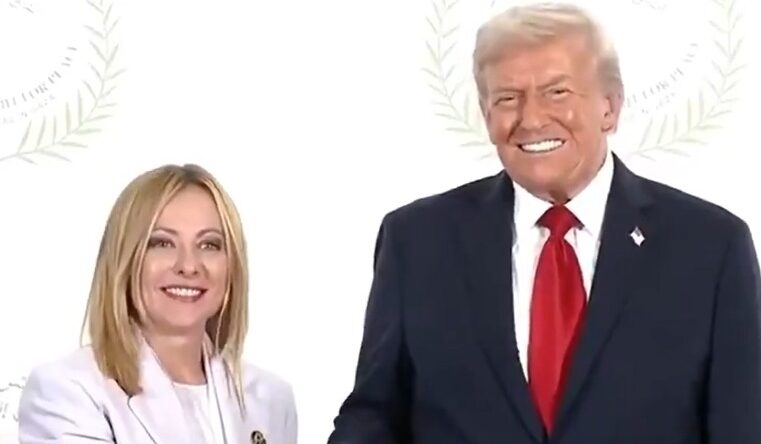
Estonian Prime Minister Kristen Michal called the Patriot licence decision “huge” and described the summit overall as “positive.” Italian Prime Minister Giorgia Meloni, still smarting from her public falling-out with Mr Trump, chose to channel Edith Piaf: “I regret nothing,” she said. “The (…) conviction that the west should be united (is) not a strategy I put into motion with Donald Trump,” the Italian PM remarked.
The limits of solidarity
Not sold on love, the European Commission pushed back on Iran during its daily press briefing in Brussels. Commission spokesman Anouar El Anouni was unequivocal: “It is clear that only and only diplomacy can bring about a sustainable solution to all outstanding issues. It is crucial that all actors fully respect the ceasefire, implement the UN Security Council Resolution 2817 and refrain from actions that endanger the ongoing diplomatic process.”
When pressed on whether the Commission considered the ceasefire still in force, Mr El Anouni did not waver — or answer. “I think our position is quite clear and does not leave any room for confusion,” he said. “It is crucial that all actors fully respect the ceasefire.”
Mr Trump also used the summit’s margins to reopen two other fronts with Europe. He repeated his claim that Greenland should come under American control, and made remarks about Spain that suggested he was considering severing trade relations with Madrid.
A cordial room, a fractured alliance
Commission spokesman Olof Gill addressed both. On Greenland, he was direct: “Greenland is an autonomous territory in the Kingdom of Denmark. Decisions about the future of Greenland are for Greenlanders and Danes to decide. Territorial integrity, national sovereignty and inviolability of borders are fundamental principles of international law. They are essential not only for the European Union, but for nations around the world. We will not stop defending them.”
On Spain and trade, Mr Gill was equally firm but more measured: “Trade between the European Union and the United States is deeply integrated and mutually beneficial. Therefore, it is in our mutual interest to safeguard this relationship. The Commission will always ensure that the interests of the European Union and all our member states are fully protected.”
If a moment comes where I consider it necessary to explain (what US-Spain trade spat may entail) in detail to you, I will do so. This is not that moment. — Olof Gill, European Commission spokesman
Asked what that meant in practice, however, Mr Gill declined to elaborate. “If a moment comes where I consider it necessary to explain that in detail to you, I will do so. This is not that moment,” he quipped.
What Ankara produced, in the end, was less a strategic realignment than a snapshot of an alliance navigating a US president who rewards loyalty, resents restraint, and makes policy in real time, on the go, at a whim. For Europe, the challenge remains the same as it was before the summit began: to build enough military and industrial capacity to matter to Washington. Given the climate surrounding the meeting, the Europeans’ eagerness to call it a success appeared justified.