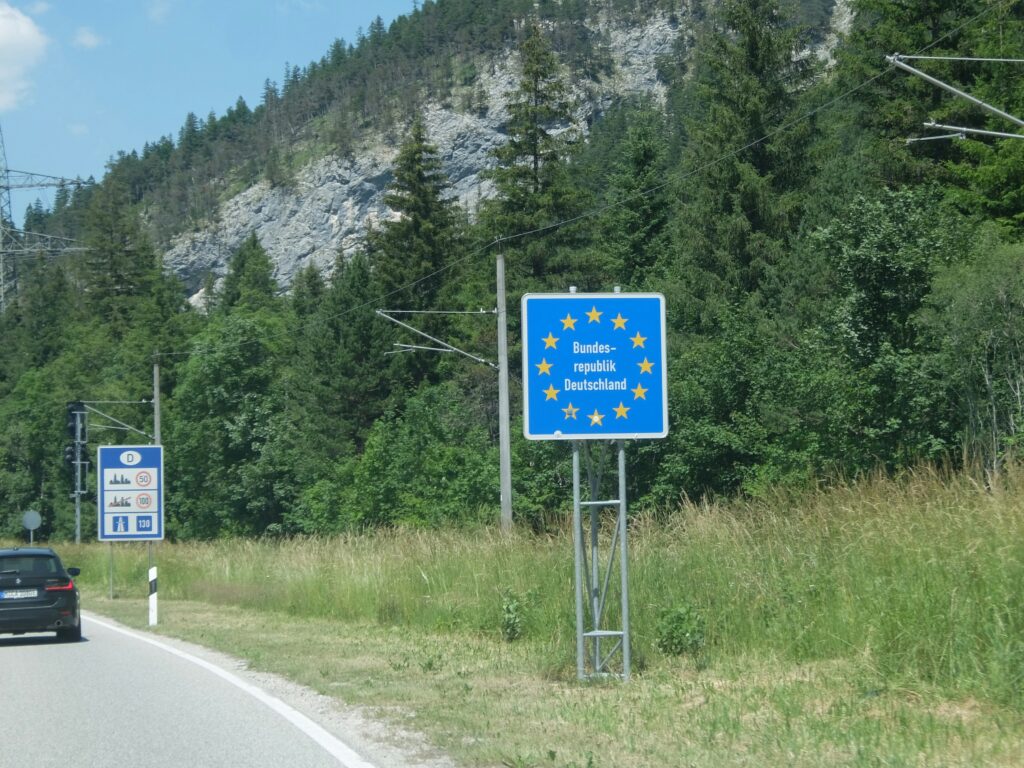
On the German-Dutch border, Schengen’s promise of a Europe without borders has turned deadly. Queues at German checkpoints have been linked to accidents. At least four people have died. More than ten have been injured. Berlin has extended the checks again. This is despite a court ruling an earlier extension unlawful.
Germany’s border controls were due to expire on 15 September. They will now remain in place until mid-March 2027. Berlin notified the European Commission of the extension on 19 August. The measure covers all nine of the country’s land borders.
“Border controls are one element of our reorganisation of migration policy in Germany,” Interior Minister Alexander Dobrindt said in February, when he announced an earlier extension. The line has defined Berlin’s approach ever since.
Deadly queues, daily chaos
The sharpest backlash has come from border towns on the Dutch side. In April, a seven-car crash near Babberich killed a 66-year-old man. Babberich is a village on the A12 motorway. Officials linked the pile-up directly to a tailback caused by the German checkpoint. Three more people were injured in a similar crash on the same stretch of road in July.
Rijkswaterstaat, the Dutch infrastructure agency, tracks accidents near the border. It recorded a 250 per cent rise on the A12 and A1 since the checks began in September 2024. Hubert Bruls, mayor of Nijmegen, has openly questioned whether the controls are even lawful. “If I may believe legal experts, it is not,” he told the Dutch newspaper Trouw.
Mayors take on Berlin
Mark Boumans, his counterpart in Doetinchem, has taken a similar line. He says Germany has failed to limit the side effects of its migration policy, and that this is no longer acceptable. Transport and Logistics Netherlands, an industry body, estimates the resulting delays have cost freight companies millions of euros.
Germany defends the checks as necessary. It cites continued irregular migration and pressure on its asylum system. A court in Koblenz disagreed. On 27 April, it ruled that the government’s justification for extending controls between 16 March and 15 September 2025 fell short. The Schengen Borders Code requires a substantiated, up-to-date threat assessment. The interior ministry said the ruling addressed a single case only. It did not mean border controls were unlawful more broadly. Berlin appealed and kept the checks running.
The Commission itself is treading carefully around this week’s announcement. Its spokesperson was asked about the new German notification at Thursday’s regular press briefing. He said Brussels would now assess it. It was too early to say anything further, he added.
A rulebook without enforcement
The pattern extends well beyond Germany. Nine Schengen countries are currently maintaining internal border controls of their own. Most cite irregular migration, smuggling networks or terrorism risks. Italy imposed checks on its air and sea borders with Spain in August. This followed the arrival of large numbers of migrants in the Spanish enclave of Ceuta.
In June, the Commission urged those nine countries to begin phasing out their internal controls. It argued that targeted spot checks and the newly rolled-out Entry/Exit System give authorities enough tools to manage security. Free movement across the bloc need not suffer, it said. A reformed Schengen Borders Code has been in force since 2024. It was meant to reinforce that logic. It caps border controls based on the same underlying threat at three years in total. Member states must submit substantiated risk assessments to Brussels.
The ruling was a strong signal for European integration.
— Dominik Brodowski, Professor of Criminal Law, Saarland University
For Dominik Brodowski, the ruling was about more than his own journey. The law professor brought the Koblenz case after being stopped at a rest stop on the A8 motorway, just inside Germany. He had taken a bus from Luxembourg to Saarbrücken, travelling home from an event marking the 40th anniversary of the Schengen Agreement. “The ruling was a strong signal for European integration, for European unification and also for Schengen law,” he said.
Whether that signal changes anything in Berlin is another matter. Checks are now locked in until March 2027. Families in Doetinchem and Nijmegen have little reason to expect the queues, or the risks that come with them, to ease before then.