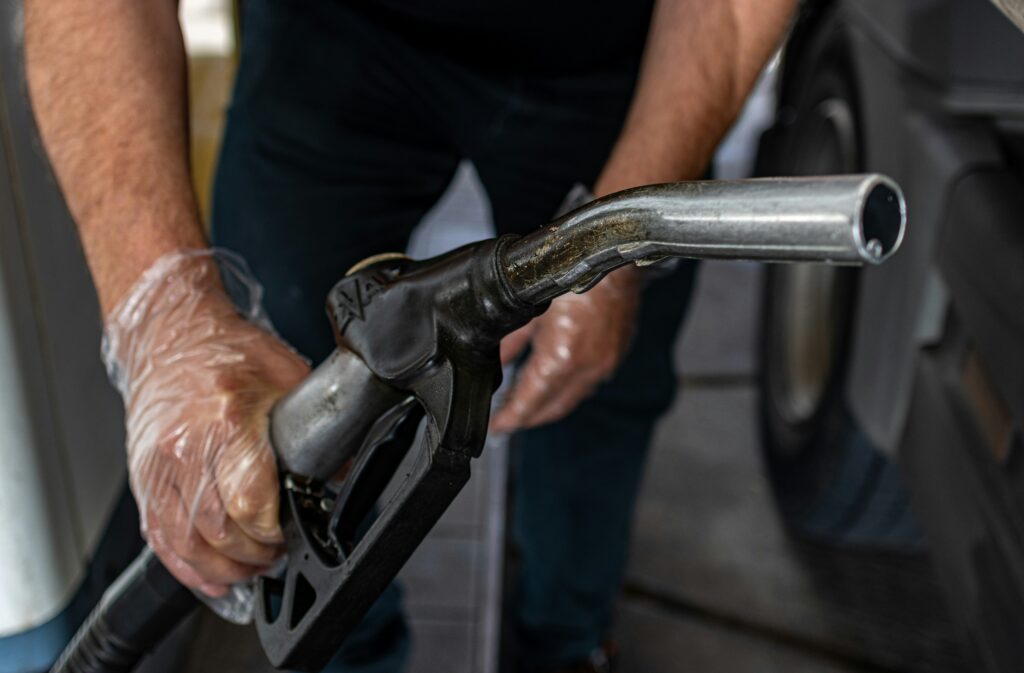
Europeans already pay record prices for diesel, and the next blow may come from their closest ally. Washington has told Germany and France to open their emergency tanks or risk losing American supplies. In August, half of the EU’s diesel imports came from the United States.
Washington wants 120m barrels of European diesel on the market within six months. A source in an unspecified European capital gave Reuters that figure, and the agency reported the demand on 1 October. According to three people close to the discussions, the sharpest message went to Berlin and Paris. They should draw down their emergency diesel reserves, or risk a US ban on diesel exports.
The pressure has a domestic motive. US diesel has climbed to $7 a gallon, and President Donald Trump’s Republicans face midterm elections in November. The White House is weighing a 90-day export ban to cool prices at home. “It is in Europe’s best interest to work with the United States as we pursue multiple pathways to boost the supply of refined products and lower costs for consumers,” a US official told Reuters.
Half of Europe’s imports at stake
For Europe, the threat comes at the worst possible moment. The US supplied half of the EU’s diesel imports in August, the European Commission confirmed. That dependence grew after the bloc banned Russian oil products in 2023. It deepened when the war with Iran choked shipping through the Strait of Hormuz, which used to carry about a fifth of the world’s oil.
Brussels pushed back as soon as the export ban idea surfaced. “We believe this is a bad idea,” Commission spokesperson Olof Gill said on 24 September. “We believe it potentially can have a negative impact on both sides.” He added that the EU expects close partners to consult each other before they take measures that affect shared markets.
Drivers already feel the squeeze. The average price of diesel in the EU hit €2.226 per litre on 21 September. That is the highest level since the Commission’s Weekly Oil Bulletin began tracking prices in 2005. From 1 October, Germany cuts fuel taxes by about 17 cents per litre until the end of December, at a cost of €2.5bn. When Berlin tried the same measure in May and June, the Ifo Institute found that fuel companies passed on only about 12 cents of the cut on diesel.
A ban would also hurt the US itself. American refiners are running close to full capacity to meet export demand. Analysts at S&P Global Energy CERA estimate that a ban could force them to cut output by roughly 2m barrels a day. The American Exploration & Production Council, an industry group, urged policymakers to reject this “short-sighted approach”.
Quarrel over unkept pledges
At the heart of the row lies a promise from March. Shortly after the US and Israel attacked Iran on 28 February, about 30 members of the International Energy Agency (IEA) agreed to release some 400m barrels from emergency stocks. The US pledged 172m barrels, and EU countries committed to about 20 per cent of the total. On 29 September, US Energy Secretary Chris Wright said that “several European member countries have released only a fraction” of what they had promised.
Washington’s own contribution comes with strings attached. The US offers its barrels as an exchange, which is a loan that companies must repay with a premium. Even so, its strategic reserve is set to fall to its lowest level since 1982. IEA chief Fatih Birol has played down the dispute and says two-thirds of the pledged oil has already reached the market. Europe still has room to act, though. France and Germany hold more than a third of the EU’s 39m tonnes of emergency diesel and gasoil stocks, according to Eurostat data from May 2025.
The immediate consequences would be even costlier supply scenarios for European consumers and additional costs for industries and energy operators.
— Francesco Sassi, assistant professor, University of Oslo
Brussels is in no hurry. Commission spokesperson Anna-Kaisa Itkonen said on 1 October that “there is currently no shortage of diesel in the EU”. She described the situation as an “affordability crisis” instead, declined to say how much of the March pledge member states have delivered, and stressed that any release is voluntary. The next move lies with the IEA, whose governing board meets on 2 October, while high-level contacts with the US administration continue. “The immediate consequences would be even costlier supply scenarios for European consumers and additional costs for industries and energy operators,” Francesco Sassi, a political scientist at the University of Oslo, told Euronews.