Finland built a housing system others envy. Now a Brussels accounting decision is quietly dismantling it.
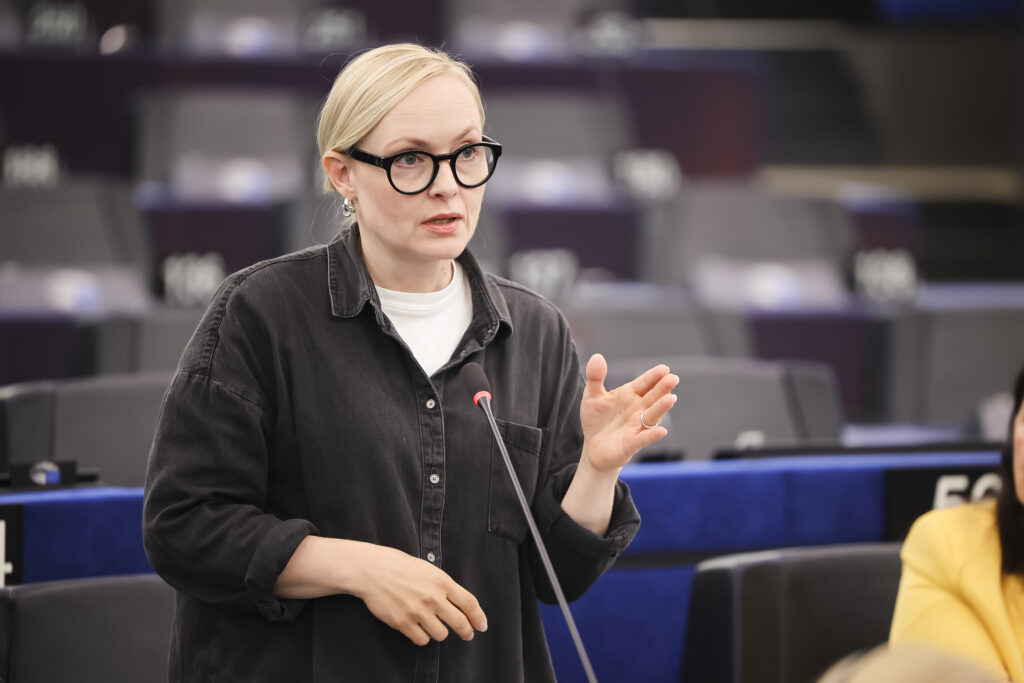
Finland needs up to 36,000 new flats a year, according to a Housing Europe report, yet the funding meant to build them is drying up. Finnish MEP Maria Ohisalo (Greens/EFA) has just returned from a field mission to her home country as a member of the European Parliament’s special committee on the housing crisis (HOUS). In this interview with EU Perspectives, she explains what other member states could learn from Finland’s ‘housing first’ model, and why Brussels is partly to blame for its funding squeeze.
What was the goal of your mission, and what impressed you the most?
If there’s one takeaway from this trip to examine housing challenges and innovative solutions, it’s the housing first principle. The core idea is simple: put people at the centre, and treat housing as a human right, combine housing and support services when needed.
Estimates suggest that when a person lives on the streets as long-term homeless, the cost to society is €40,400 per year. But once that person has a home, the use of support services falls over time and the cost to society roughly halves.
Finland has succeeded in building a healthy housing mix, meaning private housing, public affordable housing, and right-of-occupancy housing, and often within the same neighbourhoods, to prevent segregation. And sustainability isn’t an afterthought: the sector makes more and more use of circular economy principles, invests in energy efficiency and renewable energy. And yes, even affordable housing can come with shared saunas!
What are Finland’s biggest challenges when it comes to housing right now?
Finland’s affordable housing production is weakening right now, a structural shift in housing policy is deepening the problem further. The current government has taken several steps to reduce tools that keep housing affordable, including cutting grants for investment, housing counseling, and accessibility improvements.
For example, as of this year, the state no longer subsidises the construction of new right-of-occupancy housing and state subsidised housing production in general is shrinking. Production of housing for special needs groups such as elderly and students is also too low. All this is coupled with narrowing eligibility for social housing to more strictly defined low-income groups, leaving many to struggle with housing.
But one of the main concerns related to the EU level, is Finland’s 2021 decision to move the interest subsidy loans funding social and affordable housing into the general government debt category (on-balance-sheet) which then became part of Finland’s EDP debt and deficit through a statistical reclassification, not because the state directly lends the money.
This reclassification added roughly €15 billion to Finland’s government debt, pushing the debt-to-GDP ratio up by about six percentage points, from 66% to around 72%, in a single year. This triggered a substantial real-world retrenchment in Finnish housing policy, and substantial impact on support for affordable housing.
What worries you most about this from an EU perspective?
The EDP situation in Finland exemplifies how accounting classifications can end up driving substantive housing policy outcomes rather than the reverse – housing need or policy evidence shaping the finance model.
It is unacceptable that a purely technical, statistical reclassification decision – made to align with ESA2010 accounting rules, has such a significant practical impact. The Commission should wake up to this fact as well.
What’s next for the HOUS committee, and why was its mandate extended?
Effective and rapid action at EU level is a must to address the housing crisis, which is preventing millions of people from having affordable, sustainable and decent housing, no matter how hard they work. The European Parliament’s special committee on the housing crisis was due to be shut down following the adoption of its report, but given the scale of the crisis, the European Parliament decided for the continuation of the work of the Special committee on housing until the end of the year.
We are opposed to backdoor deals grounded on power games by the biggest political groups. — Maria Ohisalo, MEP (Greens/EFA)
However, its mandate was lightly amended at the same time. I find it rather unfortunate that EPP Group pressed the S&D Group to accept a revision of the mandate of the special committee to focus on the “fight against squatting”, in exchange for accepting to prolong the mandate for a few months.
I do not believe that squatting is at the heart of the housing crises, and there could have been other issues, such as money laundering and lack of transparency in the sector, that could have merited more attention. The Greens voted in favour of prolonging the mandate, but we expect democratic and transparent procedures for any further decisions regarding the management of this committee, and are opposed to backdoor deals grounded on power games by the biggest political groups.