Lithuania, Latvia and Estonia have taken matters into their own hands. After the EU removed Russian billionaires Alisher Usmanov and Mikhail Fridman from its sanctions blacklist, all three Baltic states have decided to impose their own national sanctions.
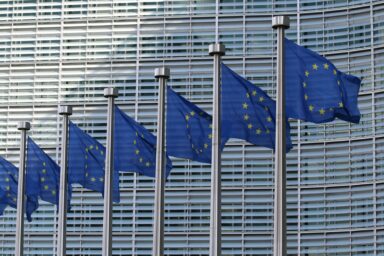
Tallinn announced its own sanctions after EU member states agreed on Tuesday to extend sanctions against almost 3,000 people and entities linked to Russia’s aggression against Ukraine. “A key outcome of this agreement is the extension of the sanctions regime from six to 36 months. This reduces the risk of sanctions renewals becoming the subject of political negotiations every six months,” Estonian Foreign Minister Margus Tsahkna welcomed the move.
The deal, however, also included the removal of Usmanov and Fridman from the EU sanctions list. “Estonia did not support lifting sanctions on these two prominent Russian businessmen, as they continue to support the aggressor and contribute to its aggression,“ Mr Tsahkna stressed. He formally confirmed the new sanctions by signing them on Wednesday.
Riga imposed national sanctions on both men on Tuesday, immediately after their removal from the EU list, to ensure there was no interruption in the restrictions.
“The national financial restrictions are essentially the same as the targeted financial sanctions previously imposed by the EU: the funds and economic resources of the individuals must be frozen, and no new funds or economic resources may be made available to them, directly or indirectly. This also applies to legal entities owned or controlled by the individuals,” Latvia’s Financial Intelligence Unit said.
Kyiv welcomes the move
Vilnius also opposed the removal of both billionaires during the negotiations on extending the sanctions. On Wednesday, Lithuanian Foreign Minister Kęstutis Budrys asked for both men to be added to the country’s national list of people barred from entering Lithuania for five years. The government is also preparing legal steps to freeze their financial funds and economic resources.
“Oligarchs are part of Russia’s war machine. The regime’s ‘wallets’ must not be allowed to feel at ease in Europe while Ukrainians are being killed,” Lithuanian Prime Minister Mindaugas Sinkevičius wrote.
Ukrainian Foreign Minister Andrii Sybiha welcomed the move by the three Baltic states. He called the removal of the two men from the blacklist “shameful and indefensible”. “We urge all other EU members to follow the example of our Baltic friends and do so as well. This is the best way to demonstrate that principles are not for sale,” he wrote in response to Lithuania’s decision.
How Usmanov and Fridman came off the EU list
The removal of Usmanov and Fridman followed several days of negotiations. France pushed to remove Usmanov from the list, citing “national security”. Luxembourg then demanded the same treatment for Fridman, who is pursuing a dispute with the country over the freezing of his assets and is seeking around $16 billion in damages.
According to diplomats cited by media, France linked its position to the case of two French nationals detained in Azerbaijan. The sources said Azerbaijan had put pressure on Paris over the Usmanov case. Baku rejected the claim.
Yet a day after the deal was reached, Azerbaijani President Ilham Aliyev pardoned French national Martin Ryan. Ryan had been serving a 10-year prison sentence in Baku for espionage since March.
Latvia was the last country to oppose the lifting of sanctions on both oligarchs. In the end, however, it abstained, as did its Baltic neighbours. That allowed a compromise to go through without putting the extension of sanctions on thousands of other people and entities at risk.
Some European officials have also warned that removing two prominent names could set a precedent for further attempts to weaken the sanctions regime in pursuit of national interests.