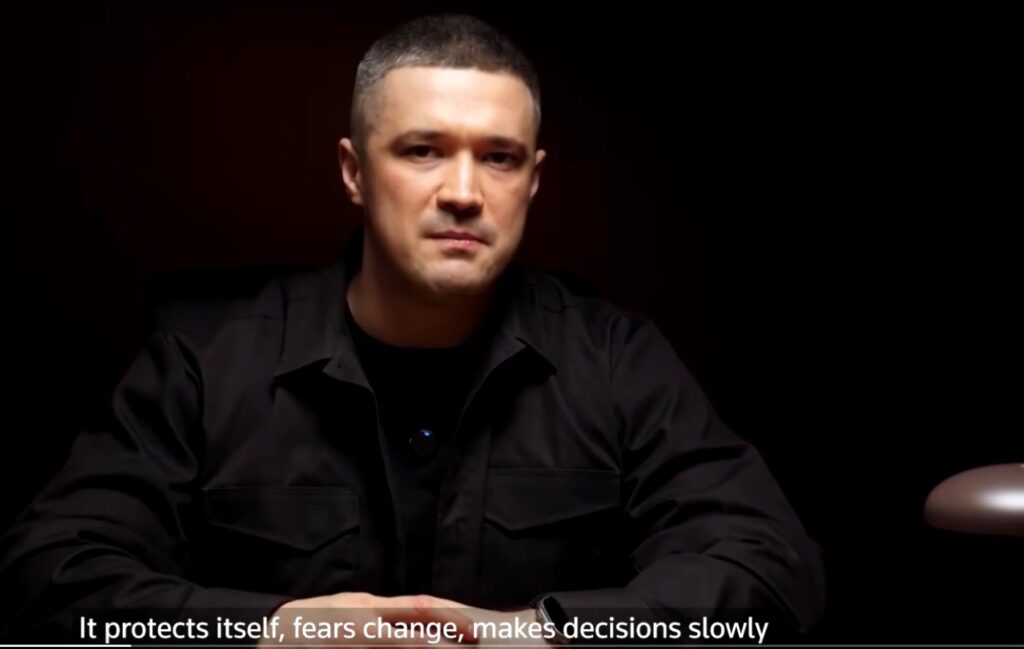
The EU is demanding answers from Kyiv. Mykhailo Fedorov’s challenge to Volodymyr Zelenskyy is only making that harder to avoid.
The political rupture between Ukrainian President Volodymyr Zelenskyy and his former defence minister, Mykhailo Fedorov, began as a domestic affair. It has not stayed that way. Brussels funds Kyiv heavily, coordinates defence procurement with it, and is midway through accession talks. A wartime leadership crisis in Kyiv is, by extension, a problem for the EU.
Mr Fedorov, a former digital transformation minister credited with driving Ukraine’s drone and defence-technology push, served only about six months at the defence ministry. His dismissal triggered protests across Ukraine. Mr Zelenskyy’s office has offered no explanation for the move.
‘Systemic failures’
The Kyiv Independent covered the dismissal as breaking news, highlighting public anger and the first calls for street protests. The story quickly migrated to global headlines, with Brussels media running headlines like “Fedorov demands elections”.
In a nine-minute YouTube address, Mr Fedorov accused the Zelenskyy administration of systemic failures and corruption. His language was direct. “Democracy is not a peacetime luxury,” he said. “Democracy is part of what we are fighting for today.”
He also challenged the logic of indefinite wartime rule. “We must not let Putin decide when Ukrainians can choose their government,” Fedorov said. “Ukrainian democracy must not depend on the goodwill of the Kremlin.”
His critique went beyond elections. He attacked the culture of appointments inside the Ukrainian state. “It is particularly dangerous when society develops the feeling that the main criterion for an appointment is not professionalism . . . but personal loyalty to the system,” he said. “A modern state cannot function this way.”
Brussels reads the signals
Reuters argued that Mr Zelenskyy’s shake-up “puts EU paymaster in tight spot,” framing the episode as a question of accountability, not just personnel politics. The EU funds Kyiv heavily and wants explanations for decisions that affect how that money is spent and managed.
Others reported that Brussels was “surprised” by the dismissal and noted growing concern that removing a tech-savvy minister could damage drone cooperation and other defence industrial work. Several EU capitals with bilateral defence deals with Kyiv registered the reshuffle with unease.
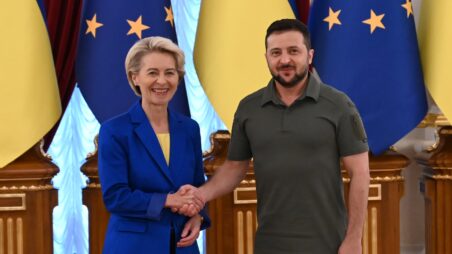
European Commissioner Andrius Kubilius stressed his long working relationship with Mr Fedorov and the need to keep funding flowing, according to Reuters. The EU, the report said, planned to ask Zelenskyy directly what had led to the decision — a rare and pointed diplomatic signal.
An already strained relationship
The Fedorov episode did not land in calm waters. Some described EU-Ukraine relations as already tense over fast-track accession, with some in Europe growing tired of Mr Zelenskyy’s pressure for quicker membership. A former Ukrainian official told the outlet that wartime relations were at a low point.
Putin would use the vulnerability of Ukraine during the election campaign to his favour. — Oleksandr Merezhko, chair of Ukrainian parliament’s foreign policy committee
Euronews and Interfax both reported friction over how far EU partners should go in adapting membership rules for Ukraine. The pattern is consistent: strong support in principle, but increasing impatience with Kyiv’s demands and internal choices.
That impatience now has a sharper edge. Mr Fedorov’s public challenge—and Mr Zelenskyy’s silence in response—forces Brussels to ask questions it would rather not have to ask during a war.
The democratic question
Mr Zelenskyy has long argued that elections cannot be held during a ‘hot phase’ of the war, a position that Ukrainians overwhelmingly support. Martial law, imposed after Russia’s full-scale invasion in February 2022, has kept both the president and parliament in place beyond their typical five-year terms .
Mr Fedorov does not dispute the difficulty. “How should a state function if the war lasts for years?” he asked. “What if the war continues for another year? Two? Three?” He called for a legal and realistic mechanism to restore democratic process even amid prolonged conflict — including voting rights for soldiers, citizens abroad, and people in frontline areas.
Oleksandr Merezhko, an MP in Mr Zelenskyy’s party and chair of parliament’s foreign policy committee, pushed back hard. He argued, also quite plausibly, that the only winner of a wartime election in Kyiv would be Russian President Vladimir Putin. “Putin would use the vulnerability of Ukraine during the election campaign to his favour,” he wrote
What the media landscape reveals
Ukrainian mainstream outlets, including LB.ua and Glavcom, treat the episode as an unprecedented but containable wartime political crisis. They give roughly equal space to Mr Zelenskyy’s aides, who cite command-and-control problems, and to Mr Fedorov’s camp, which blames old-guard resistance.
Opinion pages are less measured. Political scientist Volodymyr Fesenko, writing for Radio Svoboda, claims Mr Zelenskyy “will never bring Fedorov back,” because war (not internal rivalry) remains the decisive factor for voters. Veteran columnist Vitaliy Portnikov, on Espreso TV, is more dismissive of Mr Fedorov’s ambitions, claiming he remains “a courtier of Zelenskyy” leveraging personal popularity rather than building an independent movement.
Democracy is not a peacetime luxury. Democracy is part of what we are fighting for today. — Mykhailo Fedorov, Ukraine’s ex-defence minister
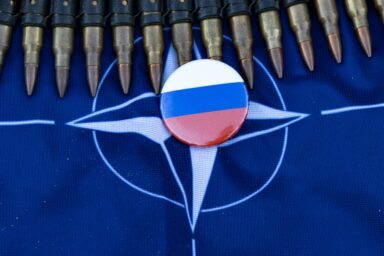
Fringe voices amplify the split in predictable directions. Russian Telegram channels, with their trademark capacity for courteous understatement, portray it as a “civil war inside Kyiv”. Far-left platforms call both factions servants of NATO. Mr Fedorov’s own Telegram channel (which drew 650,000 views on his 18 August video alone) functions as a de-facto campaign blog, setting narratives that mainstream outlets then chase.
What Brussels must decide
The EU faces a dilemma it did not invite. It cannot be seen to take sides in Ukrainian domestic politics. It also cannot pretend that a wartime leadership crisis in Kyiv has no bearing on the billions it commits, the defence projects it co-funds, or the accession process it manages.
The three lenses through which EU media read the situation — trust, continuity of defence cooperation, and the accession debate — are not separate problems. They converge on a single question: whether Brussels can maintain a coherent partnership with a Kyiv that is visibly divided over who should lead it, and on what terms.
None of the coverage suggests a collapse in EU-Ukraine ties. But several outlets note that the move will force Brussels to seek reassurances. In wartime, that is never an easy task.