Europeans broadly accept the need for climate action, but that does not mean they are willing to change how they travel or heat their homes. Eurofound finds that north-western countries are better prepared to design green policies around how people actually make decisions, while much of Central and Eastern Europe is only beginning to catch up.
Around 84 per cent of EU citizens agree that climate change results from human activity, while 94 per cent recognise an urgent need to adapt. Yet support does not automatically show in their everyday behaviour: how they save energy, choose sustainable options or respond to environmental policies. Cost, convenience, habits and trust often matter more than good intentions.
The new Eurofound study therefore examines whether governments use behavioural evidence when designing climate measures. Its central finding is stark: 17 of the 28 countries assessed—the EU member states plus Norway—have little or no institutional capacity for green behavioural public policy. This can include small “nudges”, but also simpler grant applications, better-timed incentives and services designed around how people actually make decisions.
Climate risk and government capacity do not match
Established behavioural research capacity is concentrated in Denmark, Finland, France, Germany, Ireland and the Netherlands. Much of Central and Eastern Europe has little identifiable expertise, while other countries rely on isolated projects or university research rather than permanent government teams.
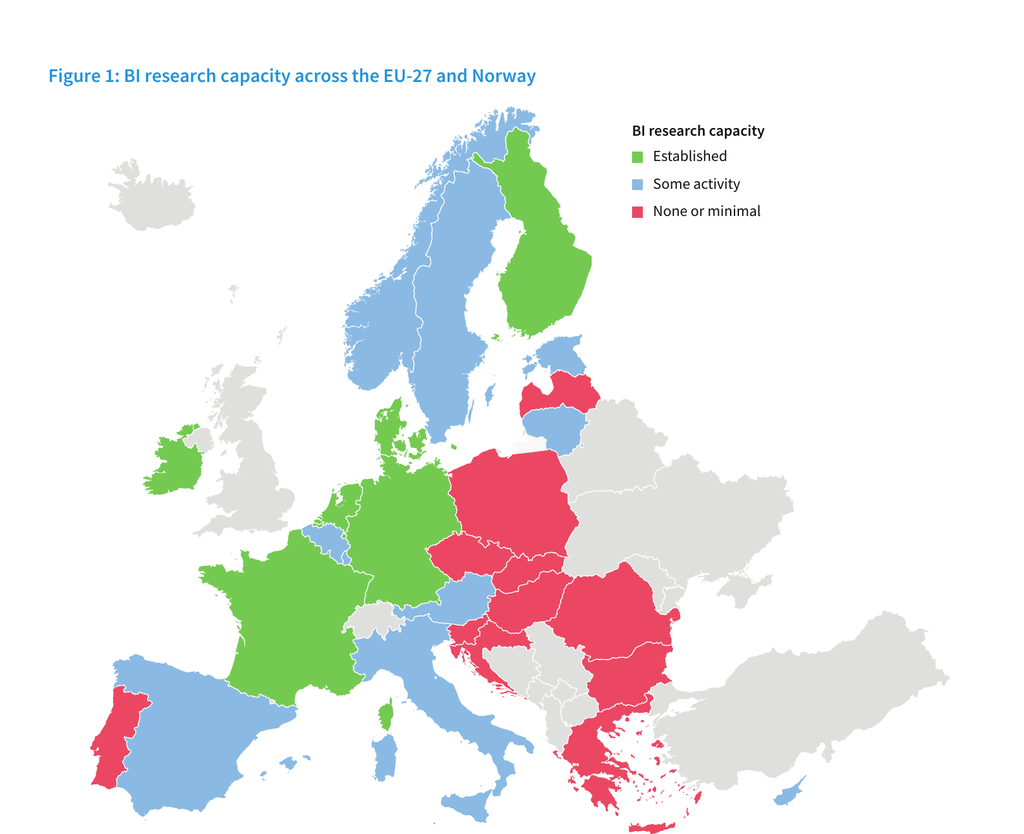
Behavioural-insights research capacity across the EU and Norway. Source: Eurofound, Mapping green behavioural public policy in the EU (2026), authors’ elaboration.
Possessing expertise does not guarantee that governments use it for climate policy. Italy and Spain have behavioural research capacity that is not yet fully directed towards environmental objectives. In Lithuania, Portugal and Slovenia, useful academic findings rarely develop into lasting government programmes.
The mismatch is greatest in southern Europe. Greece and Portugal face serious threats from heat and prolonged drought but show limited capacity and application. Some of the countries most in need of effective adaptation policies are therefore among the least equipped to design them around people’s real circumstances.
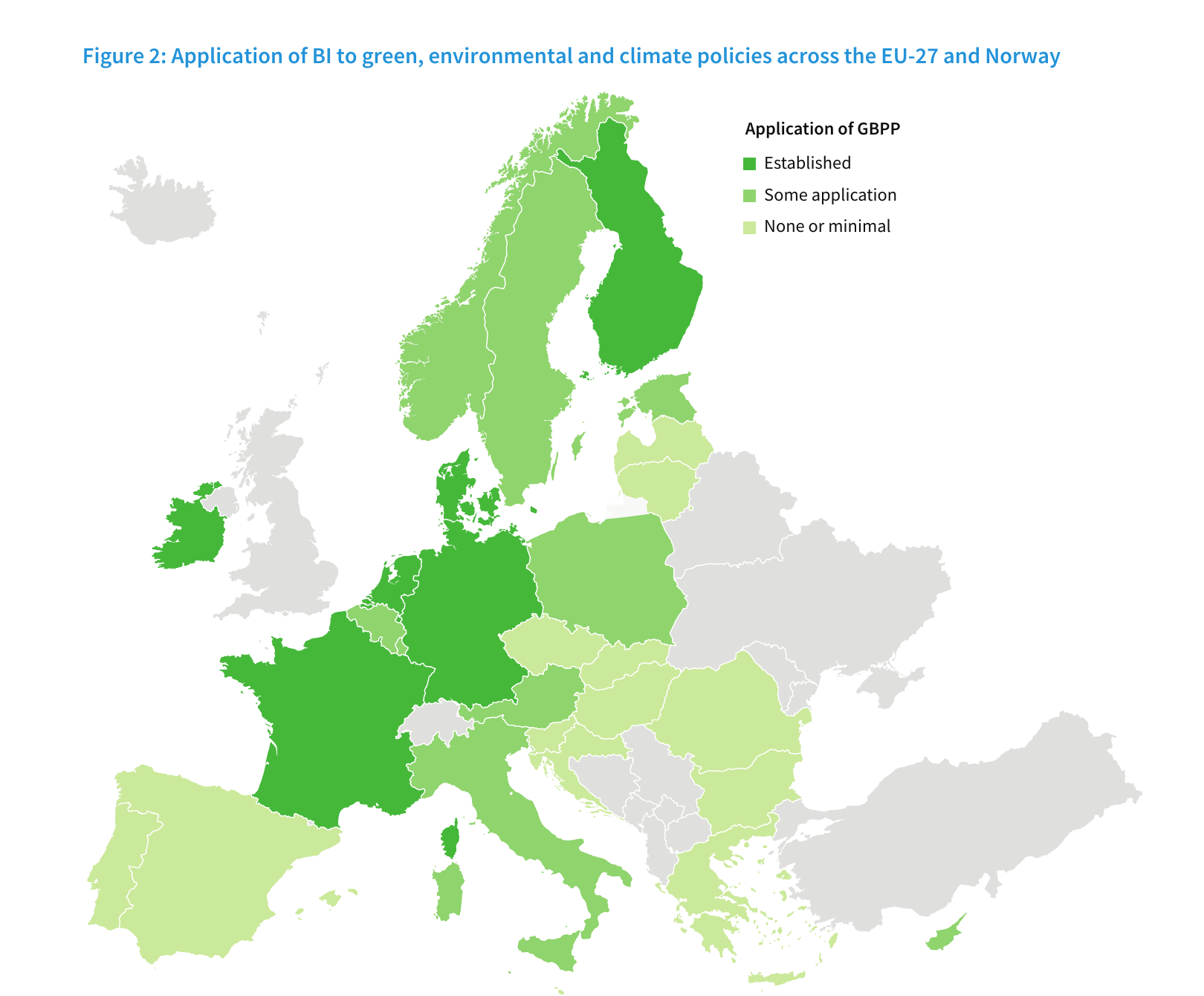
Application of behavioural insights to green, environmental and climate policy. Source: Eurofound, Mapping green behavioural public policy in the EU (2026), authors’ elaboration.
Ireland and the Netherlands lead a largely unprepared Europe
Eurofound placed Bulgaria, Hungary, Latvia and Romania in its lowest category, finding no identifiable behavioural capacity applicable to green policy. Another 13 countries, including Greece, Poland, Portugal and Spain, remain at the initial stage.
Ireland and the Netherlands are the only countries in the highest category. Both use behavioural evidence across institutions, coordinate work between ministries and repeatedly evaluate whether interventions work. Denmark, Finland and France have formally embedded expertise, while Germany and Sweden remain at the project-based stage despite their stronger research capacity.
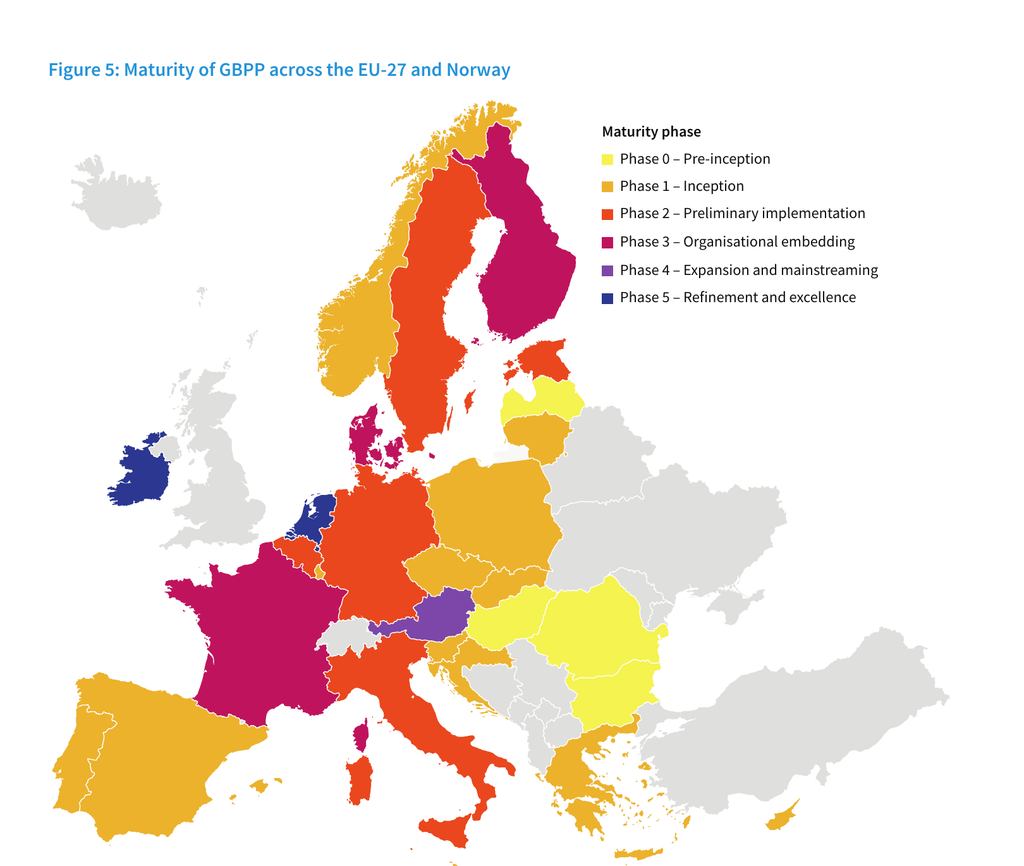
Maturity of green behavioural public policy across the EU and Norway. Source: Eurofound, Mapping green behavioural public policy in the EU (2026), authors’ elaboration.
Progress can also disappear. Austria appears in the second-highest category because of its previous capacity, but its dedicated behavioural unit closed in 2024. Estonia subsequently merged its expertise into a broader department. The comparison shows that a successful team does not become permanent unless behavioural evidence becomes part of routine policymaking.
From free bicycles to forms that people can understand
Finland tested what happens when sustainable alternatives appear at the right moment. Customers received an electric bicycle free of charge while their cars underwent maintenance, increasing their willingness to adopt an e-bike by 88 per cent. Researchers also proposed sending preloaded public-transport cards to older people when retirement, moving home or surrendering a driving licence disrupted their usual routines.
Cyprus demonstrates the opposite problem. More than 55 per cent of the intended beneficiaries of renewable-energy grants failed to access them. Complex online forms, technical language and uncertainty about reimbursement discouraged households already struggling with energy costs. Researchers recommended pre-filled applications, one-page explanations and assistance from trusted welfare officers. As the report warns, “where citizens doubt the fairness or competence of public authorities, even well-designed behavioural interventions will struggle to take hold”.
Denmark found only 1.08 people travelling in the average car, while genuine carpooling with people from another household accounted for less than one per cent of journeys. A ten per cent increase in carpooling could cut annual emissions by approximately 200,000 tonnes, but commuters valued flexibility and the “mental free space” of driving alone. Researchers proposed integrating private journeys into public-transport booking systems, particularly in rural areas where running empty buses makes little sense.
Luxembourg uncovered a different barrier: people underestimated how much support green policies already enjoyed. Participants believed that only 36 per cent of the public supported strict rules on meat consumption, when the real figure was 64 per cent. Revealing that difference increased support for regulation and contributed to lower reported meat consumption.
Nudges cannot rescue a badly designed policy
A five-country project tested energy-saving apps, targets and real-time feedback among 472 households. In Germany, nudges increased the use of self-generated solar power by 3–4 per cent, rising to 16 per cent among the most engaged participants. In Portugal, they improved window-opening behaviour and indoor air quality but did not significantly reduce electricity consumption.
Where citizens doubt the fairness or competence of public authorities, even well-designed behavioural interventions will struggle to take hold. — EUROFOUND Report
Croatia exposed the limit of the entire approach. Regulations could penalise households for generating too much electricity, encouraging them to restrict renewable production. No reminder, dashboard or carefully worded message could compensate for a system rewarding the wrong behaviour.
By contrast, the Netherlands has moved beyond isolated nudges. Although 80 per cent of Dutch residents consider climate action necessary, only 55 per cent report changing their daily lives. Its climate plan proposes one-stop renovation services, simpler processes and targeted support so that green subsidies do not primarily benefit households already able to afford heat pumps, insulation or electric vehicles.
Behavioural policy cannot replace infrastructure, regulation or financial assistance. Its purpose is to make those policies usable. The most important divide on Eurofound’s maps is therefore not between Europeans who care about climate change and those who do not. It is between governments designing policies around real human behaviour and those assuming that announcing a measure is enough.