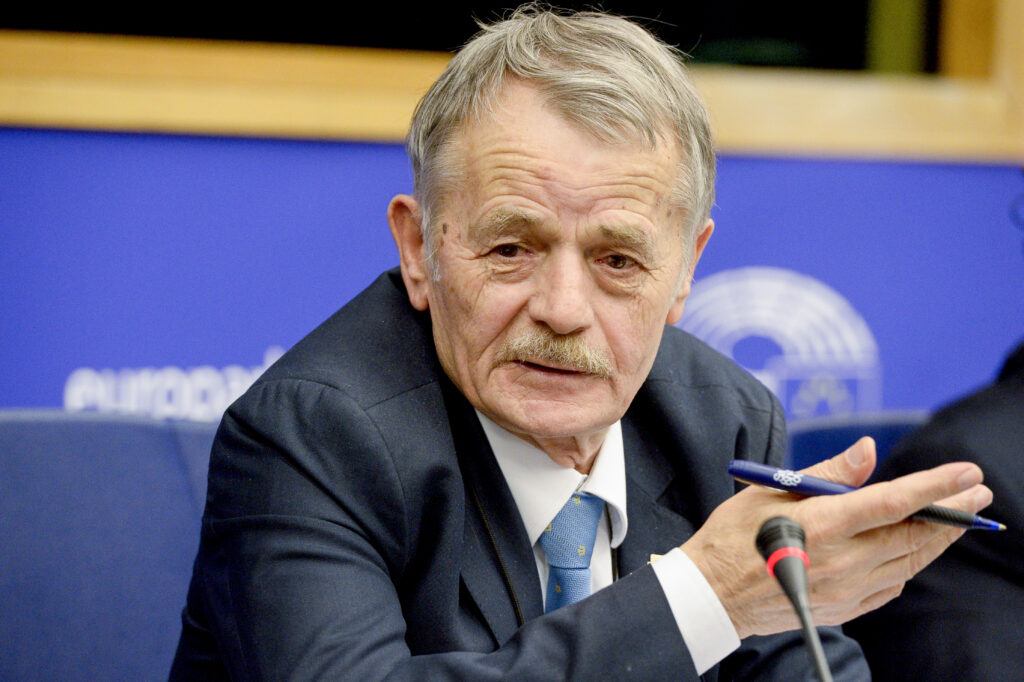
Crimean Tatar leader Mustafa Dzhemilev, a lifelong advocate of non-violence, said peaceful diplomacy had proved unable to stop Vladimir Putin. At the sixth Crimea Platform summit, he accused Ukraine and its allies of responding too weakly when Russia seized the peninsula in 2014, arguing that their hesitation encouraged the full-fledged war.
“I have adhered to the principle of non-violence throughout my entire life,” Mr Dzhemilev, whose community is indigenous to Crimea, said. “But now it is quite clear that peaceful and diplomatic methods are practically powerless to stop Putin’s Russian fascism.”
Wednesday marked the 4,599th day of Russia’s occupation of Crimea, he noted. The number would never have reached four digits if Kyiv and the international community had acted more decisively in 2014, Mr Dzhemilev argued.
The sixth International Crimea Platform summit brought more than 60 participants, including 16 national leaders, to the United Nations in New York, according to Ukrainian President Volodymyr Zelenskyy.
“Almost no one in the world believes in international law anymore,” Mr Zelenskyy said. “But we still do not want these words to lose their meaning completely. We want international law to have real force.”
Crimean Tatars were urged to avoid armed resistance
Mr Dzhemilev recalled that thousands of young Crimean Tatars had expressed readiness to resist alongside Ukrainian military units in 2014. However, Kyiv and foreign governments urged them to avoid actions that could cause bloodshed. They promised that diplomatic pressure would secure Crimea’s liberation.
Ukrainian forces subsequently withdrew from the peninsula. “This stance of the Ukrainian authorities and our Western allies greatly emboldened Putin to carry out further seizures of Ukrainian territory,” Mr Dzhemilev said.
Responding to the Kremlin’s expansionist rhetoric, he offered a deliberately provocative alternative: “Russia’s borders end wherever it gets punched in the teeth.” He called for considerably greater military support, particularly air-defence systems protecting Ukrainian civilians from Russian missiles and drones.
European leaders reject a territorial bargain
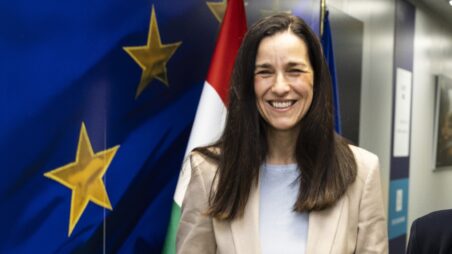
European Parliament President Roberta Metsola said Russia’s control of occupied territory could never create a legal right to possess it. “Force may give you possession, but it can never give you title,” she said. “No illegal referendum, no imposed passport and no sham election can change that.”
Ms Metsola said almost four million Ukrainians were living under occupation, where they faced detention, torture, disappearances and violence. Children were being deported, subjected to Russian re-education and militarised, while Crimean Tatars faced systematic persecution.
The EU has adopted 21 sanctions packages against Russia. Ms Metsola said Parliament would continue pressing to close loopholes and prevent companies or governments from circumventing the restrictions.
Now it is quite clear that peaceful and diplomatic methods are practically powerless to stop Putin’s Russian fascism.
— Mustafa Dzhemilev, Crimean Tatar leader
Austrian President Alexander Van der Bellen warned that “Ukraine must not become the subject of a transactional deal”. Czech President Petr Pavel similarly said that “no durable peace can be built on the acceptance of territorial conquest by force”.
The presidents of Latvia, Lithuania, Estonia, Montenegro and Slovakia also reaffirmed that they would not recognise Russia’s annexation. Estonian President Alar Karis said the wider question was whether aggression could “simply wait for the world to grow tired”.
Black Sea proposal awaits Moscow’s response
Mr Zelenskyy also announced that Egypt, India and Türkiye had submitted proposals intended to restore safer shipping and food exports through the Black Sea. He said Kyiv had agreed to a possible path forward and was waiting for Moscow’s answer, although he did not disclose the details.
“Ukraine is ready to do its part to ensure calm, safe shipping and food security in the Black Sea if Russia is ready to take real steps towards de-escalation too,” he said.
Kyiv previously proposed that both sides stop attacking civilian vessels. Mr Zelenskyy connected the disruption to Crimea, which Russia has transformed into a military base. Without the occupation, he argued, grain, fertiliser, diesel and oil could move more freely through the Black Sea.
Ukrainian authorities say 316 people in occupied Crimea currently face politically motivated prosecution, including 169 Crimean Tatars and one Karaite. The figures underline why speakers insisted that the summit was not only about territory, but also about people living under Russian rule.