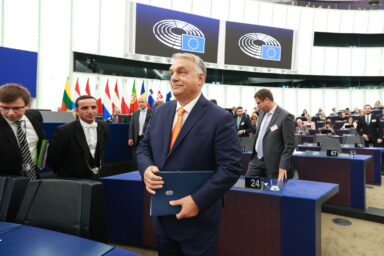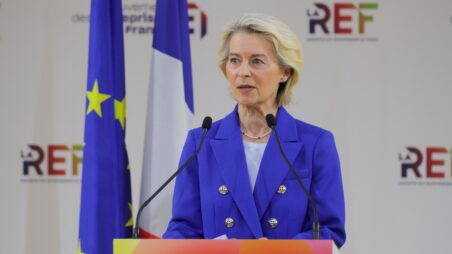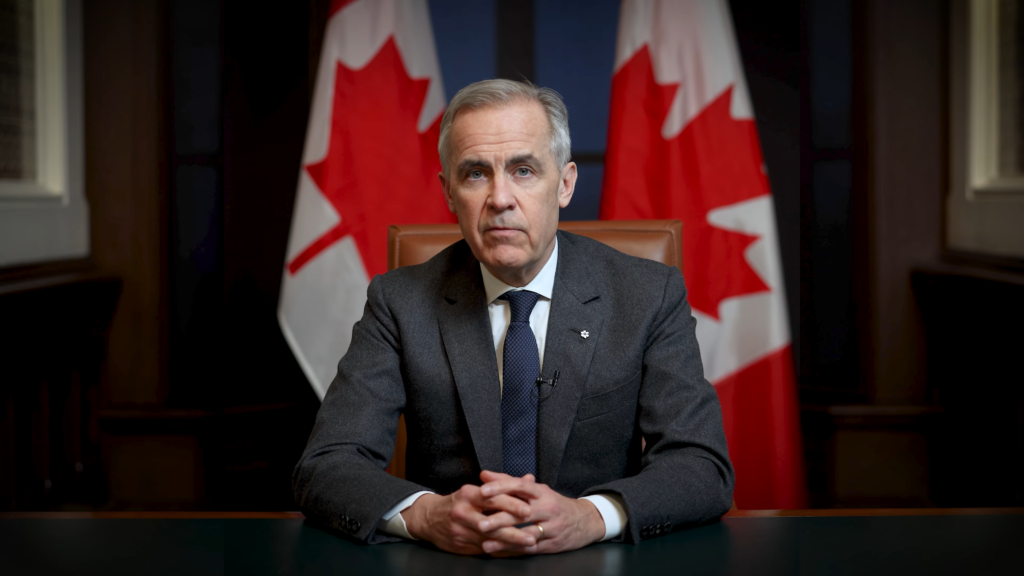
Mark Carney, Prime Minister of Canada, arrives in Strasbourg today as the first sitting head of government ever invited to attend the EU’s State of the Union in person. Tomorrow he sits as a guest while Commission President Ursula von der Leyen delivers her address. On Thursday, he takes the floor himself to address lawmakers directly.
Guests of honour at the address are usually drawn from civil society, not from sitting governments; the most memorable recent example was Olena Zelenska in 2022. Inviting a serving prime minister, and one from outside Europe altogether, marks a departure from that pattern. European Parliament President Roberta Metsola issued the invitation before the worst of the current turmoil between Canada and the United States broke out. Its timing today, though, reads as a statement about who the Union chooses to stand beside.
A pointed invitation
For the Commission and Parliament, the visit fits a wider push to diversify partnerships beyond Washington. Canada joined the EU’s €150bn Security Action for Europe (SAFE) defence procurement fund earlier this year, becoming the first non-European country admitted to the scheme. Brussels has also been negotiating improved access to Canadian lithium, nickel, and graphite, materials the bloc badly needs to reduce its reliance on Chinese supply chains.
Mr Carney’s presence gives those technical steps a public face. His government has pledged to open “intensive discussions” this autumn on a broader economic and security partnership, ahead of a full EU–Canada summit planned for 29 and 30 October in Montreal. Officials on both sides describe this week’s appearance in Strasbourg as the political curtain raiser for that agenda.
The backdrop in Washington
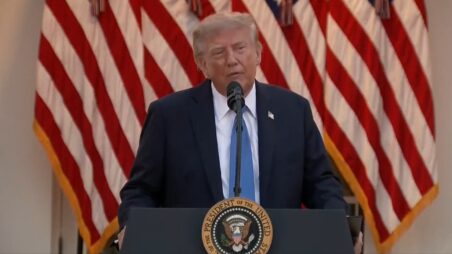
The visit follows the collapse of trade talks between Ottawa and Washington three weeks ago. Mr Carney said the United States made last minute demands to restrict Canada’s ability to strike deals with other countries and pushed to weaken protections for French language media, a red line for Quebec. Hours later, President Donald Trump’s 50 per cent tariffs on roughly $20bn of Canadian goods took effect; Canada responded with matching duties of 15 to 50 per cent on American steel, dairy, and electronics.
In a more dangerous and divided world, Canada and our European partners are moving ever closer. — Mark Carney, Prime Minister of Canada
Mr Trump has also repeated his suggestion that Canada become the 51st US state, prompting Mr Carney to describe the relationship as effectively “at war” on trade. Announcing the visit, he framed it as part of a broader reorientation: “In a more dangerous and divided world, Canada and our European partners are moving ever closer,” said Mark Carney, Prime Minister of Canada.
What the EU gets out of it
Brussels has every reason to welcome the attention. The EU is already Canada’s second largest trading partner, worth roughly $178bn in 2025, and a closer partnership would give the bloc a reliable supplier of critical raw materials just as it tries to cut dependence on China.
That said, EU officials are careful to draw a line between partnership and membership. Bruegel senior fellow Guntram Wolff has noted that strategic alignment “could go far,” but accession remains legally closed: Article 49 of the Treaty on European Union restricts membership to European states. Whatever goodwill Strasbourg generates this week, Canada is not about to become a member of the bloc.