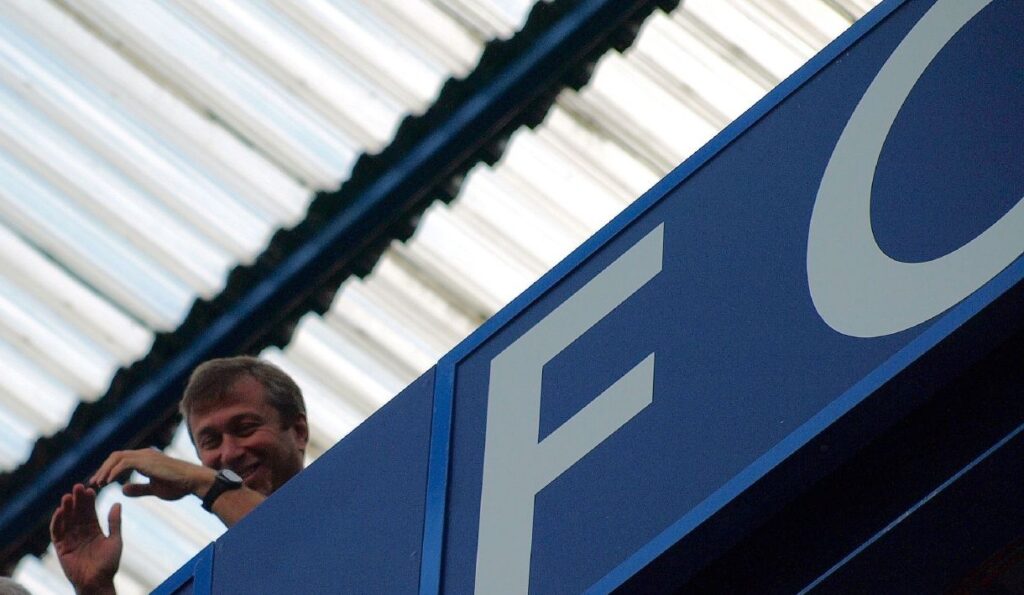
The General Court rejected the request by Roman Abramovich, an influential Russian businessman, to remove him from EU sanctions list. His name stays there; his assets remain frozen; his travel ban stands, too.
The court dealt with a request to decide whether it was lawful for the EU to keep Roman Abramovich on its sanctions list. It means his assets stay frozen and he cannot travel to EU countries. Mr Abramovich argued, through several legal angles, that the sanctions against him were wrong.
He claimed that he does not qualify as an “influential businessman operating in Russia” or as someone whose business activities provide “a substantial source of revenue to the Russian government” — the two definitions the EU uses to justify listing him. The legal criterion used to list him (the so-called “g-criterion”), he said, was itself unlawful and should not apply to him at all.
A prominent target
Mr Abramovich also protested alleged procedural errors and vilation of his fundamental rights. Specifically, he had his human dignity on his mind, as well as, his freedom of movement as an EU citizen (he holds a Portuguese passport), and his right not to hold on to his property absent proper justification for seizure. He also had other fancy ideas, such as that the EU should pay him damages for the harm caused.
The court rejected all of it. His name stays on the list, his assets remain frozen, and his travel ban stands. The EU’s definition of who counts as a sanctionable businessman with ties to the Kremlin has now been undegrone a test, and it held. More broadly, it now counts as a valid legal tool for use against others in similar positions.
When the EU froze his assets and banned his travel in March 2022, within days of Russia’s full-scale invasion of Ukraine, Mr Abramovich became the most prominent target of Brussels’s sanctions regime. He found hsmlf on a list under Article 3(1)(g) of Regulation 269/2014. It was under the so-called ‘leading businesspersons’ criterion, which targets individuals operating in sectors that generate substantial revenue for the Russian state. His majority shareholding in Evraz, a steel and mining conglomerate whose products were later part of Russian military hardware, was the primary basis.
He went to court almost immediately. His first challenge, Case T-313/22, met dismissal in 2023. A second action, T-1105/23, failed in 2025. In both instances the General Court found that the Council had provided sufficient grounds for the listing and that the measures, though severe, were proportionate to the geopolitical circumstances.