Three companies, three conversations, three layers of the same armoured vehicle: the steel, the structure, the signal. And three very different relationships with the EU’s rearmament moment, EU Perspectives learned.
Europe is rearming, that much is not in dispute. Defence budgets across the continent have surged, Brussels has unleashed a cascade of new financing instruments: the European Defence Fund, SAFE, ReArm Europe. The political will to build a genuine European defence industrial base is, for the first time in a generation, something approaching real.
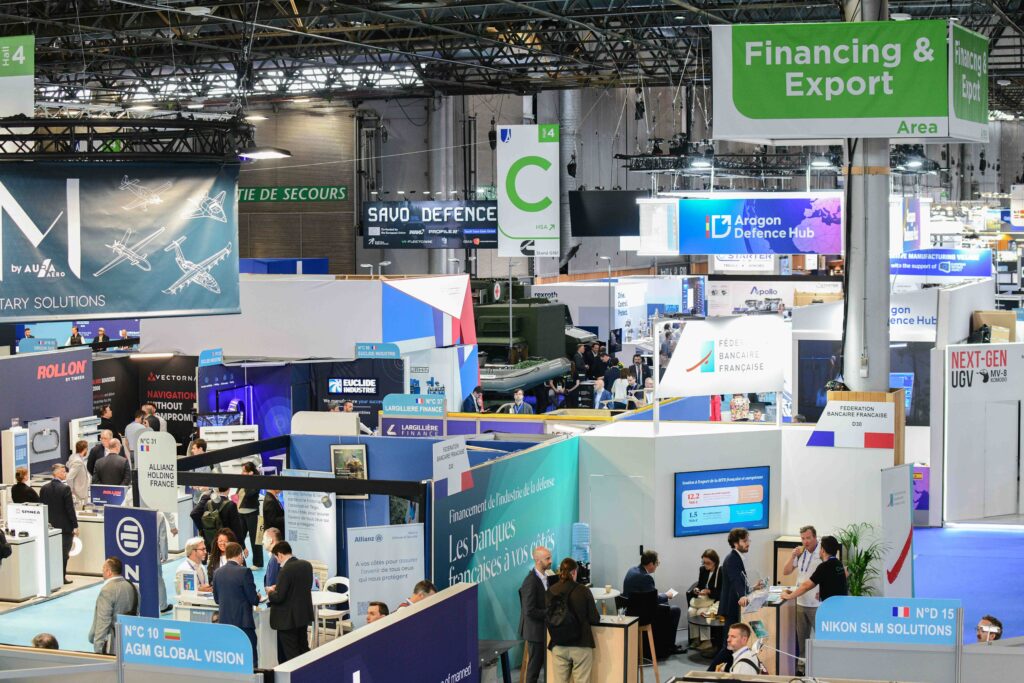
But what does all of this actually look like from the factory floor, the engineering lab, and the boardroom of a mid-sized communications firm? Three conversations at and around Eurosatory 2026, the world’s leading land and airland defence and security exhibition, offer a revealing, and occasionally sobering, answer.
Layer one: the steel beneath everything
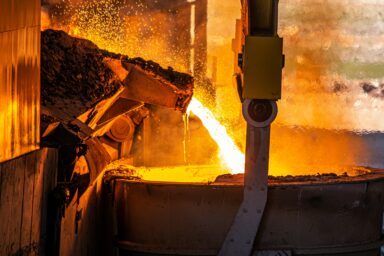
Every armoured vehicle begins as steel. And in the European defence supply chain, a great deal of that steel begins at SSAB, the Swedish steelmaker whose high-hardness Armox plates protect military vehicles from the Baltics to the Sahel. SSAB sales director Mikael Ringholm was willing to discuss his products at some length. His customers, however, were another matter entirely.
Which EU prime contractors is SSAB currently dealing with, beyond a publicly announced letter of intent with Rheinmetall; can we discuss that? “No,” said Mr Ringholm, with admirable economy. Pressed further, he elaborated — slightly. “We are extremely hesitant and restricted by the rules and regulations that we have. So it will be extremely little information that you can get from that perspective.”
What share of SSAB’s production capacity goes to defence? “That is classified. I’m sorry, that is classified.” Any pressure to prioritise certain customers or sign long-term framework contracts in the current surge environment? “Not at all.”
One could be forgiven for concluding that interviewing Mr Ringholm is a bracing exercise in the art of the closed door. But the silences are themselves informative. The company cannot discuss its customer list, cannot reveal its defence capacity share, and declines to engage with EU funding instruments. This is not because it dislikes them but because it does “not directly engage with these at all” and must “rely on existing customers and how they connect to it”. It is a company so deeply embedded in sensitive supply chains that transparency has become structurally impossible. The discretion is, in its own way, a form of disclosure.
Armour you can print
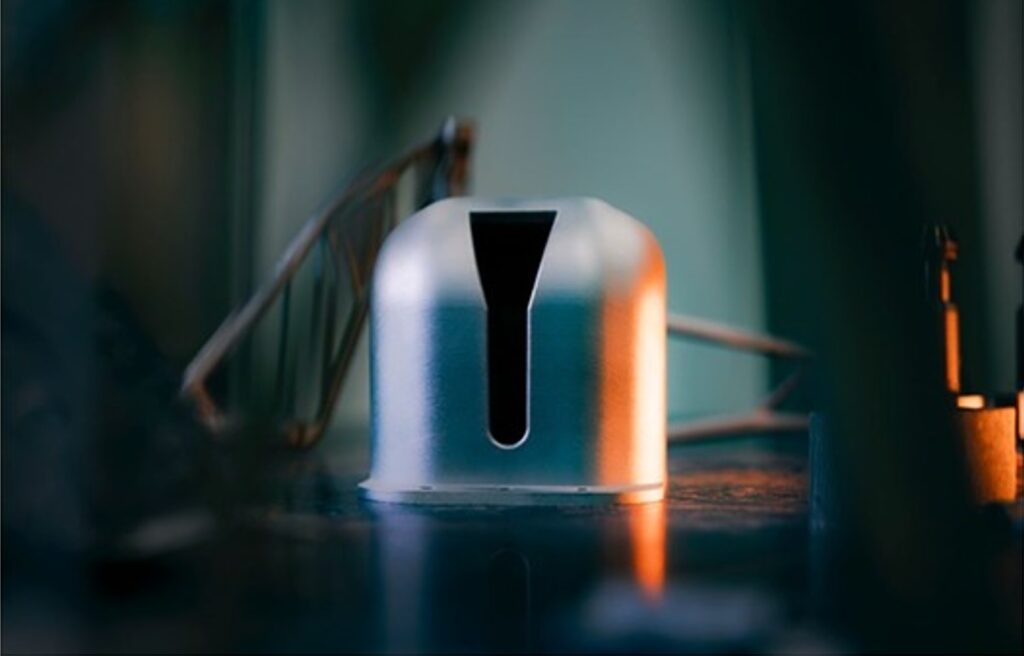
Where Mr Ringholm did open up was on the technology. SSAB’s headline news at Eurosatory was the Armox 500AM, a steel powder designed for additive manufacturing, in plain terms, armour you can 3D-print. The implications are significant. Traditional armour plate, however well engineered, imposes geometric constraints: flat surfaces, predictable angles, standard thicknesses.
A printable armour powder removes those constraints almost entirely. “With the powder and its capabilities, you can protect more or less everything,” said Mr Ringholm — and then, with characteristic caution, immediately attributed the claim to others: “But this is not our words. This is from some of the bigger OEMs that might have an interest in this.” (In business parlance, OEM stands for original equipment manufaturer.)
The technology is new enough that even SSAB is uncertain about the roadmap. “It’s definitely scaling, but the question is how? And with what?” Mr Ringholm acknowledged. “We don’t exactly know where to use it and how to use it. We have to give it a bit of time for the end users to come up with ideas.” That is an unusually candid admission from a sales director, and a useful corrective to the hype that tends to surround additive manufacturing in defence circles.
Green steel, future edge
The other forward-looking thread from SSAB is greener: the company’s fossil-free, hydrogen-reduced steel, produced via what Mr Ringholm called a “hybrid” process, positions it well as EU procurement frameworks begin to incorporate carbon-footprint criteria. “If you look at the bigger OEMs of today, they also have the requirement to reduce the carbon dioxide footprint in general,” he said.
“We are well positioned for the future, no question about it.”
— Mikael Ringholm, SSAB
“And this gives them a great opportunity if they use our material. We are well positioned for the future, no question about it,” the sales director continued. Whether the regulatory frameworks will move fast enough to make that positioning commercially decisive in the near term is, as Mr Ringholm put it with characteristic understatement, “really tricky to say.”
Layer two: the vehicle in the middle
If SSAB represents the raw material, Soframe—the Alsace-based armoured vehicle manufacturer and 100 per cent subsidiary of the privately-owned LOHR Group—represents the integrator. Someone has to turn the steel into something an army can drive, and Soframe has been doing exactly that since 1978, when it originated as Lohr Defense. Today, under a brand it has carried since 2000, it produces everything from light 4×4 patrol vehicles to heavy 8×8 recovery trucks, and claims world leadership in the somewhat specialised niche of riot-control water-cannon vehicles.
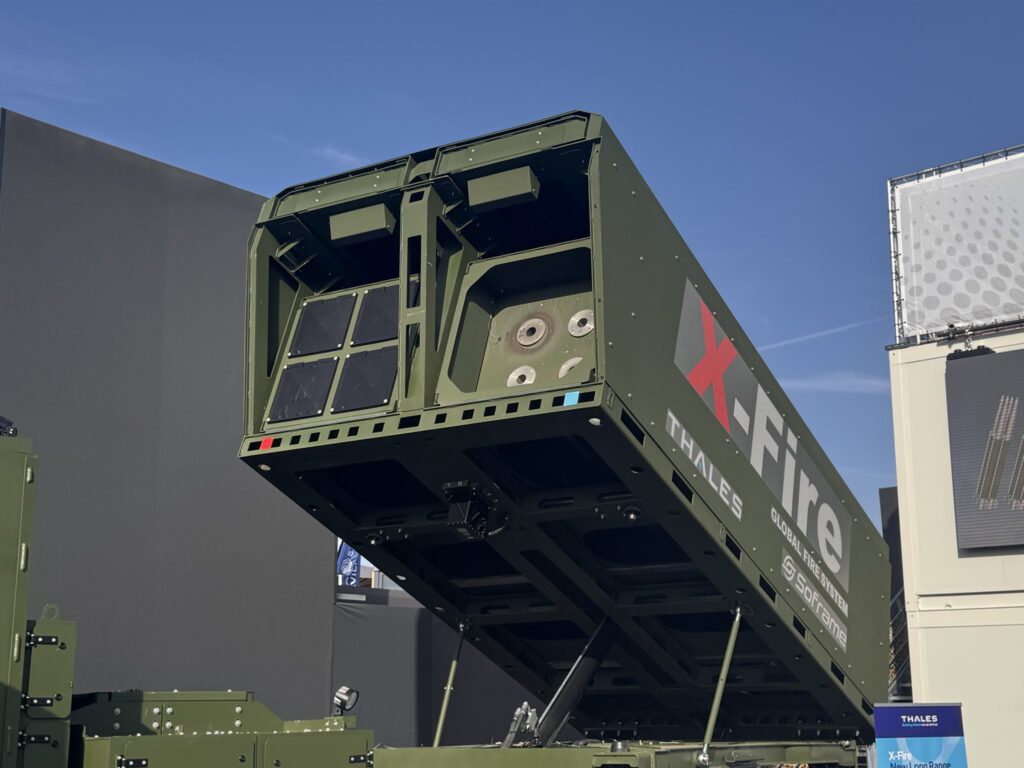
The company’s headline news in 2026 is a flagship contract from the French Defence Procurement Agency (DGA) for its Heavy Recovery Vehicle, the ELD, in its latest 8×8 configuration. The initial order covers 20 vehicles, with options for up to 80 more. The platform derives its design from the Protected Recovery Vehicle already in service with the Belgian Army.
The Belgian precedent matters: common chassis across French and Belgian fleets simplifies joint operations, eases logistics, and crucially gives Soframe a live reference customer when pitching to Central and Eastern European armies whose ageing recovery fleets are due for replacement.
Simplification? The paperwork disagrees
On the broader question of whether Europe’s regulatory revolution has changed Soframe’s business environment, Daniel Delorme, the company’s business developer, was candid to the point of deflation. “To be honest, we have not seen many changes on our regular business right now.” Simplification of procurement rules? “We have not seen simplifications so far.”
“What we are starting to see is interest for some countries that were not able to fund themselves so far and that can now find support by the European Union for such purpose.”
— Daniel Delorme, Soframe
But, and this is the more interesting part, something is shifting at the margins. “What we are starting to see is interest for some countries that were not able to fund themselves so far and that can now find support by the European Union for such purpose.” That is a quiet but structurally significant observation.
The EU’s new financing instruments may not yet be cutting bureaucratic red tape for established players like Soframe, but they are bringing new buyers to the table: smaller or less wealthy member states that previously lacked the budget to modernise their fleets and can now access EU co-financing to do so. The market is expanding, even if the paperwork has not gotten any lighter.
Layer three: the digital nervous system
An armoured vehicle with no secure communications is, in modern warfare, little more than an expensive target. Which brings us to Bittium and to the layer of the supply chain that, arguably, is moving fastest of all.
Founded in Oulu, Finland in 1985 as SAS Research and rebranded as Bittium in 2016, the company of roughly 550 employees specialises in secure tactical communications for defence and public safety. Its product range spans ruggedised communication nodes, encrypted data transfer systems, cybersecurity software, and, in a perhaps unexpected diversification, biomonitoring devices for military medical applications.
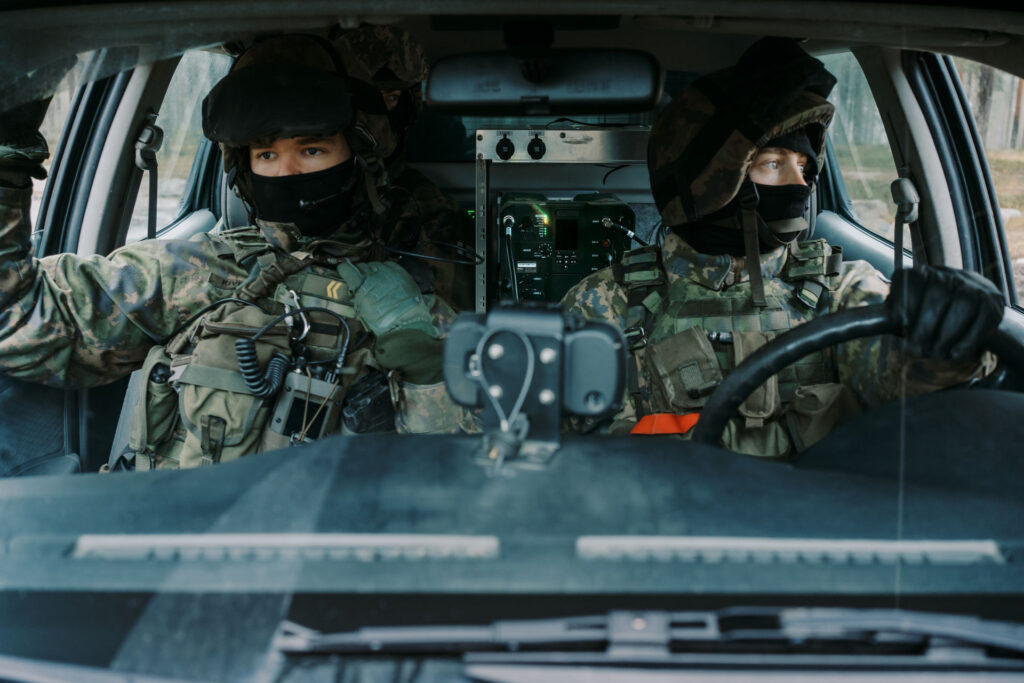
“We are on a growth path,” said Bittium marketing manager Sini Pihlajakoski at Eurosatory, “and we are looking forward to a bigger footprint on the market, with major deals hopefully made globally and especially in Europe.”
Plugged into the future
Unlike SSAB, Bittium is not merely adjacent to the EU’s new funding architecture; it is actively inside it. Asked whether the company was utilising instruments like the European Defence Fund, Ms Pihlajakoski’s answer was immediate: “Yes. Our company is involved in many European funded projects.”
Two examples she cited illustrate precisely where European defence investment is flowing at the technological frontier. In the IMAX 2 project, Bittium is developing communication solutions for unmanned systems. In AI-WASP, it is providing the communications backbone for an AI-powered drone swarming solution. “These are just a couple of examples,” she added.
“Our company is involved in many European funded projects. These are just a couple of examples.”
— Sini Pihlajakoski, Bittium
Those two projects, taken together, sketch the outline of a battlefield that looks very different from the one Soframe’s recovery vehicles are designed to operate in: a battlefield of autonomous systems, artificial intelligence, and networked swarms that require communications infrastructure as sophisticated as the platforms themselves. Bittium’s participation in both programmes signals that the EU’s defence funding is not simply buying more of what Europe already has. At least some of it is reaching the companies building what comes next.
The view from the supply chain
The three companies represent three layers of the same hypothetical armoured vehicle. All of them have very different relationships with the process of Europe’s rearmament. SSAB is embedded so deeply in sensitive supply chains that it can barely acknowledge who it sells to, let alone engage directly with Brussels funding programmes. Its competitive edge in the coming decade will be determined not by procurement politics but by materials science. Printable armour and fossil-free steel are genuine innovations, and the original equipment manufacturers are paying attention.
Soframe is doing solid, unglamorous, necessary work, building the trucks and recovery vehicles that armies actually need right now, and finding that the EU’s promised simplification has not yet materialised in any form it can feel. What it can feel is new demand: countries that could not previously afford to modernise are beginning to come forward, cheque-book in hand, backed by European money.
To be honest (…), we have not seen simplifications (of procurement rules) so far.
— Daniel Delorme
Bittium, meanwhile, is plugged directly into the EU’s technology investment pipeline, working on unmanned systems and AI swarming at the same time as it supplies secure radios to NATO partners. It is the most forward-facing of the three, and the most comfortable in the new European defence ecosystem that Brussels is trying—imperfectly, bureaucratically, but with genuine momentum—to build.
Europe is rearming. From the inside, it looks like this: cautious, complicated, occasionally tight-lipped, and shot through with real technological ambition. Characteristically European, in other words; but moving ahead none the less.