After weeks of wrangling, EU countries have agreed to keep Russia sanctions in place for another three years. But the compromise also frees billionaires Fridman and Usmanov from the bloc’s restrictions, drawing sharp criticism from Kyiv.
EU member states agreed on Monday to overhaul the timetable for renewing sanctions against Russian and Belarusian individuals and companies. The bloc has typically renewed the list every six months, making the three-year extension a significant departure from its usual practice.
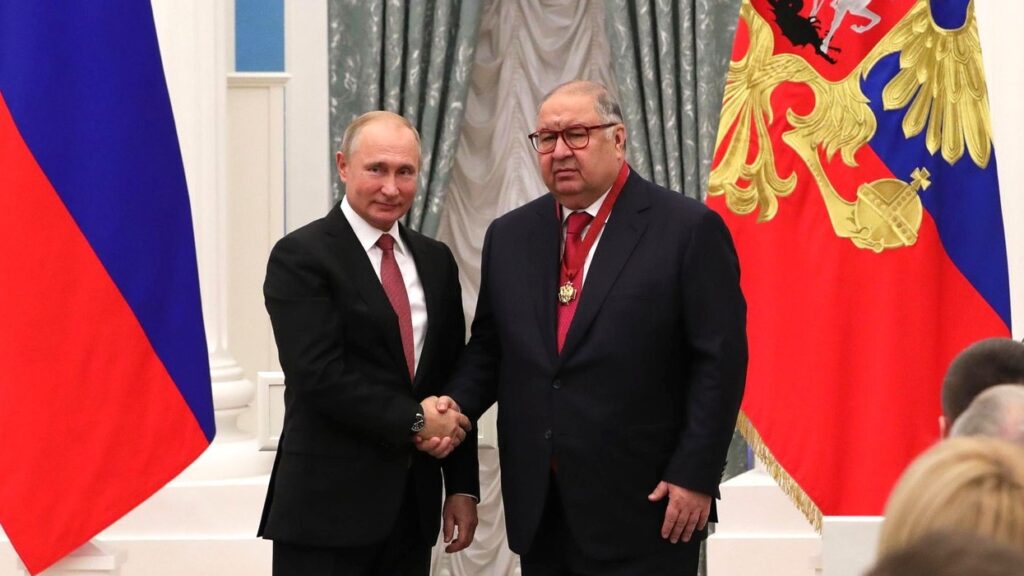
At the same time, however, the deal removes two prominent Russian billionaires, Alisher Usmanov and Mikhail Fridman, from the sanctions list.
The deal was struck by the ambassadors of all 27 member states in the Committee of Permanent Representatives (COREPER), where EU countries negotiate and prepare decisions before they go to ministers’ tables.
Ukraine’s Foreign Minister Andrii Sybiha criticised the move, arguing that nothing had changed since Mr Usmanov and Mr Fridman were sanctioned. “Delisting is unacceptable and would send the wrong signal to Moscow at a time when pressure needs to increase,” he said, calling instead for tighter sanctions and broader individual listings.
A sanctions deal under pressure
The agreement follows almost two weeks of intense negotiations. Ambassadors met several times to discuss the sanctions and consulted their national governments after each round. The original deadline for extending the measures was 15 September. Member states agreed only to a seven-day extension until 22 September, buying more time for further talks.
The biggest dispute in recent weeks centred on Mr Usmanov. Slovakia had long pushed for his removal, and France joined the call this month. According to diplomats cited by Reuters, Luxembourg then also sought to have Mr Fridman removed.
French diplomats reportedly pushed for Mr Usmanov’s removal after France came under pressure from Azerbaijan over at least two detained French citizens. Baku rejected that account. A senior Azerbaijani diplomat said the country supports removing Mr Usmanov from Western sanctions lists, but has never interfered in EU or US sanctions processes.
France has not publicly confirmed that it sought Mr Usmanov’s removal. Its foreign ministry said only that the matter was one of “national security”.
Mr Usmanov, who ranked among Russia’s richest people this year with an estimated fortune of $16.6 billion, according to the Bloomberg Billionaires Index, made much of his wealth in mining and metals. He also holds stakes in telecommunications and internet companies, as well as the Russian business daily Kommersant.
Fridman’s $16bn Luxembourg case
Luxembourg’s reasoning over Mr Fridman is different. According to diplomats, the country argued that keeping sanctions against Mr Fridman alone could weaken its position in an arbitration case in which he is seeking $16 billion in damages from Luxembourg for losses he says resulted from Western sanctions and the freezing of his assets.
Mr Fridman co-founded Alfa Group and Alfa-Bank and is one of Russia’s wealthiest businessmen. Like Mr Usmanov, he has challenged his inclusion on the EU sanctions list in the bloc’s courts.
The EU sanctioned both men in 2022. At the time, it said Mr Usmanov had “particularly close ties” to Russian President Vladimir Putin. Both businessmen have fought their inclusion on the list through the courts.
The EU sanctions list currently covers more than 6,000 individuals and entities. The measures include asset freezes and travel bans, and target people and organisations the EU accuses of contributing to the undermining of Ukraine’s territorial integrity, sovereignty and independence.
Monday’s agreement must now go through a so-called written procedure, which will formally confirm the deal.