Europe is heading into winter with its gas storage facilities at a record seasonal low of 74 per cent. Some countries are calling for looser rules. Energy expert Olga Khakova tells EU Perspectives how Europe can balance security of supply with the cost of maintaining adequate gas reserves.
Since Russia’s invasion of Ukraine and the sharp reduction in Russian gas imports, Europe has introduced mandatory gas storage requirements to reduce the risk of shortages during winter. Although the bloc has since diversified its gas supplies, ongoing geopolitical conflicts and persistently high energy prices continue to put pressure on Europe’s energy sector.
The Institute for Energy Economics and Financial Analysis (IEEFA) recently warned that with the current storage levels, the bloc may need to reduce winter gas demand by sevent per cent year on year, or cover the shortfall with additional imports costing up to €3 billion.
Yet, several countries want to rethink storage rules that require member states to ensure sufficient reserves to cover periods of high demand or disrupted supply. The Netherlands, for example, which has the EU’s third-largest storage capacity, is pushing for the bloc to scrap the current system when the law expires after 2027.
The Dutch government argues that the targets place a disproportionate burden on countries with large storage facilities and can distort market incentives by making it less attractive to buy gas and store it over the summer.
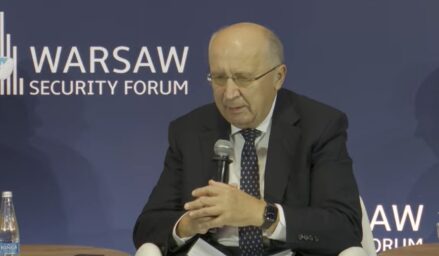
Are Europe’s gas storage rules still fit for purpose, or could more flexible rules bring down costs without increasing the risk of shortages? Olga Khakova, senior fellow on energy at the Center for European Policy Analysis (CEPA), argues that the EU can give countries more flexibility while maintaining safeguards against supply disruptions.
The Netherlands says the current gas storage system puts an unfair burden on countries with large storage capacity. How do you look at that criticism?
We are seeing this criticism across Europe. Requiring countries to reach specific storage levels by set dates can create considerable economic pressure, forcing them to buy gas when prices are high.
When seasonal price differences narrow, as they have this year, buying early and paying for storage may make less economic sense.
Normally, countries buy cheaper gas in summer and draw on reserves as demand and prices rise in winter. But when seasonal price differences narrow, as they have this year, buying early and paying for storage may make less economic sense.
The burden falls unevenly on countries with large storage capacity relative to consumption. It also depends on their connections to the wider European market and direct access to LNG terminals or pipelines.
For a landlocked countries such as Austria, Hungary, or Czechia, securing additional gas may involve transit through several countries, adding tariffs and fees. The Netherlands, with direct access to LNG terminals, may secure supplies more quickly and economically.
Countries would therefore benefit from more flexibility over when they buy gas and fill storage.
What would be an alternative to the current system that could make the market fairer without compromising security of supply?
Better interconnections, the infrastructure allowing gas to move between national markets, and clearer information on available capacity would help traders identify the most efficient routes across Europe. More consistent fees and fewer unnecessary tariffs would also help, as transport charges can accumulate at each border.
Poland’s storage is almost full. However, its capacity is a fraction of its annual consumption. Comparing countries’ storage percentage levels without taking into account demand and regional interconnections does not provide the full picture.
Poland is an interesting example. Its storage is almost full, partly thanks to its many interconnections. It has also proactively secured gas, diversified suppliers, increased purchases from the United States and expanded LNG terminals.
However, the country’s storage capacity is a fraction of its annual consumption; comparing countries’ storage percentage levels without taking into account demand and regional interconnections does not provide the full picture.
There are lessons in these different approaches. Governments tend to prioritise their citizens while seeking to be good neighbours. A better-integrated market would give them more options to secure supplies at lower cost.
Some market watchers argue that the EU should simply loosen its storage requirements. How do you look at that?
Requirements should be more flexible, but there needs to be a backstop. If storage fell to 30 or 40 per cent by September or October, for example, a mechanism should allow the EU to investigate and determine whether action is needed.
That assessment should examine why levels are low, including whether gas demand has fallen significantly. With demand growing in areas such as data centres and electrification, I would not expect a massive annual drop in gas consumption. A trigger should bring the public and private sectors together to assess the situation.
Ignoring storage levels is not the answer. Countries need flexibility alongside safeguards.
Since Russia’s full-scale invasion of Ukraine, Europe has also expanded LNG imports and diversified its suppliers. Does that reduce the need for mandatory storage targets?
Monitoring storage remains important. Requirements should become more flexible, with triggers that bring the public and private sectors together when levels are too low.
Countries could also agree to purchase gas from neighbours or store it on their behalf. Greater flexibility would help market participants find efficient ways to meet winter demand.
The private sector should play a central role, supported by a well-functioning market and a mechanism to intervene when necessary.
Is the current system also hurting European competitiveness?
Prescriptive interventions can add costs by requiring countries to buy gas by a deadline, even when prices are high. If the market cannot cover mandated storage costs, governments may need to provide support. Ultimately, European citizens pay, whether nationally or at EU level.
Governments have addressed high energy prices through broad subsidies and discounts, targeted support for vulnerable households or energy-intensive industries, and incentives for heat pumps and efficiency.
The past five years have shown that emergency measures may be necessary during geopolitical crises, but they should be targeted and temporary.
The past five years have shown that emergency measures may be necessary during geopolitical crises, but they should be targeted and temporary. Prolonged broad subsidies can distort markets and weaken incentives to conserve energy or invest in efficiency. Without price signals, consumers and businesses have less reason to adjust their behaviour, with harmful long-term consequences.
High energy prices also contribute to Europe’s deindustrialisation. They are not the only cause, but can push businesses to relocate, close or change operations.
The challenge is to improve efficiency without destroying economic activity. Using less gas because factories have closed is not a win for Europe.
IEEFA recently warned that storage is at a record seasonal low and that Europe may need to cut winter gas demand by seven per cent. Does that set alarm bells ringing for you?
I think Europe can compete for the gas volumes it needs. Storage is partly low because gas was extremely expensive this summer, and those prices matter.
Historically, gas has cost more in winter than summer, but that gap has narrowed. Storage also costs money, so filling facilities regardless of gas prices is not necessarily economical.
The question now is what Europe will have to pay. With limited resources and capital, we need to optimise their use rather than assume that filling every facility to 100 per cent is always best.
Risks remain. A cold snap, stronger Chinese demand, cyberattacks or other outages could increase market pressure.
The situation is not ideal. But given the multiple crises and high LNG prices, I would consider storage around 73 per cent a cautious win. It warrants continued monitoring, rather than panic.
There is no quick solution. We should apply the past five years’ lessons on which measures are most economical, encourage conservation and keep businesses competitive, while ensuring Europe secures the energy it needs.