Surplus carbon permits above a fixed cap were due to be invalidated for good. Brussels wanted to stop that and stockpile them instead. Lawmakers said no: keep the mechanism, just raise the cap first, from 400m to 650m allowances from March 2027.
Carbon allowances are the currency of the EU’s flagship climate tool: firms need one for every tonne of CO2 they emit, and the tighter the supply, the more expensive it gets to pollute. The Market Stability Reserve (MSR) is what keeps that supply steady, soaking up spare permits when there are too many and releasing them when there are too few. On 10 September, the Parliament’s environment committee decided the MSR should carry on culling its oldest stock, by 43 votes to 21, with six abstentions
At stake is the invalidation mechanism of the MSR. The reserve has operated since 2019 to address the imbalance between the supply of and demand for allowances. It works within the EU Emissions Trading System (ETS), the bloc’s main carbon market. The ETS requires covered industries to hold allowances for their emissions. The MSR stabilises that market by adjusting the number of allowances in circulation.
Parliament says no
Under current rules, all allowances in the reserve above 400 million are invalidated, permanently removed from the market. The Commission had proposed ending that invalidation mechanism immediately, letting the reserve grow without limit as a buffer, with the aim of supporting market stability. MEPs rejected that approach. They propose keeping the mechanism, but raising its threshold from 400 million to 650 million allowances from 1 March 2027.
Today’s vote strikes the right balance between climate ambition and industrial competitiveness. — Pierfrancesco Maran (S&D, ITA)
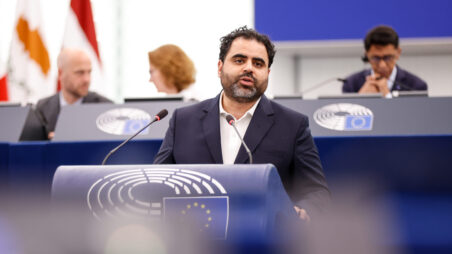
“Today’s vote strikes the right balance between climate ambition and industrial competitiveness. Raising the invalidation threshold and setting a clear date for entry into force gives the MSR the necessary flexibility while safeguarding the EU ETS,” said Pierfrancesco Maran, the report’s rapporteur and MEP (S&D/ITA).
The committee believes 650m will be a large enough cushion to absorb shocks related to supply and demand‚ while not stockpiling too many allowances in the reserve․ That balance is politically sensitive because more reserve can mean less price volatility and therefore greater predictability for industry․ If a surplus develops‚ that threatens to weaken the scarcity that gives the ETS its power to drive climate action․
A tool for climate and industry
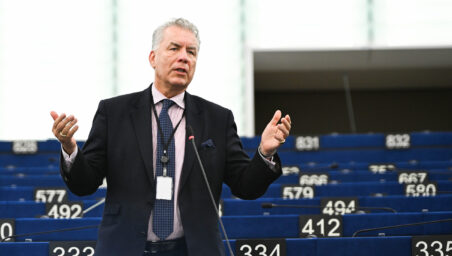
The vote was part of a larger political battle regarding the future of the ETS, one started by Climate Commissioner Wopke Hoekstra․ Addressing MEPs on the review of the ETS‚ he said that the system must now serve three goals at once: climate action‚ competitiveness and energy independence․ The ETS, he said, is one of the EU’s strongest market-based policy tools, but one in need of repair.
Hoekstra pointed to two problems with the current scheme. Companies receiving free allowances were not always reinvesting them in European decarbonisation. And member states were not channelling enough ETS revenue back into those sectors.
This is not a tax. This is an investment engine to decarbonise European industry. — Wopke Hoekstra, European Commissioner for Climate, Net Zero and Clean Growth
“The central promise has been: this is not a tax. This is an investment engine to decarbonise European industry,” said Hoekstra.
Hoekstra noted that although the EU has raised over €250bn through ETS revenues since 2013, member states have not always used that money transparently or sufficiently to decarbonise their industries.
A signal before the wider ETS revision
Today’s vote also offers a first hint of where MEPs may stand once the bigger fight begins. A wider revision of the ETS is coming. It is expected to touch some of the most contested files in EU climate policy: the emissions cap, the linear reduction factor, free allocation and conditionalities, waste-to-energy plants, aviation, shipping, investment tools and how ETS revenue gets spent. Maran said the broad majority behind this agreement “sets the scene” for that fight, “proving that ambitious climate and industrial policies can go hand in hand.”
Hoekstra defended his original proposal, saying it stayed aligned with the EU’s 90 per cent target while making the system more responsive to business needs. He pushed back against blaming the ETS alone for Europe’s industrial troubles. High energy prices, unfair competition and dumping, he argued, play a bigger role.
Buildings and transport are next
The MSR debate is not limited to the original ETS. A separate reserve exists for ETS2, the newer carbon market covering buildings, road transport and other sectors. In June 2026, MEPs and the Council already struck a provisional deal to revise that reserve too, aimed at protecting consumers from sharp price swings. The parallel debate underlines how central market stability has become across the EU’s whole climate agenda.
Carbon pricing exists to put a cost on greenhouse gas emissions. Brussels faces a balancing act. The system needs to be predictable enough to draw business investment. Yet it also has to stay politically acceptable to both the public and governments. Today’s committee vote looks like a small technical fix, but its political meaning is bigger. MEPs are not ready to give up the safety valve built into the EU’s carbon market. They want to keep it flexible, but still under control.
With the next ETS revision approaching‚ that same line could become one of the main battlegrounds between climate ambition‚ industrial competitiveness and market stability․