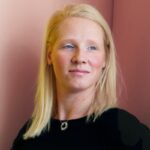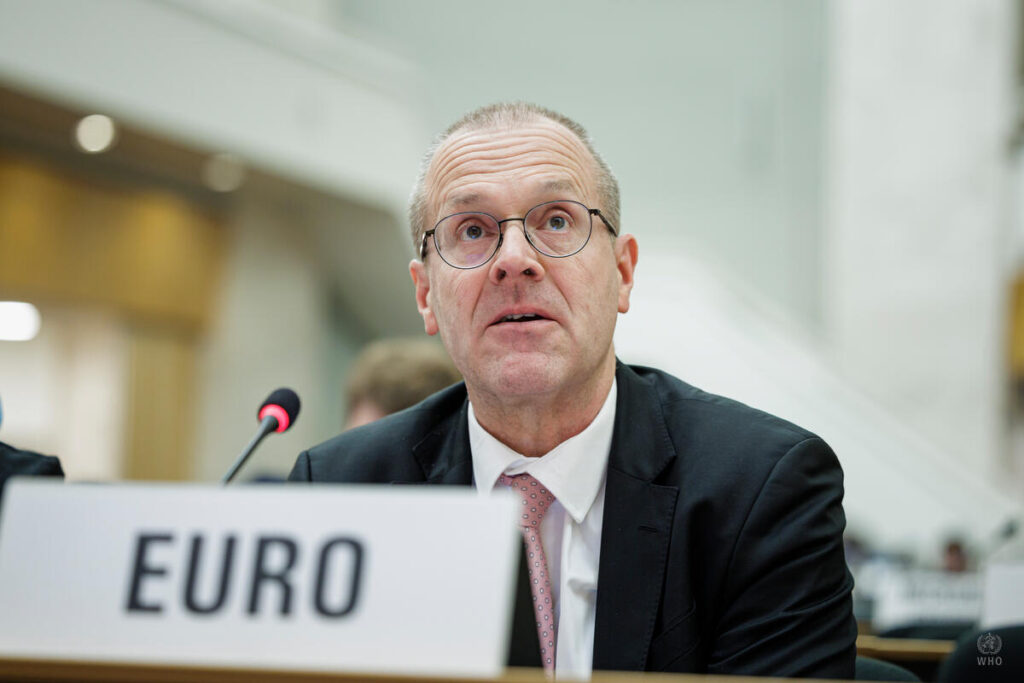
A mother who survives childbirth. A child who reaches their fifth birthday. This is what Dr Hans Kluge says his campaign for the world’s top health job comes down to. The doctor who once treated tuberculosis in Siberian prisons is now Belgium’s WHO candidate, backed by Prime Minister Bart De Wever as “someone who has done the work”.
Dr Kluge stepped down as World Health Organization (WHO) Regional Director for Europe on 21 August 2026 to run for Director-General. This is the post that Dr Tedros Adhanom Ghebreyesus leaves in August 2027. Days later he published his pitch, a 27-page document called Rebuilding the World Health Organization Together.
His manifesto is clear about the organisation he wants to run. “I am WHO’s biggest advocate, yet also its most candid critic,” it begins. WHO is “often overstretched, under-focused, overly bureaucratic, with rising inefficiencies, fragmented financing and complex governance,” Dr Kluge writes. “This must change.”
Country-first, people-centred, networked
Dr Kluge compresses his own plan into a single sentence. “At its heart is a country-first, people-centred, networked WHO that is one step ahead of global health challenges and always in partnership.”
First, country-first means turning WHO away from its own structures. He would organise the agency “around country priorities rather than institutional silos, legacy structures or funding streams”. As a result, countries “should experience one WHO, not several seemingly disconnected institutions”.
Second, networked means moving “from hierarchy to networks”. It connects countries facing similar challenges “across all six WHO regions” and draws on expertise that “is not confined to WHO headquarters or its regional offices”.
Finally, people-centred is where the manifesto ends. “Rebuilding WHO Together is ultimately not about institutions. It is about people,” he writes. “A mother who survives childbirth. It is about children who reach their 5th birthday.”
“There is no magic bullet”
The money is the hardest part. “There is no magic bullet,” he writes.
WHO’s approved core budget for 2026–2027 is US$4.26bn. According to WHO’s latest financing report to the World Health Assembly, the base segment was projected to be 90 per cent funded as at 31 March 2026. This leaves a gap of US$407m, following the United States’ withdrawal in January 2026.
On income, he would implement “the agreed increase in assessed contributions”, the mandatory dues each country pays, and set up “a time-limited independent expert group” on WHO’s resource model. On spending he is direct, promising to “cut duplication between WHO headquarters, regional and country offices”, “consider delivering the programme of work at lower overhead costs” and “rebalance resources towards country offices and regions while maintaining a nimble headquarters”.
One initiative to be judged on
Dr Kluge names a single flagship. He would make primary health care, the everyday level of the system where nurses, midwives and family doctors work, “the integrated delivery platform” through which WHO delivers everything else. Primary health care, he writes, is “the lifeline for people who are left behind”.
Three numbers carry the priorities underneath it. Maternal and child health, infectious and noncommunicable disease together “account for around 90 per cent of the global burden of disease”. Countries spend “only about two to three per cent of their health expenditure” on prevention. And by 2030 the world faces a shortage of “approximately 11 million health workers”.
“He has done the work”
Belgium’s case for Dr Kluge is about where he has worked, and Prime Minister Bart De Wever makes it inside the manifesto itself.
Dr Kluge “spent the early part of his career where the work is hardest: treating tuberculosis in prisons, building health systems in fragile states,” Mr De Wever writes. “Field experience combined with a talent for organisation is rare, and it is exactly what the World Health Organization needs now.” He closes on the line the campaign will repeat: “Global health needs someone who has done the work, keeps his word, and remembers that all of it comes down to one patient at a time.”
The record starts in Leuven, where Dr Kluge qualified in medicine, surgery and obstetrics in 1994. From 1995 he worked for Médecins Sans Frontières (MSF) Belgium in Liberia and Somalia. Then he ran MSF’s tuberculosis programme in the prisons of Siberia and advised on the disease across the former Soviet Union.
He joined WHO in 1999 and led its three diseases unit in Myanmar from 2004 to 2009. When the Global Fund to Fight AIDS, Tuberculosis and Malaria pulled out of the country, he helped build the replacement. A Three Diseases Fund, backed by Australia, the European Commission, the Netherlands, Norway, Sweden and the United Kingdom, kept HIV, tuberculosis and malaria services running.
He became Regional Director for Europe on 1 February 2020, a week after the region confirmed its first COVID-19 cases, and led it through the pandemic, mpox and war-related emergencies. Member states nominated him for a second term in October 2024.
Who else is running, and how the vote works
Three others are also on WHO’s list of prospective candidates. Dr Hanan Balkhy of Saudi Arabia is WHO’s Regional Director for the Eastern Mediterranean. And Dr Hanan Mohammed Al-Kuwari is Qatar’s former Minister of Public Health. Dr Budi Gunadi Sadikin is Indonesia’s Health Minister, a nuclear physicist and banker by training who ran Bank Mandiri and then state miner Inalum before taking the health job in December 2020, and one of the architects of the World Bank-hosted Pandemic Fund.
Rebuilding WHO Together is ultimately not about institutions. It is about people.
— Dr Hans Kluge, candidate Director-General, World Health Organization (WHO)
According to Health Policy Watch, Indonesia contributed US$30m to WHO in voluntary funding in July to help close the outstanding gap in the 2026–2027 base budget.
More names may follow. Proposals close on 24 September 2026. WHO publishes the official list of candidates, with their CVs, on or after 29 October. The first candidates’ forum runs from 18 November, the Executive Board shortlists up to three finalists at its 160th session from 25 January to 2 February 2027. A second forum follows on 15 March, and the World Health Assembly elects in May 2027. The winner takes office on 16 August 2027.