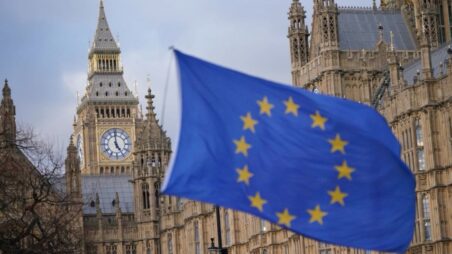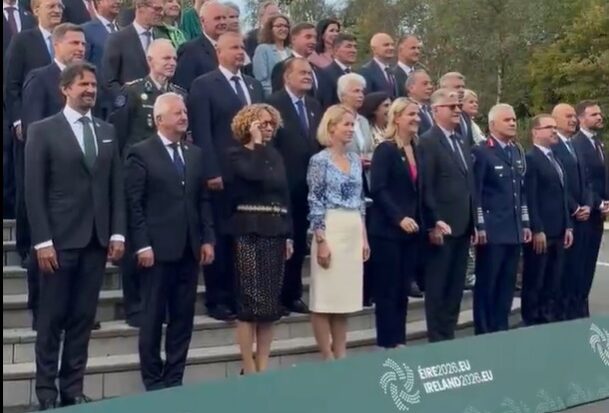
An informal gathering of Europe’s defence chiefs in Wicklow, Ireland produced lots of grand rhetoric and no concrete commitments to Kyiv.
The answer to the session’s most pressing question was very blunt. “No, we didn’t get any concrete decisions today,” High Representative Kaja Kallas told reporters when asked whether Greece, Spain or anyone else had pledged Patriot interceptors from their stockpiles. “Unfortunately, no concrete success today regarding this.”
That admission set the tone. After months of escalating Russian bombardment, with Ukraine’s air defences stretched and its civilian infrastructure systematically targeted, Europe’s defence ministers gathered, talked, and went home without delivering the weapons Kyiv most urgently needs.
Words and weapons
Ms Kallas was not without things to say about the military picture. Russia, she noted, is losing more than 30,000 soldiers a month. Ukrainian drones are striking refineries deep inside Russia, producing what she called “the biggest fuel crisis in Russia in decades”. It has, she said drily, been “a rough summer for (Russian President Vladimir) Putin”.
But the gap between battlefield analysis and concrete action was visible throughout the press conference. On Patriot missiles, the EU’s top diplomat acknowledged that “Interceptors are in short supply everywhere.” She called on member states to look again at stocks, “especially Patriot missiles about to expire”, and consider sending or selling them to Ukraine.
The moral case featured uncharacteristic emotional appeal: “Every interceptor we provide to Ukraine means a Russian missile that does not reach a Ukrainian school, home or hospital.” The ministers, however, had little time for emotional appeals; the missiles did not materialise.
On financing, Irish Defence Minister Helen McEntee said there was “consensus” among member states to front-load contributions to the €90bn Ukraine support loan, bringing forward money planned for future years to meet immediate needs. But she was careful to qualify it, with the exception of €10m to support the modernisation of military training centres in Ukraine and €2m for the EU Satellite Centre. “Obviously, no formal agreement today,” she said. Ms Kallas echoed the caveat: the decision, she noted, lies “not just for us here today but for the Commission and the Council to take”.
Lebanon, space and the sea
The European Peace Facility—frozen for months over a Hungarian veto—was another item on the wish list. Ms McEntee expressed confidence that it could be unlocked “in the coming days,” releasing more than €6.6bn in military support. Again, no decision was taken.
We are not replacing UNIFIL. The idea is to (strengthen the Lebanese government) to take order in Lebanon under control. — Kaja Kallas, the EU’s foreign and security policy chief
Beyond Ukraine, ministers covered considerable ground. On Lebanon, Ms Kallas confirmed that more than ten member states have expressed willingness to contribute personnel and resources to a new EU mission to train and advise the Lebanese armed forces, with a Council decision to launch targeted for October. Ireland, Austria and Spain have jointly proposed a civilian mission with a force-protection element. “We are not replacing UNIFIL,” Ms Kallas said. “The idea is to really strengthen the Lebanese armed forces and the Lebanese government to take order in Lebanon under control.”
On maritime security, both ministers pointed to growing threats to undersea cables and energy pipelines, shadow-fleet activity, and Houthi attacks on Red Sea shipping. EU naval operations, Ms Kallas noted, are now boarding suspected shadow-fleet vessels, and hundreds of ships have been deflagged as a result. “Illegal oil sales are a critical lifeline for the Kremlin,” she said, “and we will continue to cut them off.”
Ireland’s awkward moment
Another sharp exchange was reserved for Ms McEntee, who faced a pointed question about Ireland spending the least on defence of any EU member. Somewhat embarrassingly, the country had to rely on the British Royal Navy for security at the presidency event itself.
Her answer was unapologetic but notably forward-looking. Defence spending, she said, has risen 43 per cent in two years. She expressed personal support for Ireland joining the SAFE instrument to accelerate capability investment. And she made the case to the Irish public in terms that went beyond solidarity with Ukraine.
“We are not just talking about a conflict in Ukraine,” she said. “We are now starting to see threats materialise. (There are) incursions into the airspace and land domain of Romania, Latvia, Estonia and Germany.” It was perhaps a more candid acknowledgement of Ireland’s exposure than Dublin usually offers. Whether it translates into the budget commitments the minister promised is another question. Wicklow, once again, could not answer it.