Bulgaria has given up looking for the crew of a cargo ship that sank in about three minutes after a drone strike off its coast. Brussels condemns the attacks and sends satellite images. Out at sea, the war in Ukraine has moved uncomfortably close to EU shores.
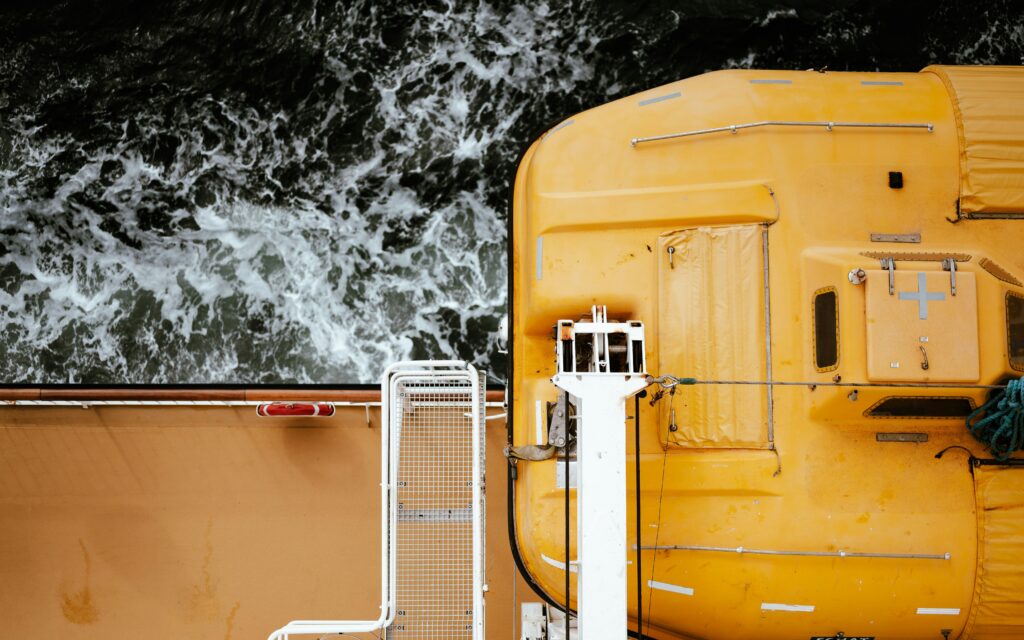
Three life rafts and an overturned lifeboat. That is all Bulgarian rescuers found of the Alfa Watan, a Turkish-owned cargo ship that went down some 70 nautical miles off the coastal town of Byala early on Tuesday. Air and sea drones struck it at around 3am. According to initial reports, it sank in about three minutes. On Wednesday, Bulgaria’s Maritime Administration said the search for its crew had ended and would not resume.
The same attack set the Palau-flagged Able on fire. A Bulgarian ferry, the Dioscuria, saw the explosion and rescued all 18 crew members. One of them, a mechanic, suffered burns to 45 per cent of his body and remains in critical condition in Varna. On Monday, another Turkish-owned freighter carrying Ukrainian corn to Italy sank off Romania. Its Azerbaijani captain, Rustam Hasanov, was one of two people who died.
War on the doorstep
Both ships went down inside the exclusive economic zones of Bulgaria and Romania. These are stretches of sea beyond a country’s territorial waters where it still controls fishing, energy, and other resources. For Bulgaria, it was the first known attack on merchant shipping in its zone. Romania has seen such strikes before, most recently in August.
Neither Sofia nor Bucharest has named the attacker. Bulgarian Prime Minister Rumen Radev said the drones came from either Russia or Ukraine and that he had informed NATO. Ukrainian President Volodymyr Zelensky blamed two Russian drones for the strike off Romania. On Wednesday, President Iliana Iotova convened Bulgaria’s Consultative Council on National Security to discuss threats to maritime security and critical infrastructure.
Brussels chose firmer words. At the Commission’s midday briefing on Wednesday, foreign affairs spokesperson Christian Wigand called the attacks “completely unacceptable” and placed them in the context of Russia’s war against Ukraine. “Russia must cease all actions that endanger international shipping and the lives of seafarers,” Mr Wigand said.
The help so far is mostly from above. Romania and Bulgaria asked the European Maritime Safety Agency (EMSA) for satellite images of the area, and the agency is now delivering them. Commission President Ursula von der Leyen condemned the strikes on X, warning that the situation in the Black Sea is growing more alarming.
Plans on paper, drones at sea
The attacks put to the test a plan that Brussels launched in May 2025. The EU strategy for the Black Sea promised a maritime security hub to serve as an early warning system for shipping and undersea cables. Since then, the EU has started 65 projects worth around €200m in the region, Mr Wigand said. Asked how far the hub had got, he said Romania and Bulgaria lead it and promised to check. He also promised to come back on a protected coastal corridor that Romanian, Turkish, and Bulgarian forces say they secured.
There is money, too. Under Security Action for Europe (SAFE), the EU’s loan scheme for defence purchases, Romania and Bulgaria will together receive €20bn. Bucharest has already received €2.5bn up front and Sofia €0.5bn, Commission spokesperson Thomas Regnier said. He would not say what they will buy. He pointed instead to joint EU projects on drones, counter-drone systems, and the Eastern Flank Watch, where both countries have signed up.
Commercial ships, and innocent crews, are being targeted, with lives already lost at sea.
— Ursula von der Leyen, President of the European Commission
The shipping industry is already counting the cost. Mr Radev warned that the attacks are driving up insurance costs even further. “Commercial ships, and innocent crews, are being targeted, with lives already lost at sea,” Ms von der Leyen wrote. For the crew of the Alfa Watan, the search is over. For everyone else in the western Black Sea, analysts warn, the danger now begins as soon as a ship enters it, not only near Ukrainian ports.