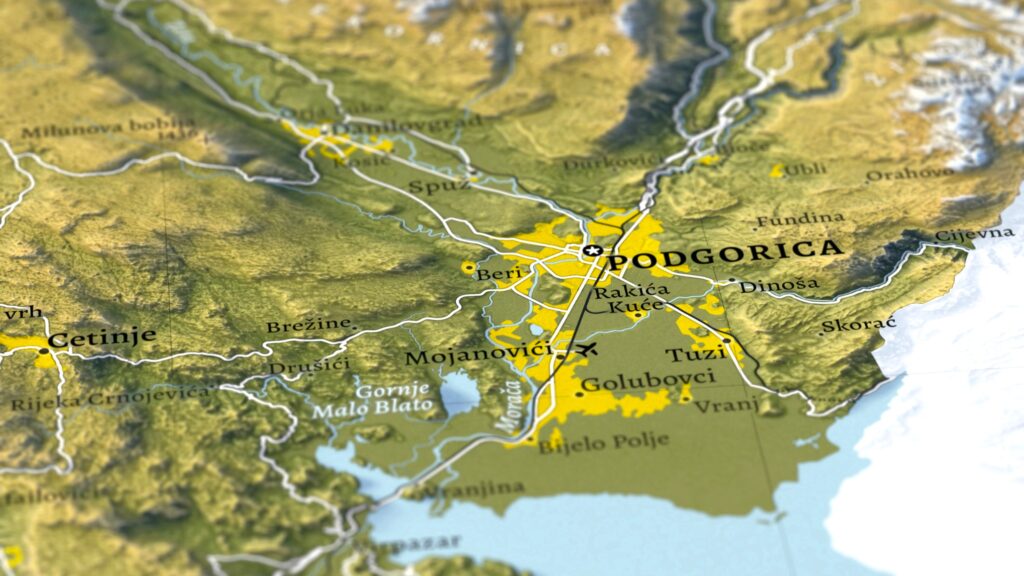
Podgorica is counting down the final steps. Belgrade is standing still, while Tbilisi has become a candidate in name only. Some countries are already reaching for the EU’s door handle. Others seem to be losing the will to make it to the finish line. Which nations could we soon welcome as our new neighbours?
Montenegro is entering the final stage of its accession process, according to the European Commission’s assessment of progress among EU membership candidates. It has provisionally closed 21 of the 33 negotiating chapters.
With member states’ approval, Montenegro could close the remaining chapters by the end of this year. The European Commission is already drafting an accession treaty, which the country could sign as early as June 2027. With a population of just 624,000, Montenegro could become the EU’s 28th member in 2028. The Commission has also prepared a financial package to support its accession.
Today, we are merely a short time away from completing the process of Montenegro’s integration into the EU. — Marta Kos, Commissioner for Enlargement
Enlargement Commissioner Marta Kos praised the progress made by the frontrunner and some other hopefuls. “Today, we are merely a short time away from completing the process of Montenegro’s integration into the EU,” she said.
Albania, Moldova and Ukraine have set similarly ambitious targets. All three opened their final remaining negotiating clusters this year. Moldova and Ukraine each opened four additional clusters. The Commission now expects Albania to complete accession talks by 2027, Moldova in early 2028 and Ukraine by the end of 2028.
Brussels’ optimism comes with one important condition. Candidates must keep up the pace of reform, particularly on the rule of law, institutional functioning and fundamental rights.
One war, two candidates, similar ambitions
Moldova and Ukraine turned to the EU for membership in the shadow of Russia’s aggression and growing security threats. They share several features in this year’s assessment. Both opened four negotiating clusters over the past year. According to the Commission, both now meet the conditions for opening all remaining clusters. They are also making progress in aligning their laws with EU legislation.
Kyiv is reforming its institutions in the middle of Russia’s invasion. The Commission welcomes the continued overall independence and effectiveness of Ukraine’s specialised anti-corruption bodies. But it also wants further progress on the judiciary, democratic institutions and public administration reform. Ukraine must also implement its action plan on national minorities.
Chisinau, meanwhile, has made significant progress on the interim benchmarks covering the fundamentals of EU membership. These include the rule of law and the functioning of democratic institutions. But Moldova must maintain its current reform momentum to meet its target of concluding negotiations in early 2028.
Western Balkans: a much less promising picture
While the four frontrunners prepare for the next stage, the Western Balkans offer a far less encouraging picture.
Serbia made no substantial progress in accession negotiations during the reporting period, according to the Commission. Technical work on aligning national legislation with EU law continued. But political developments moved in the opposite direction. The report highlights growing polarisation, problems during the pre-election period and poor alignment with the EU’s common foreign and security policy.
Georgia’s EU accession process remains de facto halted. — The European Commission
The Commission therefore wants Serbia’s new government to reverse course. It must refocus on democratic reforms, judicial independence and fundamental rights. Passing EU-compatible laws is not enough if the country simultaneously moves further away from the values underpinning the Union.
The Commission takes an even harsher view of Georgia. According to its report, the government in Tbilisi continues to undermine democratic principles, the rule of law and fundamental rights. It is also restricting space for civil society and enabling further state capture.
“Georgia’s EU accession process remains de facto halted,” the Commission says. It also notes that the Georgian leadership has yet to fulfil the nine steps Brussels set as conditions for candidate status.
The EU nevertheless draws a distinction between Georgia’s government and its people. It continues to support Georgian society’s European aspirations, even as the country’s political leadership retreats from integration.
North Macedonia runs into its own constitution
North Macedonia offers another example of how domestic politics can hold up accession. Skopje continues its preparations to open the first negotiating cluster. It has also delivered strong results under the EU’s Reform and Growth Facility. In this area, it ranks among the most successful candidates.
But one key obstacle remains unresolved: the constitutional amendments the countrya pledged to adopt. Without them, accession talks cannot move forward.
Bosnia and Herzegovina, meanwhile, continues to describe EU membership as a strategic goal. In practice, however, it is moving further away from the European path. Nationalist rhetoric, political divisions and anti-EU narratives have intensified ahead of the elections. Sarajevo must also speed up reforms to make full use of funding from the EU’s Reform and Growth Facility.
Enlargement is not just about making the European Union bigger but about making us safer and stronger. — Kaja Kallas, High Representative for Foreign Affairs and Security Policy
Kosovo is beginning to return to the reform process after a prolonged institutional crisis. The Commission welcomes progress in tackling serious and organised crime, as well as full alignment with the EU’s common foreign and security policy. But it also flags problems with the judiciary and fundamental rights. Brussels is ready to prepare an opinion on Pristina’s membership application if the Council requests one.
Türkiye remains an EU candidate and an important partner. But accession negotiations have been frozen since 2018. The Commission warns of further democratic backsliding, particularly legal action against elected politicians, opposition figures and civil society. The gap between Ankara’s declared ambition to join the EU and its actual political course continues to widen, Brussels says.
Brussels wants candidates in before they join
Alongside its assessments of individual countries, the Commission has unveiled new plans to help advanced candidates prepare for membership. It has drawn up indicative timetables for Montenegro, Albania, Moldova and Ukraine, setting specific targets for next year. Other countries will receive similar plans once they reach a comparable level of progress.
The next step is to gradually involve candidate countries in selected EU policies before they become members. The focus will be on energy, transport, digitalisation and defence. The Commission plans to start talks with candidates over deeper integration within the next six months.
“Enlargement is not just about making the European Union bigger but about making us safer and stronger,” said EU foreign policy chief Kaja Kallas. Candidate countries already contribute to European security, she argued. Their contributions include battlefield experience in drone warfare, advanced technologies and secure energy supplies.
For Brussels, enlargement need not mean waiting until a country receives full membership rights. The Union wants to bring future members closer and involve them in its work now. But which candidates actually make it across the threshold will still depend largely on how quickly and consistently they deliver on their reform commitments.