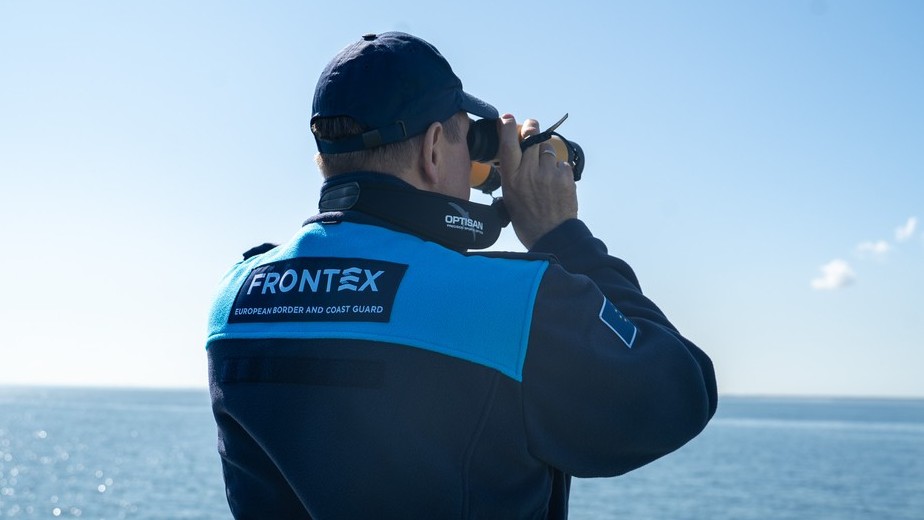
The European Commission wants Frontex to deploy faster during border emergencies, monitor public social-media content, and take a central role in returning people without a right to stay in the EU. Its proposals would expand the agency’s standing corps to 30,000 officers and allow it to support returns between non-EU countries.
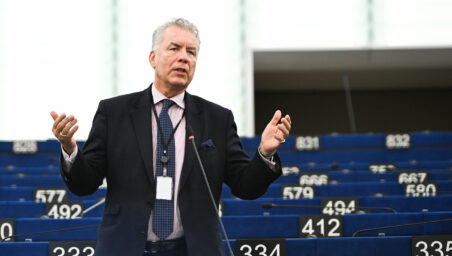
“We want Frontex to be there in hours, not in weeks,” Commissioner for Internal Affairs and Migration Magnus Brunner said on Tuesday. The presented package combines a revised mandate for the European Border and Coast Guard Agency with separate legislation to digitalise return procedures. Both proposals require agreement from the European Parliament and the Council.
A larger corps for faster deployment
The Commission argues that falling irregular crossings have not removed the need for stronger border capabilities. Executive Vice-President for Tech Sovereignty, Security and Democracy Henna Virkkunen said crossings were down 55 per cent over two years, but geopolitical tensions, hybrid threats, and increasingly sophisticated smuggling networks continued to test the system.
The proposal draws lessons from this summer’s sudden arrivals in Ceuta. “We must act before an event becomes a crisis,” Mr Brunner said. The Commission had already outlined stronger early-warning systems and a larger Frontex role in its earlier border-security plan.
We want Frontex to be there in hours, not in weeks. — Magnus Brunner, Commissioner for Internal Affairs and Migration
A new quick reaction force would be available for deployment within 24 hours, according to the Commission. Frontex’s executive director could authorise deployment following a request from a member state facing an emergency. Governments would also have to report potentially significant border events within 24 hours through Eurosur, the European border-surveillance network.
The planned 30,000-strong corps would include a new reserve of 17,000 national officers, remaining at member states’ disposal until needed. The expansion would be gradual. Frontex would also gain greater scope to acquire equipment and organise joint procurement, including digital and AI-enabled tools.
Social-media monitoring and digital returns
An online monitoring and response centre would examine publicly accessible social-media content for developments relevant to border management and illegal content linked to border-security risks.
Frontex could “directly engage with and alert platforms of its findings”, Ms Virkkunen said. It could also seek action through competent national authorities or operate as a trusted flagger under the Digital Services Act if designated by the relevant authority. “The DSA enforcement framework remains fully respected here,” she said.
Separate legislation would connect authorities through digital systems covering identification, travel documents, return operations, and post-arrival support. It follows the entry into force of the new Return Regulation on 16 October. Mr Brunner also argued that digitalisation would reduce paperwork and provide a clearer picture of what happens to people staying irregularly in the EU.
A wider return mandate under scrutiny
Mr Brunner said Frontex had supported nearly 64,000 returns last year, chartered more than 220 flights, and helped almost 20,000 people with reintegration. “That is why today we propose to make Frontex the central EU actor on returns,” he said.
A dedicated coordination centre would support the process from identification and voluntary-return counselling to transport and reintegration. Member states would retain primary responsibility. Frontex could also help organise returns between non-EU countries, subject to agreements and compliance with fundamental rights and international standards.
Frontex can act within its mandate on detection and signaling and directly engage with and alert platforms of its findings. — Henna Virkkunen, Executive Vice-President for Tech Sovereignty, Security and Democracy
Expanded powers arrive amid unresolved concerns about accountability. As EU Perspectives reported in July, lawmakers were already pressing for stronger safeguards alongside the agency’s revised mandate.
A 15 October report from the EU Agency for Fundamental Rights found that several national monitoring mechanisms were still not fully established. Of 322 criminal investigations into alleged border-rights violations opened in 12 member states between 2020 and 2025, only nine had resulted in convictions.
“Independent monitoring must be more than a requirement on paper,” the agency’s director, Sirpa Rautio, said. Parliament and the Council must now decide how far Frontex’s powers should expand.