Was Ceuta a migration crisis or an act of hybrid warfare? Brussels remains deeply divided after some lawmakers accused Morocco of orchestrating the mass crossing, while others warned against turning a humanitarian tragedy into political theatre.
“Mr Sánchez is an existential danger for Europe.” Member of the European Parliament Jorge Buxadé (Patriots/ESP) wasted no time launching a fierce attack on Spanish Prime Minister Pedro Sánchez over his migration policy.
At an extraordinary meeting of the European Parliament’s Committee on Civil Liberties, Justice and Home Affairs (LIBE), convened after the events in Ceuta, he argued that Europe had not witnessed a migration surge but a coordinated act of “hybrid warfare” by Morocco. He also accused Spain’s socialist government of lying.
Yet the people expected to explain what had happened never showed up. Neither of the Spanish ministers invited to the hearing attended.
Ceuta shaken by an unprecedented influx
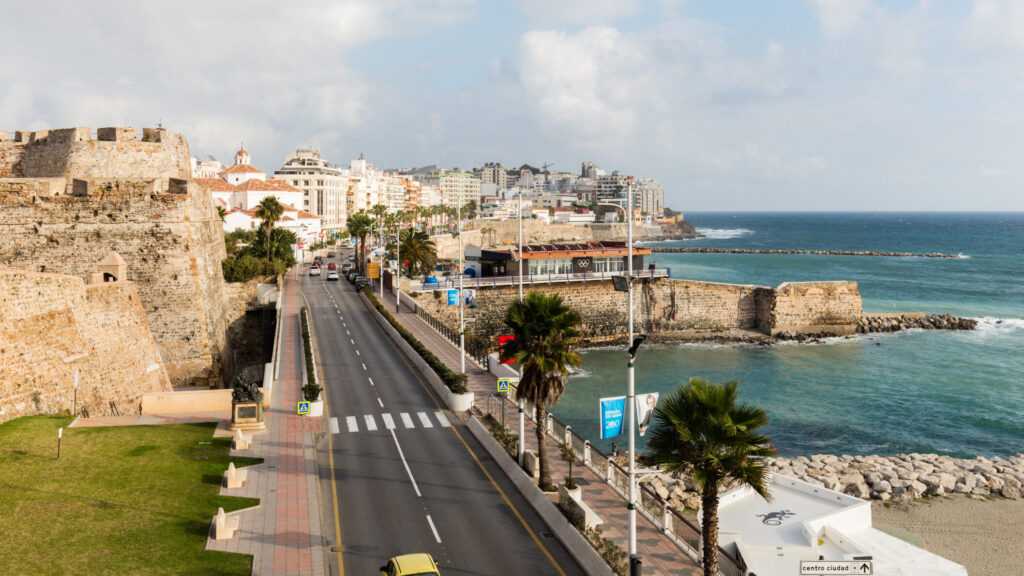
In late July, tens of thousands of people crossed into the Spanish exclave of Ceuta in North Africa within little more than a day. The overwhelming majority were Moroccan nationals. According to Juan Jesús Vivas, President of the Autonomous City of Ceuta, around 80,000 people entered the city: roughly the equivalent of its entire population. “It is as if 50 million people entered Spain in one day,” Mr Vivas said.
It is as if 50 million people entered Spain in one day.
— Juan Jesús Vivas, President of the Autonomous City of Ceuta
More than 100 people died during the crossing. Most migrants returned to Morocco within days. Even so, between 3,000 and 5,000 people remain in Ceuta, according to the president, while the city’s reception centres have stayed overcrowded ever since.
Together with Melilla, Ceuta forms the EU’s only land border on the African continent. That leaves the exclave heavily dependent on Morocco’s willingness to cooperate on border management. Rabat, however, has never formally recognised Spanish sovereignty over Ceuta.
Migration crisis or attack on Europe?
Only two outside guests attended the LIBE hearing: Commissioner for Internal Affairs and Migration Magnus Brunner and President Vivas. Spain’s Migration Minister Elma Saiz Delgado and Interior Minister Fernando Grande-Marlaska both failed to attend.
Committee chair Javier Zarzalejos (EPP/ESP) opened the session by expressing his disappointment. “I find it deeply regrettable that both have declined our invitation.”
The opening exchanges immediately set the tone. Mr Vivas rejected the description of the events as a conventional migration crisis. Instead, he spoke of an incursion that violated the territorial integrity of Ceuta, Spain and, ultimately, Europe. He urged the European Parliament to adopt an official declaration reflecting that assessment.
When asked whether the arrivals included jihadists previously expelled from the EU, Mr Vivas said the local authorities had no information suggesting that was the case. Mr Brunner later echoed that assessment, saying the Commission had received no such information from the Spanish government.
When it happened in Belarus, the Commission did not hesitate to qualify it as an act of aggression.
— Jorge Buxadé (Patriots/ESP)
Otherwise the commissioner painted a very different picture than Ceuta’s president. Mr Brunner argued that the incident had tested the EU’s new migration and asylum rules, which entered into force in June, and that they had held up well. He also noted that asylum applications across the Union had fallen by more than a quarter last year.
Ceuta, he said, represented an unprecedented shock. Nothing on this scale had hit a single external EU border in the past two decades. Even so, the Schengen area remained intact and the vast majority of migrants returned to Morocco. “We have passed this test of our resilience,” he concluded, while acknowledging that the system could still improve.
The political battle erupts
That was the moment when the hearing turned into an openly political confrontation. Mr Buxadé accused Mr Brunner of speaking too leniently about Sánchez’s government. He suggested the Commission either remained silent at Madrid’s request or because Brussels had fallen under the influence of a Moroccan lobby.
In his view, Morocco coordinated the influx through social media with the tacit approval of its authorities. He insisted the Commission should officially classify the episode as hybrid warfare. “When it happened in Belarus, the Commission did not hesitate to qualify it as an act of aggression,” he said.
Mr Brunner responded briefly. Migration policy, he said, remains the responsibility of member states. Referring to Spain, he added that “it is not a good signal for the rest of Europe”, but stressed that the decision ultimately rests with Madrid.
Instead of providing answers today, Sánchez’s ministers chose to snub the European Parliament by refusing to appear and face democratic scrutiny.
— Dolors Montserrat (EPP/ESP)
MEP Isabel Galán (The Left/ESP) offered the opposite interpretation. She argued that a meeting intended to discuss how to prevent further deaths at Europe’s borders had instead become an attempt to weaponise a humanitarian tragedy against Spain’s progressive government.
She also condemned the EU’s broader migration model—including outsourcing border control to countries such as Morocco, which she said fail to respect human rights—as a form of “necropolitics”. Ms Galán praised Ceuta’s residents, saying they had prevented far-right activists from stirring hatred on the city’s streets.
Saskia Bricmont (Greens-EFA/BEL) struck a similarly combative tone. She accused conservatives and parts of the liberal camp of behaving “like sheep” by following panic whipped up by the far right. She also reminded colleagues that Italian Prime Minister Giorgia Meloni had herself benefited from European solidarity during the migration crisis on Lampedusa.
The European People’s Party, Parliament’s largest political group, focused on the absence of Spain’s ministers. Group vice-chair Dolors Montserrat (EPP/ESP) argued that nobody could claim the crisis had already been resolved. Instead of answering Parliament’s questions, she said, the ministers had chosen to avoid “democratic scrutiny”.
Lena Düpont (EPP/DEU), the group’s spokesperson on home affairs, added that repeated warnings from local authorities and security services in the weeks before the crisis had gone unanswered. She reminded colleagues that Ceuta is not simply Spain’s border but Europe’s.
How much responsibility does Morocco bear?
One question kept resurfacing throughout the debate. How much of the crisis resulted from deliberate action by Morocco? Several lawmakers openly suggested Rabat had used migration as political leverage, whether over Western Sahara or during negotiations on a new comprehensive partnership agreement with the EU.
Mr Brunner stopped short of calling the events hybrid warfare. He nevertheless confirmed that migration forms a central part of the EU’s dialogue with Morocco. He also stressed that Brussels has tools at its disposal, including visa policy, trade and development assistance.
What happened in Ceuta is a clear sign of the failure of Europe’s migration model and its necropolitical approach.
— Isabel Galán (The Left/ESP)
MEPs also referred to a recent ruling by Spain’s Supreme Court and misleading social media posts that gave the impression the border stood “open to everyone”. According to Mr Brunner, people smugglers actively exploited those rumours to mobilise large crowds.
Another key issue dominated the discussion. Morocco appears on the EU’s list of safe countries of origin, making returns considerably easier. Mr Brunner argued that this illustrates why full implementation of the new asylum pact matters so much. Without Morocco on that list, swift returns would become far more difficult.
Some MEPs urged him to remove Morocco from the list because of allegations that it had orchestrated a hybrid attack. Mr Brunner declined. Instead, he pointed to the technical process behind the list. The Commission does not decide on its own, he said, but works alongside international organisations such as the UN Refugee Agency (UNHCR) and the International Organization for Migration (IOM), relying on experts on the ground.
What comes next?
President Vivas called for explicit backing from European institutions. He urged the EU to strengthen border protection with its own capabilities rather than relying on Morocco’s goodwill. He also asked for help with Ceuta’s overstretched reception centres and faster returns for those who remain in the enclave.
Mr Brunner pledged both financial and operational support through Frontex, Europol and the EU Agency for Asylum. He again urged Parliament to finally adopt the anti-smuggling directive, which has been stuck in the legislative process for three years. He also announced that Ceuta would feature in autumn discussions on Frontex reform and at the next European Council.
Whether Parliament will ultimately agree on what Ceuta actually was—a migration crisis, an attack on territorial integrity or an act of hybrid warfare—remained unresolved when the hearing ended. Only one point united the chamber. Everyone agreed it must never happen again. Who should take the blame proved far harder to agree on.