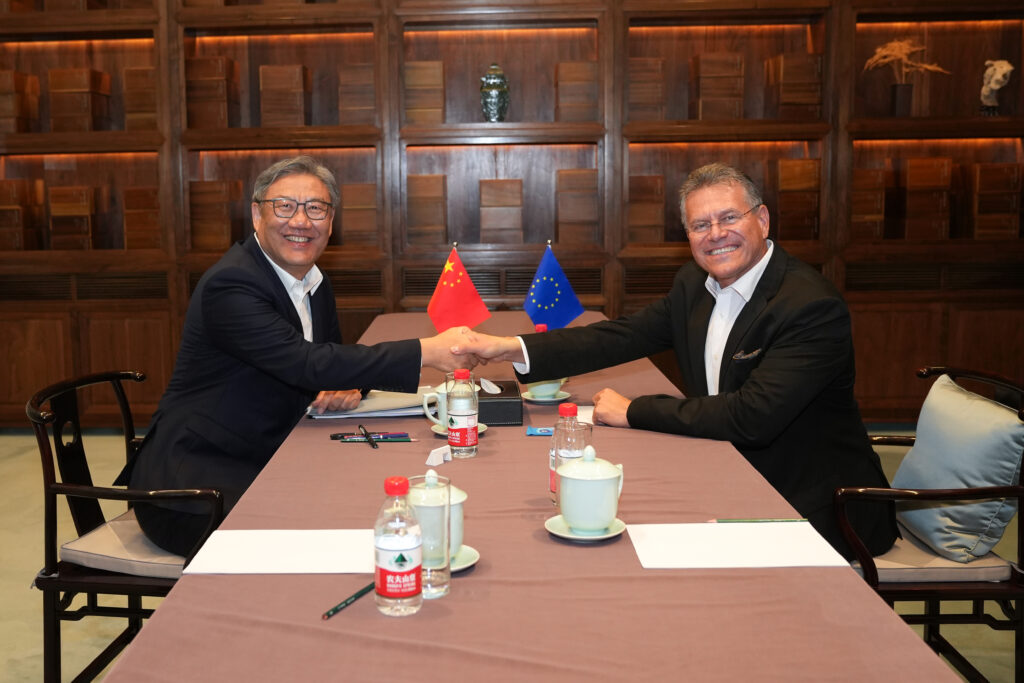
China has agreed to curb hybrid-car exports to Europe. The deal, reached during EU Trade Commissioner Maroš Šefčovič’s visit to Beijing, could cut expected shipments by more than half over the next four years.
After two days of talks with Chinese Commerce Minister Wang Wentao, Šefčovič said China had also agreed to lower tariffs on European products including car parts, olive oil and footwear. He estimated savings of at least €225 million in import duties. China also committed to making export approvals for rare earths and permanent magnets easier. “It’s a crucial first step, but only a first step in the process of rebalancing,” he said.
European carmakers face growing competition from Chinese brands. Friday’s agreement gives Brussels a negotiated response, although Šefčovič withheld details of how the export restrictions would work until EU leaders examine them next week.
Fewer cars than forecast, not half of today’s sales
The understanding covers both conventional hybrids and plug-in hybrids. Šefčovič said it could prevent several million Chinese vehicles from entering the European market over four years compared with the number expected without an agreement.
However, the promised reduction is measured against projected exports, rather than a commitment to halve current shipments. “According to the projection we have, that’s more than halving of the exports of hybrids and plug-in hybrids into the European Union under no change scenario,” he explained.
Asked repeatedly how the restrictions would work, Šefčovič declined to disclose the mechanism or numerical parameters before presenting them to governments. He said the arrangements had been negotiated in detail and would comply with World Trade Organization (WTO) rules. The joint statement published by China’s commerce ministry confirms an understanding on hybrid trade, but does not spell out the restrictions.
It’s a crucial first step, but only a first step in the process of rebalancing.
— Maroš Šefčovič, Trade Commissioner
Journalists also challenged whether limiting cheaper Chinese cars would hurt European consumers. Šefčovič defended the need to balance access to products with protection for European manufacturing. He argued that the surge in exports threatened entire industrial sectors and thousands of jobs, making a negotiated response necessary.
Cheaper access to China, smoother supplies from it
The package also includes lower Chinese import tariffs on seven product categories, covering European exports worth almost €4 billion. Šefčovič named car parts, olive oil and footwear among the products concerned and estimated duty savings of at least €225 million. Those savings would reduce the cost of selling into China.
A third commitment concerns export licences for rare earths and permanent magnets. Šefčovič said the aim was to improve an existing fast-track process, giving European companies more predictable access to supplies. “What we are looking into right now is how to make it even smoother, more user friendly,” he said. The announcement concerns easier approvals, without removing China’s export controls.
EU leaders will assess the package at their summit next week. Šefčovič and Wang Wentao will hold a follow-up video call in January, with another round of trade talks planned for March. Friday’s package gives European exporters potential savings and manufacturers a promise of less import pressure. Leaders must now judge whether those gains are substantial enough.