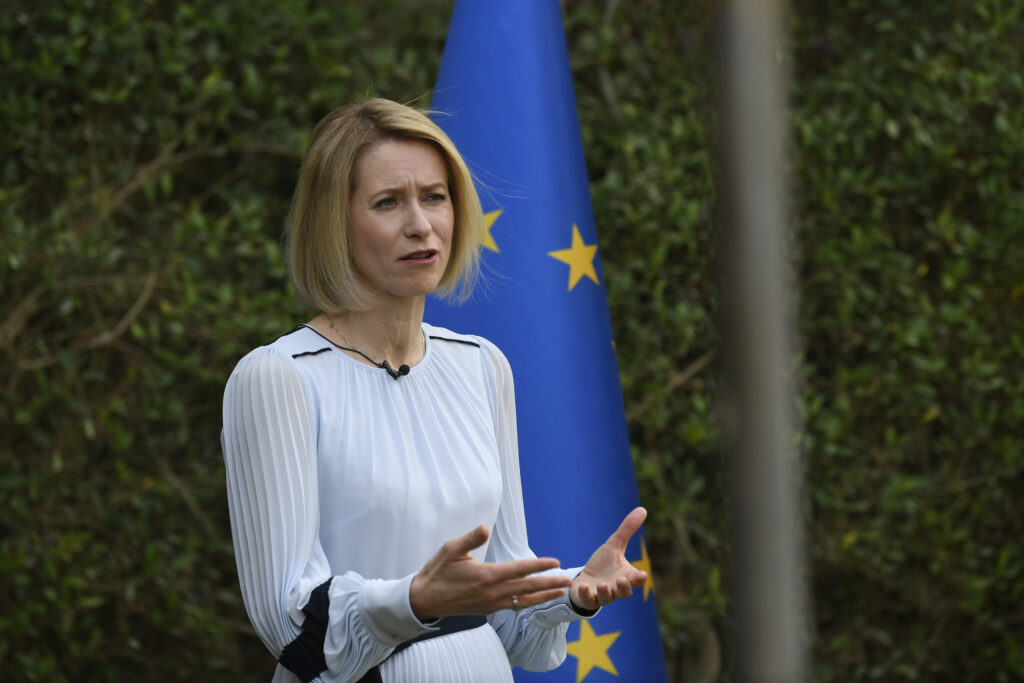
Europe is adding nearly 1,600 sanctions targets. Kaja Kallas wants Washington to tighten the pressure too. The EU foreign policy chief called for US sanctions on Monday, as Donald Trump’s energy ceasefire faced reports of further Russian attacks on Ukraine.
“We would call on the US to put the sanctions in place,” Ms Kallas said in her remarks before the Foreign Affairs Council in Luxembourg. She argued that coordinated action by Europe and the United States would make it harder for Moscow to continue the war.
EU foreign ministers approved nearly 1,600 new sanctions listings, most of them targeting Russia’s military-industrial complex, confirming an agreement reached by EU ambassadors last Wednesday. More than half are linked to ballistic-missile production. “We are making it significantly harder, slower and more expensive for Russia to produce the weapons it uses to kill Ukrainians,” Ms Kallas said after the decision.
Europe expands sanctions while seeking American backing
“This will be the single largest expansion of our sanctions list since Russia started its war,” Ms Kallas wrote in her post on X before the meeting. The focus is on the businesses supplying Russia’s weapons industry, rather than another general restriction on the Russian economy.
The practical effect of EU listings includes freezing assets held within the bloc and prohibiting the provision of funds or other assets to those sanctioned. For European businesses, that means checking that their transactions do not support newly listed companies.
Ms Kallas said the UK was already aligned with the EU and urged Washington to follow. She specifically called for the US to implement the Russia sanctions law named after the late Senator Lindsey Graham. Her appeal came as journalists questioned Mr Trump’s agreement to purchase Russian diesel. The deal pulls Washington in a different direction from Europe’s effort to restrict Moscow’s income.
The sanctions push also covers 77 people involved in organising or standing in Russia’s State Duma elections in occupied Ukrainian territory. Ms Kallas said proposed targets were checked against information from governments, intelligence services, and public sources before being put forward.
An energy ceasefire has yet to stop the attacks
Mr Trump announced an energy ceasefire on Sunday. But Ukrainian authorities reported further Russian strikes on energy facilities on Monday, including a facility outside Kharkiv. President Volodymyr Zelenskyy had welcomed Mr Trump’s announcement while saying attacks on Kyiv and Kharkiv were continuing.
We are making it significantly harder, slower and more expensive for Russia to produce the weapons it uses to kill Ukrainians. — Kaja Kallas, EU foreign policy chief
Ms Kallas welcomed the prospect of a pause but questioned both compliance and its scope. A deal protecting only refineries would favour Russia, she argued, because it has many more than Ukraine. With winter approaching, protection for Ukraine’s wider energy system matters too.
She also said she wanted the agreement to ensure that “the ceasefire would include people not being killed”. Her position was that an energy arrangement should accompany pressure to end the fighting, rather than replace it.
Monday’s decision gives Europe a substantially longer sanctions list. Ms Kallas’s appeal puts the next question to Washington: whether it will reinforce those restrictions while pursuing its energy agreement with Moscow. For Ukraine, the immediate test is whether the promised ceasefire actually stops attacks on its energy infrastructure.