Investors want evidence before they back new tests, but without investment, the data needed to prove their value may never materialise. Berlin startup theblood hopes menstrual blood could help close that gap in conditions such as endometriosis, although EU rules for diagnostic tests do not yet explicitly recognise the sample.
Endometriosis affects one in ten women, but there is “basically no data available”, the Gates Foundation’s deputy director of diagnostics told the World Health Summit in Berlin last week.
Without that data, investors stay away. “When you talk to industry they will tell you oh but there’s no market there because the burden is not known,” said Dr Maike Scharp.
There are 385 proteins in menstrual blood that are not to be found anywhere else. — Marilena Schmich, theblood
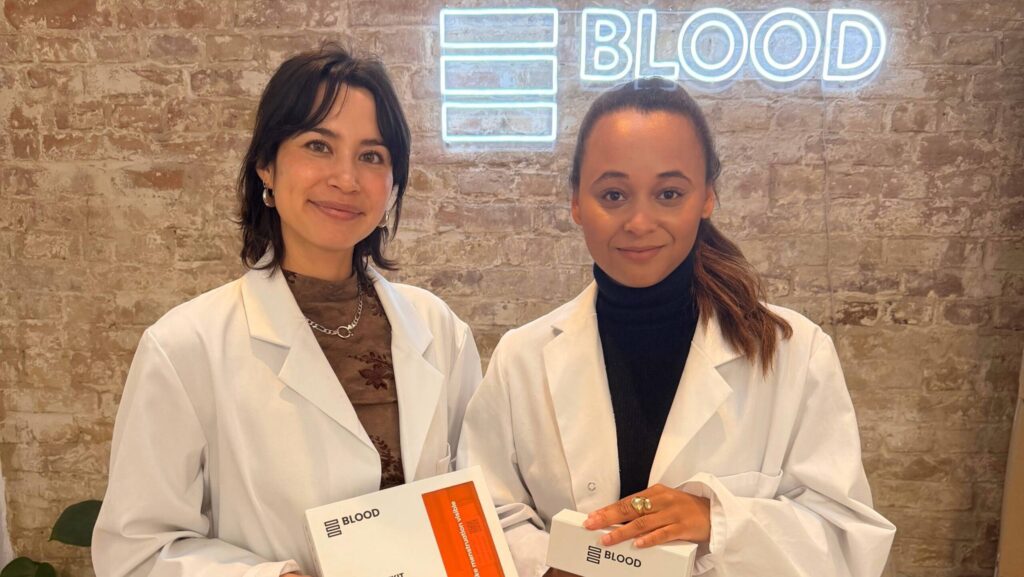
Berlin startup theblood thinks part of the data sits in menstrual blood. It is developing a home test that uses it. The blood holds proteins and tissue that could help detect fertility problems and diseases such as endometriosis, the founders say.
“There are 385 proteins in menstrual blood that are not to be found anywhere else,” said Marilena Schmich, the company’s chief operating officer. “There are a lot of research groups currently working on understanding what these proteins can do and if you can turn them into biomarkers for infertility, for cancer, etc.” One marker in the company’s first test may in the future also help indicate pre-diabetes, the founders say.
Thousands of data points
The company already holds thousands of data points from its studies. Test results are anonymised, and users can choose to share their data for research with universities and partners.
Theblood also works with outside research groups that study menstrual blood but have no way to bring their findings to market. “The world needs more women health data,” Ms Schmich said.
Why is menstrual blood forgotten? — Isabelle Guenou, theblood
Medicine routinely analyses saliva and urine, but not menstrual blood, said CEO Isabelle Guenou. “Why is menstrual blood forgotten?” she asks. Investigators use it in forensics, she added, “but not in a medical area”.
“We are at the very beginning of untapping the whole potential of the sample,” Ms Guenou said. When she began looking at the research in 2020, she found five or six papers on stem cells and menstrual blood. Now five to ten new papers appear every week, she said.
The EU’s rules for diagnostic tests do not yet explicitly recognise the sample either. “At the moment, the IVDR in the EU doesn’t recognise menstrual blood as a specific matrix,” Ms Schmich said. The In Vitro Diagnostic Regulation (IVDR) sets the rules for diagnostic tests sold in the EU.
A forgotten sample
The company grew out of Ms Guenou’s own experience. She has endometriosis, and it took her eight years to get a diagnosis, she said. Ms Schmich, who also has endometriosis, waited about 15 years.
The World Health Organization (WHO) estimates that endometriosis affects ten per cent of women of reproductive age worldwide. The average time to diagnosis is between four and 12 years.
Cardiovascular disease is a leading killer of women while endometriosis, autoimmune diseases, osteoporosis, dementia and menopause remain under recognised. — Dr Sylvie Briand, World Health Organization
At last week’s World Health Summit, Dr Sylvie Briand, the WHO’s chief scientist, said women’s health is still seen too narrowly. “For too long, women’s health has been viewed mainly through reproduction,” she said. “Cardiovascular disease is a leading killer of women while endometriosis, autoimmune diseases, osteoporosis, dementia and menopause remain under recognised.”
A test without a needle
Theblood’s test comes as a kit for use at home. Women collect blood with a menstrual cup on the second day of their period and post it to a lab. Results appear in an app. The first test covers routine biomarkers linked to fertility and polycystic ovary syndrome (PCOS). It does not give a diagnosis.
“The upside is you don’t need a needle. You don’t need to go to an appointment to the doctor. You can measure it continuously,” Ms Schmich said. The company hopes to ship the first test early next year.
In the long term, the founders hope to offer a full health check from menstrual blood alone, covering the biomarkers of a standard blood panel. For now, this is a vision rather than a product. “If you could do that as a health checkup once a year or twice a year just by sending in your menstrual blood, that would be amazing,” Ms Schmich said.
A sample the rules don’t define
To build the test, the team compared menstrual blood with blood from a vein, the gold standard. Some markers matched. For others, they had to build “a whole new reference range”, Ms Guenou said.
That is why the founders want menstrual blood to be explicitly recognised as a distinct specimen type, for example through guidance or standards under the IVDR. “Because then we have research that gets funded in that direction or initiatives that can be taken,” Ms Schmich said.
There were so many rejections or labs that didn’t really quite understand what we’re trying to do. — Marilena Schmich, theblood
The certification body has no definition for the sample either, Ms Guenou said. “This is always a challenge because there is not really a definition of the sample existing.” Even finding a certified tube labelled “human sample” instead of “venous sample” took a long time, Ms Schmich said.
Early on, labs turned the team down. “There [were] so many rejections or (…) labs that didn’t really quite understand what we’re trying to do,” Ms Schmich said. Some doctors still ask: “Why do we need menstrual blood like you have venous blood?”
Stuck between funding stages
The founders see a structural problem: current funding instruments do not fit early-stage innovation in women’s health. “I would say funding for me is like the biggest obstacle,” Ms Guenou said. The company started in 2022, when the funding market was different, she said.
When the founders started, women’s health and endometriosis were new territory for most investors. “We talked to so many venture capitalists,” Ms Guenou said. “The beginning was completely, completely new. So we did more education than raising capital.”
So far it has received German and Berlin research funding, but no EU funding. Its investors include business angels and a venture builder from a pharma company. Each new biomarker needs its own certification, and that costs money, Ms Schmich said.
Early EU research funding requires consortiums of partners from different countries. University partners bring strict rules on intellectual property, which is hard for a company with investors, she said. “We would actually need funding to get to that readiness level that you need for the bigger funding.”
A roadmap by Digitalis Labs, part of a group that includes investor Digitalis Ventures, describes the same trap: thin evidence weakens the case for coverage, uncertain coverage weakens the case for investment, and scarce investment ensures the evidence never gets built.
What MEPs want
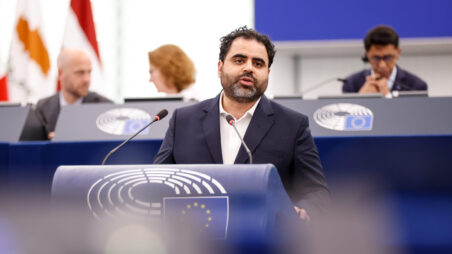
Policymakers are starting to respond. On 16 September, the European Parliament adopted a report on gender inequalities in health, by 390 votes to 218, with 29 abstentions. According to Parliament, these inequalities are “rooted in decades of medical research designed around the male anatomy”, affecting women’s care “from clinical trials to diagnosis, treatment, and access to healthcare”.
Women’s health has been under-researched, underfunded and too often overlooked for far too long. — Billy Kelleher (Renew/IRL)
“Women’s health has been under-researched, underfunded and too often overlooked for far too long. The consequences are felt by millions of women who wait too long for a diagnosis or struggle to get the care they need,” said Billy Kelleher (Renew/IRL), the lead MEP on the report.
MEPs want a comprehensive EU women’s health strategy, with “clear, public and measurable targets”. The report names endometriosis, menopause symptoms, cardiovascular disease, migraines, infertility, osteoporosis, diabetes and mental health conditions among “under-researched and -diagnosed conditions”.
MEPs want sex and gender disaggregated data collected in EU-funded projects. They also call for policies that support medical innovation, while “reducing unnecessary regulatory burdens on health businesses, researchers and new treatments”.
No law
Maria Walsh (EPP/IRL), who negotiated the report for the EPP Group, stressed that it is not binding. “The vote does not create a new law,” she wrote in her LinkedIn newsletter. “But 218 votes against tells you how much work it still takes to move these issues forward for women.”
The Commission’s Gender Equality Strategy 2026–2030, presented in March, promises “new measures to address the lack of gender-sensitive medical research, diagnostics and treatment”. The IVDR itself is under review. The Commission proposed targeted changes in December 2025, and Parliament’s public health committee (SANT) published a draft report in July.
Member states are also moving. On 13 October, Germany’s health ministry presented the results of a year-long dialogue on the menopause. “Women’s health must not be a marginal issue in society. It affects half the population,” said Christiane Schenderlein, parliamentary state secretary at the ministry. The ministry has put up to €10m into women’s health research for 2027 to 2031.
More diagnoses to come
For now, theblood’s focus is close to home. “Our main goal at the moment is to get a test out that is certified,” Ms Schmich said.
In the longer run, she expects menstrual blood to help name conditions that are still overlooked. Many women’s symptoms are dismissed today, she said, because “we don’t have the words or the diagnosis to describe what we have yet”.
“I really think that in the coming years, we’re going to see more and more [diagnoses] to explain what we’re experiencing,” she concluded.