The green leaf on imported organic food will soon promise more. Foreign products face extra EU checks to carry the logo, while small sellers of loose produce get less paperwork. Only member states still have to sign off before current import rules expire in December.
In Strasbourg on 24 November, MEPs backed the changes by 486 votes to 39, with 140 abstentions. The vote confirms a deal struck with the Council in October. The new rules aim to protect the interests of consumers and provide a level playing field for European producers.
Less red tape for small operators should also boost the competitiveness of the organic sector. The changes will take effect the day after their publication in the Official Journal of the EU, once member states formally adopt them in the Council.
Stricter rules for imported organic food
One of the major changes affects organic products from outside the EU. Some non-EU countries have organic standards that the EU recognises as equivalent. Their products may carry the EU organic logo only if they also meet extra EU production and control requirements.
You might be interested

The rule covers the labelling and advertising of the products. It should assure consumers that they can trust the organic logo on what they buy. The country of origin should make no difference. The rule also aims to eliminate unfair competition between EU producers and rivals working under other rules.
The changes stem from a judgment of the Court of Justice of the European Union of 4 October 2024. It ruled that products from non-EU countries recognised as equivalent could not use the EU organic logo. The European Commission then proposed changes to the regulation to limit the damage to trade. Current recognition of these countries expires on 31 December 2026, so the new rules need to be in place by then.
Consumer trust in the logo matters. A 2024 Eurobarometer survey found that 56 per cent of Europeans recognise it. That makes the EU organic logo the best-known food label in Europe.
Less paperwork for small sellers
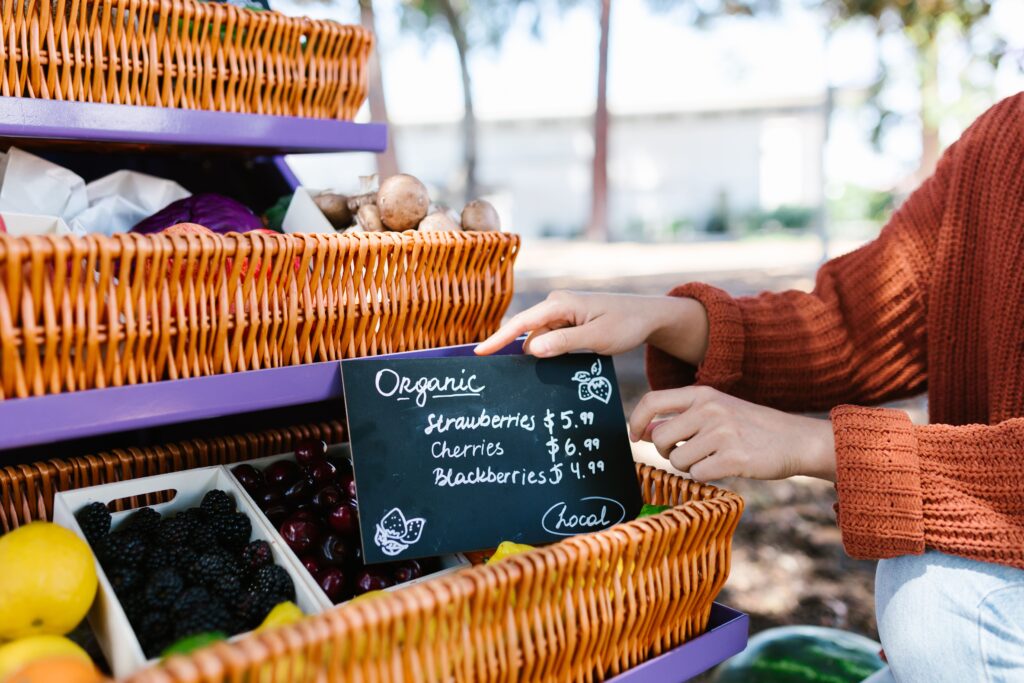
The new rules provide relief for small businesses selling organic products directly to consumers. Sellers of unpackaged organic products can be exempted from organic certification. Their annual sales must stay within 10,000 kg and their turnover below €40,000.
The limits used to be 5,000 kg and €20,000. Doubling them means more small operators can qualify for the exemption. Under certain conditions, the exemption will also cover small online retailers selling prepacked organic products.
The change should ease the load on farm shops and market stalls. Yet the exemption is no free pass. Exempt sellers must still protect the interests of consumers and the integrity of the organic system.
Call for stable rules
Camilla Laureti (S&D/ITA), Parliament’s rapporteur on the file, stressed the need for stable and clear rules. “My aim is to give this vital sector a stable, coherent, and predictable regulatory framework,” she said. “One that simplifies existing requirements while avoiding repeated legislative revisions after its introduction.”
Ms Laureti linked that stability to the sector’s standing at home and abroad. “Regulatory stability is essential to maintaining the high standards that underpin the sector’s quality, competitiveness, and reputation, both within the EU and internationally,” she said.
Guarding against contamination
The new rules also tackle the risk of contamination between organic and non-organic crops. This happens when substances from conventional farming reach organic fields. Member states read the rules differently, so practices vary across the EU.
From 31 December 2031, the Commission will publish guidelines on best practices against cross-contamination on organic farms. They should help member states apply the rules more uniformly.
The sector must continue to provide robust protection for consumers. — Camilla Laureti (S&D/ITA), rapporteur
Ms Laureti also insisted that consumers must come first. “The sector must continue to provide robust protection for consumers,” she said.
Investment still needed
The new rules alone will not deliver the EU’s organic goals, Ms Laureti warned. “Alongside the regulatory framework, to achieve the EU objectives for organic production, we need investment and support too,” she said. “This is the role of the EU’s Common Agricultural Policy.”
The revised regulation brings simpler procedures and more legal certainty. Money is another matter. It belongs to the wider debate on the future of the Common Agricultural Policy, which is tied to talks on the EU’s next long-term budget from 2028.
Last hurdle in the Council
Member states now have the final word in the Council. They need to move quickly, as current import arrangements run out at the end of December.
Once they sign off, producers will get simpler and more transparent procedures. Consumers, in turn, will know that only products that pass EU checks can carry the organic logo.