Shut down in Moscow, back in business in Bishkek within weeks. Russia’s crypto escape routes keep reappearing under new names. The European Commission now wants to keep up with a dedicated sanctions office and a task force focused on cryptocurrencies.
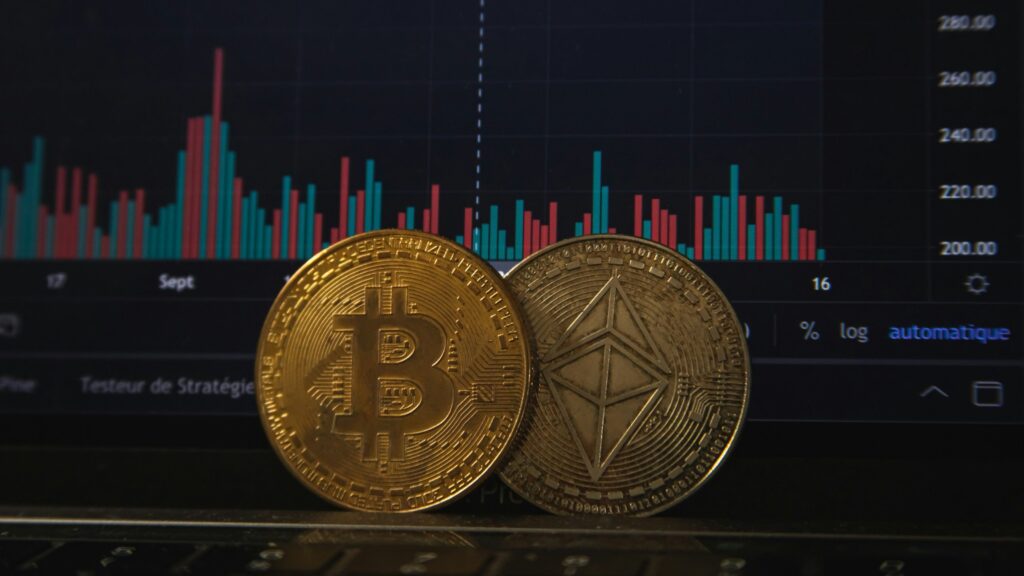
One case shows what Brussels is up against. In March 2025, US and European authorities took down Garantex, a Moscow-based crypto exchange used to move money around Western restrictions. Within weeks, analysts traced its operations to a new platform called Grinex, registered in Kyrgyzstan. Grinex soon became the main trading venue for A7A5, a stablecoin pegged to the Russian rouble. A stablecoin is a crypto token tied to a conventional currency.
A Russian firm called A7 created the token to help businesses make cross-border payments despite sanctions. According to blockchain analytics firm Elliptic, A7A5 moved more than $102bn before coordinated US, UK, and EU sanctions choked it. By June 2026, its daily volumes had dropped by 96 per cent from their peak a year earlier.
New office, new task force
Commissioner Maria Luís Albuquerque, who is in charge of financial services, announced the new tools in Brussels on 5 November. She chaired the tenth meeting of the High-Level Group on Union Restrictive Measures, which brought together senior sanctions officials from all member states. In the afternoon, EU Sanctions Envoy David O’Sullivan met partners including the US, the UK, Japan, and Ukraine.
The new office will sit inside the Commission and cover the whole life cycle of economic sanctions. That runs from policy design and outreach to implementation and the fight against circumvention. Member states should get quicker access to guidance, shared data, and economic and technical analysis.
The aim is to harmonise how national authorities apply the rules. The EU adopts sanctions jointly, but each member state enforces them on its own territory. Uneven enforcement leaves gaps that Russia and its intermediaries can exploit.
The second new measure is an informal task force on crypto sanctions. It will bring together experts from across the Commission and the member states. “We know that crypto is a tool that has been used to circumvent our sanctions,” Commission spokesperson Siobhan McGarry told journalists on 6 November. She called the sector “a very fast evolving world”.
Cat and mouse continues
Brussels has already sharpened its crypto tools. The 21st sanctions package, adopted on 23 July, banned EU operators from dealing with 14 crypto platforms based in Georgia, Panama, the United Arab Emirates, the Marshall Islands, Kyrgyzstan, and Belarus. For the first time, the EU can also ban crypto services from an entire third country that hosts such platforms.
Ms McGarry linked the new office to a pledge by Commission President Ursula von der Leyen to strengthen sanctions enforcement. “In each and every sanctions package, of course, we’re looking at ways we can close loopholes and tackle circumvention,” she said. The Commission is now working on a 22nd package.
In each and every sanctions package, of course, we’re looking at ways we can close loopholes and tackle circumvention. — Siobhan McGarry, European Commission spokesperson
Brussels argues the measures are biting. According to the Commission, Russian growth slowed from 4.9 per cent in 2024 to 1 per cent in 2025. Yet Moscow keeps adapting. In October, A7 launched a service that lets businesses pay in USDT, a dollar-pegged stablecoin, while the firm forwards the money to suppliers through ordinary bank transfers.