For the first time since 2009, a UN climate summit ended without a deal. In the European Parliament, the collapse of COP31 in Antalya has exposed a deep rift. Some lawmakers want Europe to fight harder for the climate. Others see the failure as proof that the EU should scale back its targets.
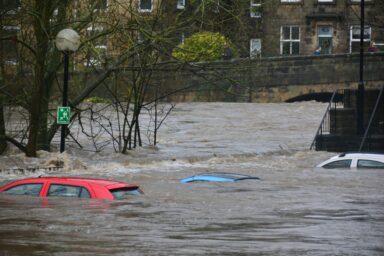
“Here we are, talking about words in an agreement, while on the other side of the world, islands are disappearing under water.” With these words, MEP Ingeborg ter Laak (EPP/NLD) captured the frustration expressed by several lawmakers during the debate on Thursday (26 November) on the outcome of COP31. She compared a climate agreement that makes no mention of fossil fuels to an attempt to extinguish a fire without first shutting off its fuel supply.
MEP Mohammed Chahim (S&D/NLD) was equally critical of the summit’s outcome. “History will remember this summit. Not for what they achieved, but for what they refused to do,” Mr Chahim said.
Climate delay: climate denial with better PR?
MEP Gerben-Jan Gerbrandy (Renew/NLD) warned that global temperatures had been more than two degrees above pre-industrial levels for over a week, describing it as a terrifying new record. “It’s almost as if the world was trying to tell us something after the failure of COP31,” Mr Gerbrandy said.
You might be interested
For MEP Lena Schilling (Greens/EFA/AUT), rejecting the agreement meant making a promise to uphold Europe’s climate ambitions. “We promised no backtracking, we promised we will stand proud and strong for the things we said for years,” Ms Schilling said, adding: “We need to deliver hope for young people. We need to deliver ambition.”
MEP Kai Tegethoff (Greens/EFA/DEU) went a step further, calling for majority voting both at UN climate conferences and within the Council of the EU. “Because climate will not wait for unanimity. Climate delay is just climate denial with better PR,” Mr Tegethoff said.
Time to turn the ‘green Titanic’ around?
Not all lawmakers shared this assessment. Some saw the failure of COP31 as evidence that Europe should reconsider its climate ambitions altogether.
MEP Ondřej Knotek (PfE/CZE) argued that the summit had exposed Europe’s isolation on climate policy. He called for a reassessment of the EU’s climate targets, including the Emissions Trading System, the bloc’s carbon market. He compared Europe’s green agenda to a Titanic heading towards an iceberg.
MEP Anja Arndt (ESN/DEU) welcomed the outcome of the summit, expressing hope that it would mark a turning point for Europe’s climate policy. “That was a good day for Europe. And I believe it marked the end of this long process wasting time on the climate agenda,” Ms Arndt said.
Taking a sharply opposing stance, MEP Vytenis Andriukaitis (S&D/LTU) criticised those advocating continued fossil fuel use. He drew a parallel between the policies promoted by US President Donald Trump and Russian President Vladimir Putin. “Those of you in this room who are in favour of drill, baby, drill are also favouring policies that kill people and make them suffer,” Mr Andriukaitis said.
Decision takers or decision makers?
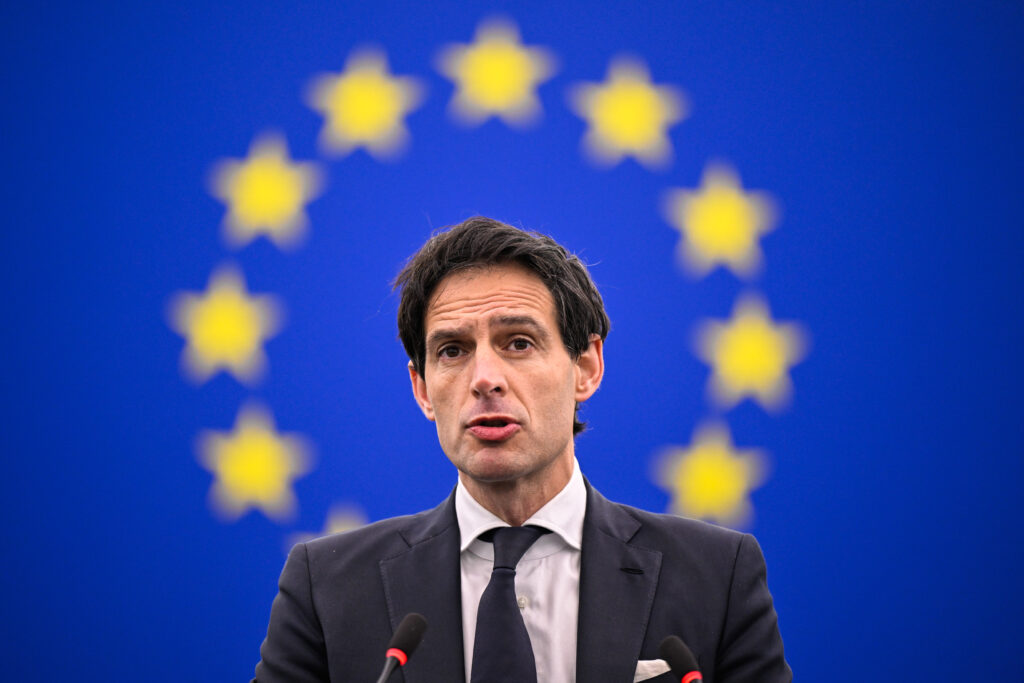
European Commissioner for Climate, Net Zero and Clean Growth Wopke Hoekstra turned the argument around. In his view, it is Europe’s dependence on imported fossil fuels, not its climate ambitions, that undermines its independence. “We are importing 80 per cent of our gas and more than 95 per cent of our oil. As long as we keep doing that, we are decision takers rather than decision makers,” Mr Hoekstra said.
The Commissioner also defended Europe’s contribution to international public climate finance, which he said had increased to €32.3bn in 2025. He urged lawmakers to acknowledge the EU’s efforts rather than criticise them and to listen to the scientific community. “We might not be perfect, but in terms of ambition and providing the financing, no one of our size is nearly matching what we are doing,” Mr Hoekstra said.
No deal better than a bad deal?
In Antalya, fossil fuels became the deal-breaker. For MEP Seán Kelly (EPP/IRL), however, walking away was preferable to compromising on climate action.
History will remember this summit. Not for what they achieved, but for what they refused to do. — Mohammed Chahim (S&D/NLD), MEP
Despite the disappointing outcome, Mr Kelly pointed to the fact that 130 countries had refused to endorse a deal that ignored the need to move away from fossil fuels. “Actually, it was the best outcome because 130 countries were not prepared to sugarcoat the drill, baby, drill philosophy that ignores climate change,” he said.