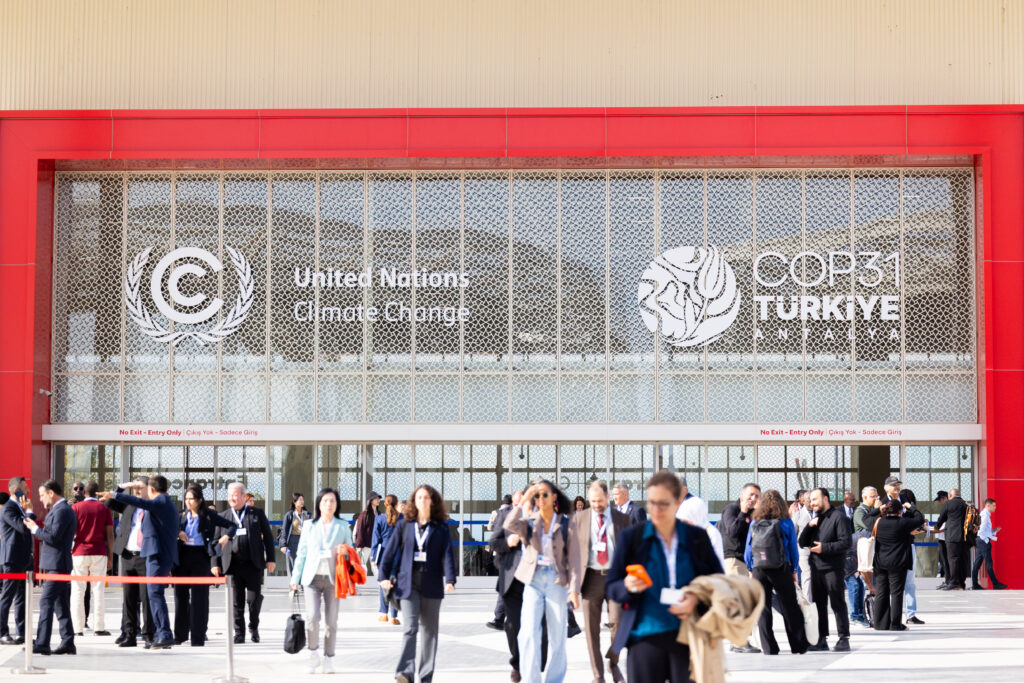
No deal, but a lesson for next time. After COP31 collapsed over disagreements on fossil fuels, EU politicians are calling for a stronger alliance to ensure the next climate summit does not end in the same deadlock.
The collapse of the world’s longest UN climate summit ever has sparked sharply different reactions among European politicians. While some praised the EU for standing firm on fossil fuels, others warned that Europe’s climate ambitions were putting its industries at a disadvantage.
Fossil fuels play a central role in global warming. We cannot turn a blind eye to that.
— Dan Jørgensen, European Commissioner for Energy and Housing
“Consensus cannot mean the lowest common denominator. We could not endorse a decision that greenwashes fossil fuels,” Commission spokesperson Anna-Kaisa Itkonen said at Monday’s press briefing, defending the decision to walk away from the table.
You might be interested
She stressed that the EU remained committed to international climate cooperation but argued that the final text failed to reflect the level of ambition needed to advance global climate action.
The Commission also pointed out that the EU accounts for around 6% of global greenhouse gas emissions, making cooperation with countries responsible for the remaining share essential to tackling climate change.
Commission calls for stronger climate action
European Commissioner for Energy and Housing Dan Jørgensen also defended the need to move away from fossil fuels, warning that their role in global warming could not be ignored.
“Fossil fuels play a central role in global warming. We cannot turn a blind eye to that,” he wrote on social media following the summit. “With weather extremes and global temperatures rising, this is not the time to put the Paris Agreement at stake. This is the time to double down on climate action,” he added.
Jørgensen called for the electrification of the economy and greater support for clean energy, describing them as the most effective ways to secure a liveable future for European citizens.
We do say yes to the COP process even though, as you have seen, it is fractured.
— Wopke Hoekstra, European Commissioner for Climate
Similarly, European Commissioner for Climate Wopke Hoekstra described the outcome as a failure to secure the action needed to address global warming, saying that negotiations had failed to reaffirm the need to transition away from fossil fuels.
“We have failed to bring together the action that is needed,” he said in Antalya on Sunday, adding that the EU could not accept a text that ignored climate science and placed excessive emphasis on carbon capture and storage.
Despite rejecting the agreement, Hoekstra reaffirmed the EU’s support for international climate cooperation. “We do say yes to the COP process even though, as you have seen, it is fractured.”
Stronger next time?
Swedish Member of the European Parliament Pär Holmgren (Greens/EFA/SWE), who attended COP31 as part of the EP’s delegation, accused negotiators of failing to tackle the root cause of climate change. Ultimately, though, he concluded that walking away is better than to accept weak wording. “No deal is better than a bad deal,” he said.
No deal is better than a bad deal.
— MEP Pär Holmgren (Greens/EFA/SWE)
His colleague Kai Tegethoff (Greens/EFA/DE) was equally critical of the negotiations. She accused oil and gas producers of pressuring Europe to accept a weak agreement. “Leaving Antalya without a deal does not mean global climate action is over. It means Europe stood up to the bullying of oil and gas producers and stood on the right side of history by refusing to sign up to a text designed to greenwash fossil fuels,” he said.
Mr Tegethoff argued that moving away from fossil fuels could also lower energy bills for households and businesses. He urged European leaders to accelerate renewable energy and electrification ahead of the next climate summit. He also urged the EU to arrive “with a coalition strong enough that petrostates cannot hold the process hostage again”.
With COP32 set to take place in Addis Ababa, Ethiopia, in 2027, governments will have another chance to reach an agreement. The reactions to COP31, however, suggest that securing agreement on the way forward will remain a challenge.