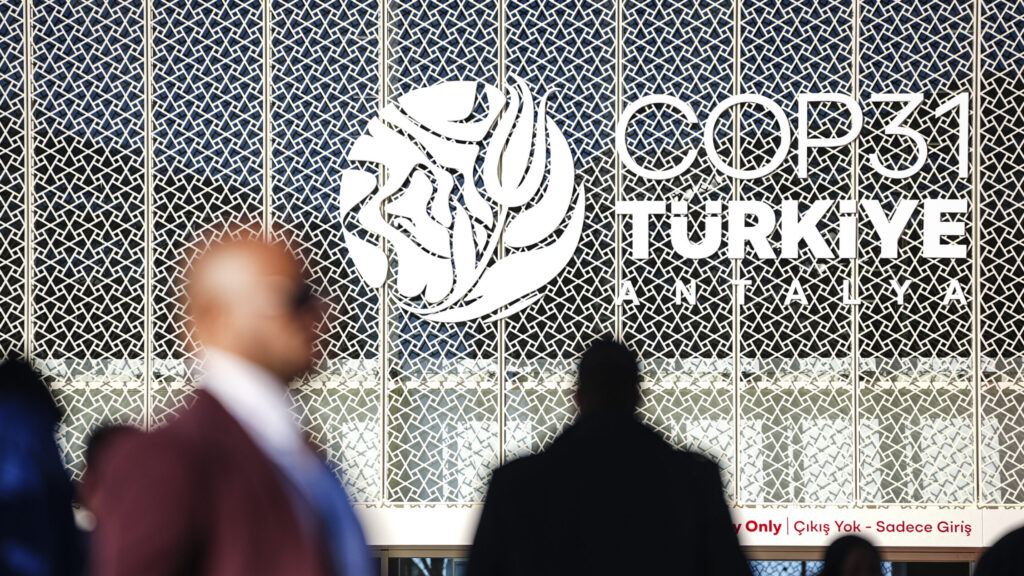
A new global alliance launched at COP31 will bring together climate and health research funders, as countries face pressure to turn promises into action.
Forty-eight developing countries say they need $3.3bn (approx. €3.0bn) a year to prepare their health systems for climate change. In 2024, international finance covered less than 34 per cent of those needs, according to the 2026 Lancet Countdown report. At the UN climate summit in Antalya (COP31), the EU’s new health pledge is aimed at research.
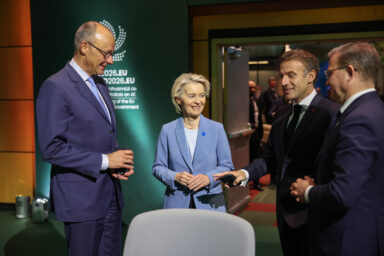
On 13 November, the European Commission launched the Multilateral Initiative on Climate & Health Research Funding with the Wellcome Trust and public research funders from five continents. The Commission calls it the first global alliance of funders dedicated to climate and health research.
The COP of implementation
The pressure in Antalya is to deliver, not to promise. “COP31 must be the COP of implementation,” says Brazil’s Health Minister Alexandre Padilha, whose country hosted last year’s summit. “More than making political commitments, we need to turn them into concrete actions.”
You might be interested

World Health Organization (WHO) Director-General Tedros Adhanom Ghebreyesus sees the same risk. “The risk now is not a lack of ambition. It’s fragmentation,” he said. He is speaking about the summit presidencies, the countries that host and chair each climate summit. Each presidency launches something new, he says, “while earlier commitments go unfunded and unreported”.
Dr Tedros recalls how health climbed the agenda, summit by summit. The United Kingdom secured the first commitments to climate-resilient, low-carbon health systems. The United Arab Emirates held the first Health Day. Brazil delivered the Belém Health Action Plan.
This year’s host, Türkiye, launched the Antalya Initiative for Health Resilience (AIR) with WHO on 9 November. It is a voluntary platform where countries share what protected health from climate shocks, and what did not. Resilient health systems are one of ten priorities on the Turkish presidency’s action agenda.
What the EU brings: research
The Commission’s alliance aims to help funders align their investments and research priorities, so that evidence reaches policy faster.
“At a time when multilateralism is under pressure, we join forces with research funders from around the world. Together, we will align our investments and turn evidence into action for the benefit of citizens,” says Ekaterina Zaharieva, Commissioner for Startups, Research and Innovation.
The Commission will fund a secretariat from January 2027 until December 2029, run by research funders from France, the Netherlands, Canada and Romania. The announcement does not mention a new research budget. The alliance delivers a promise the Commission made on 27 October, in its framework for climate resilience.
It enters a field where Europe already leads. Climate-related health research grew from 0.13 to 1.5 per cent of global health research funding between 2016 and 2024, according to the Lancet Countdown. Europe’s share of this research is twice that of North America. US funders provide 36.2 per cent of the money, which the report calls a sign of “the vulnerability of global climate and health research to shifts in the US political position on climate change”.
The report also finds a strong imbalance: 88 per cent of grants go to researchers in the richest countries, and only one per cent to those in the poorest.
Where the gap is: health systems
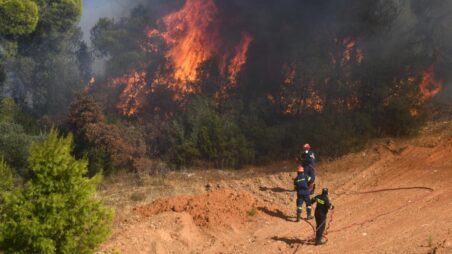
Research is one part of the problem. Another gap is money to make health systems ready for heat, floods and disease.
Of 79 developing countries with costed climate plans, 48 put a figure on their health adaptation needs: more than $16bn (€14.5bn) for 2025 to 2030. International finance committed to projects mainly aimed at health adaptation in those countries was $1.1bn (€1bn) in 2024. The report says the needs are under-reported, because many countries lack the means to calculate them.
Plans on paper are also slow to turn into action. In 2025, 56 of WHO’s 194 member states had a health national adaptation plan. Only 13 of them reported high or very high levels of implementation. Countries named insufficient finance and staff as the biggest barriers.
Some new money is coming from private funders. The Climate and Health Funders Coalition, launched at COP30, has paid out more than $225m (€204m) to 20 programmes, and added $150m (€136m) at the start of COP31, according to Brazil’s health ministry. Brazil also presented a financing framework for the Belém Health Action Plan, now backed by 40 countries. It maps existing funding sources for each measure, and does not create a new fund.
“Health adaptation is not a cost. It is an investment in stronger health systems, healthier people and more resilient communities,” says Mr Padilha.
The money on the table
The EU is a central player in the global response to climate change. “Europe is the world’s largest provider of climate finance,” Commission President Ursula von der Leyen says in her COP31 speech. In 2025, the EU and its member states gave €32.3bn in public funding to developing countries.
At COP30, countries called for a stronger push to help vulnerable countries cope with the effects of climate change. EU governments support “efforts to at least triple adaptation finance by 2035”, according to Council conclusions adopted on 9 October. At the same time, overall development aid fell by 23.1 per cent in 2025, “the largest annual drop” on record, according to the Organisation for Economic Co-operation and Development (OECD).
Sara Matthieu (Greens-EFA/BEL) is critical. “So far, the EU has warned that there is no political will for new funding pledges at COP31,” she writes. “I know budgets are tight. But a promise without money protects nobody from the next flood.” She wants climate finance as grants, “without piling new debt onto the countries that did least to cause this crisis”.
The Lancet Countdown makes the same call. It asks governments to “increase the provision of grant-based and highly concessional finance for climate change and health interventions”.
Dr Tedros wants the summit hosts to push for it. They should use their voice “to put health in the negotiated text, to make health an explicit priority for climate finance, and to bring ministers of finance and energy to the table”.
What comes next
COP31 ends on 20 November. The research alliance’s secretariat starts work in January.
At home, the EU has its own health promises to deliver. The Commission counted more than 35,000 heat-related deaths in reporting countries this summer. It has promised a European Heatwave Plan “soon”. More than 1,200 health professionals from 27 countries will send a letter to the European Parliament and the Commission on 10 December, asking for binding EU rules on extreme heat.
“Declarations do not protect people. Implementation does,” Dr Tedros said on Health Day.