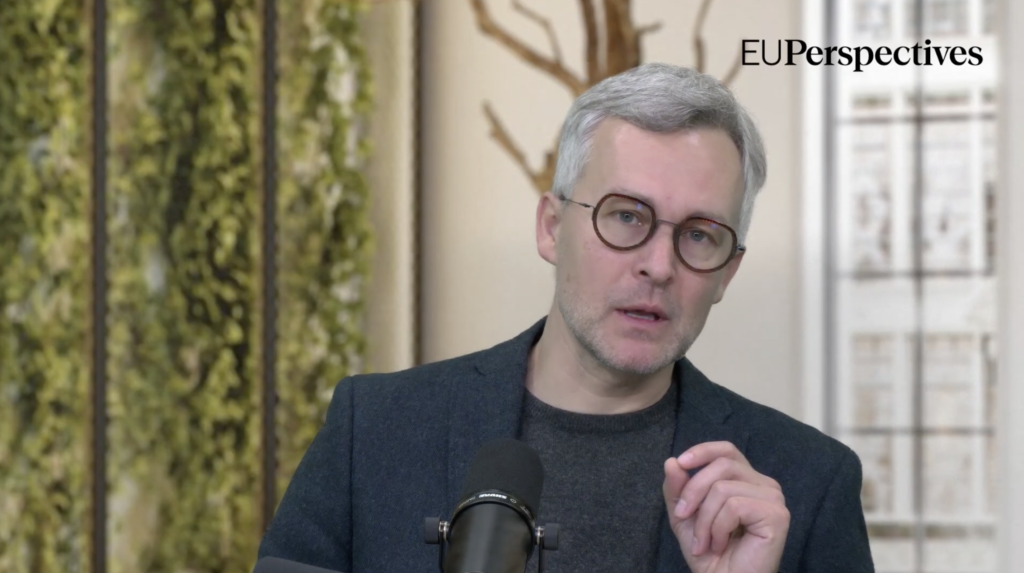
The EU is betting on the Biotech Act to help revive its competitiveness in the sector. But the legislation alone will not be enough unless the bloc also tackles deeper problems with its single market and investment environment, MEP Ondřej Krutílek (ECR/CZE) told the EU Perspectives podcast.
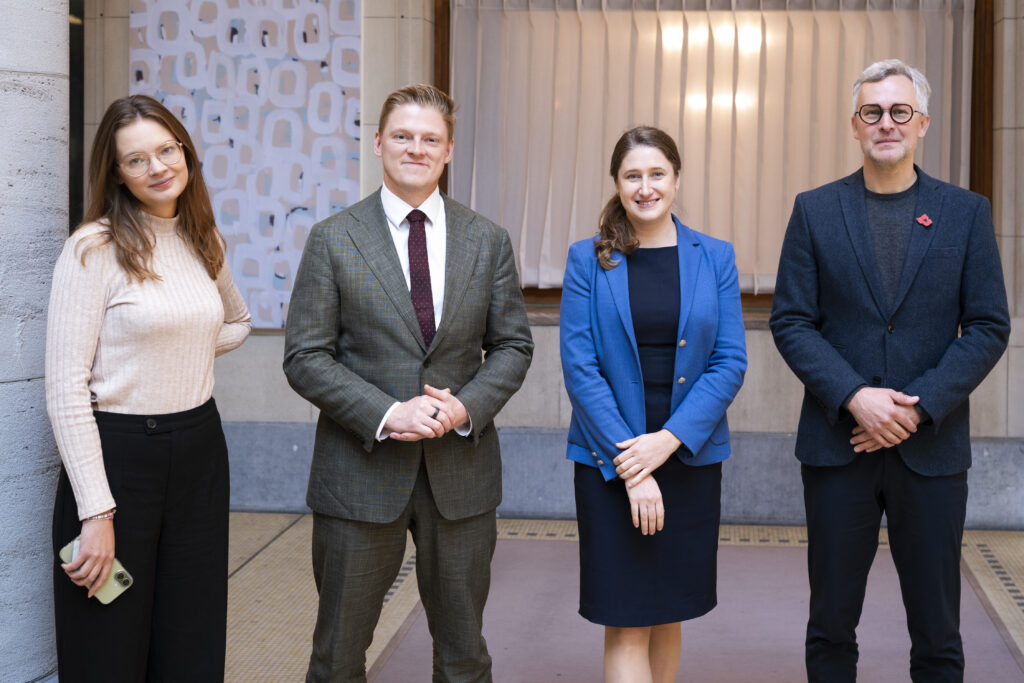
Speaking on the podcast alongside David Kolář, Executive Director of the Czech Association of Innovative Pharmaceutical Industry (AIFP) and Jana Hlaváčová, Head of the Health Technology Assesment Unit at the Czech Ministry of Health, Mr Krutílek argued that the European Commission’s proposed Biotech Act is an important step. Still, the bloc needs to do more to turn scientific research into commercially successful products.
Europe has traditionally relied on its strong research base and the benefits of globalisation. But what the bloc failed to pay enough attention to is the rest of the pharmaceutical supply chain. Then, Mr Krutílek argues, the Covid-19 pandemic exposed the weaknesses of this approach, particularly Europe’s dependence on external suppliers for critical products.
“We have been used to globalisation and good science in Europe, and we thought that it is enough. But finally, when we’ve learned a lesson from Covid-19, we’ve discovered that there is a problem,” Mr Krutílek said.
You might be interested
If [the internal market] works properly, investors will be more willing to bring their money to Europe.
— MEP Ondřej Krutílek (ECR/CZE)
He believes biotechnology is one of the sectors where action at EU level is particularly important. He pointed out that companies need to access to a sufficiently large market to scale up their operations. The problem is that the EU and its 27 member states have struggled to agree on which issues should be addressed collectively and which should remain a national responsibility.
Removing barriers to investment
Mr Krutílek said that the Biotech Act needs to be accompanied by broader reforms of the European single market, particularly in relation to the movement of capital. While the free movement of goods generally works, he argued that the same cannot be said about services and capital. He pointed to the Capital Markets Union, launched in 2014, which has yet to deliver a fully integrated European financial market.

Removing barriers would make it easier for investors to finance projects across different member states, rather than having to navigate fragmented national markets. “If [the internal market] works properly, investors will be more willing to bring their money to Europe. They will know that if they invest in Germany, for example, that capital can then flow across the European Union,” he said.
According to the MEP, better access to capital could also help mobilise European savings that are currently not being channelled into investment. He acknowledged, however, that delivering tangible results would take years rather than months.
Biotechnology is also a question of sovereignty
For the Czech conservative, the consequences of failing to strengthen Europe’s biotechnology sector extend beyond economic competitiveness. He warned that the bloc could lose its industrial base and scientific expertise. At the same time, patients would have fewer opportunities to access innovative medicines.
“We will lose our industrial ground, we will lose our science, which we need to bring into practice,” he said.
He also called for closer cooperation with countries outside the EU. Specifically, he mentioned Japan, South Korea, Taiwan and Israel, arguing that Europe should work with partners that share its values.
We can put everything on paper. It looks brilliant, but at the end of the day, if any part of the chain is not working properly, then we will not make any difference.
— MEP Ondřej Krutílek (ECR/CZE)
AIFP’s David Kolář echoed the concerns about Europe’s dependence on external supply chains. He said that maintaining pharmaceutical production in Europe should be treated as a strategic priority comparable to defence and energy. “It is not really the question of business, it’s a question of our sovereignty for the future,” Mr Kolář said.
He warned that the innovative pharmaceutical industry could follow the example of generic medicines, where production has increasingly shifted to Asia. This could happen if Europe fails to improve its investment conditions.
Jana Hlaváčová from the Czech Ministry of Health also highlighted the importance of maintaining Europe’s research infrastructure. She said that strong clinical research benefits patients, businesses and national economies, and warned that losing these capacities would make them difficult to rebuild.
“If we are strong in clinical research and we are building the infrastructure, it’s of course good for our science, for our excellence, for moving our capacities forward. It’s good for our business, and it’s good for the states […] all of these benefits we would lose and it would be really difficult to rebuild,” Ms Hlaváčová said.
A need for practical results
Mr Krutílek welcomed the European Parliament’s push for shorter clinical trial authorisation deadlines under the Biotech Act. The lawmaker called on the EU to be more ambitious in reducing administrative obstacles.
However, he warned that setting new deadlines would not be enough if authorities are unable to enforce the rules throughout the entire process. “We can put everything on paper. It looks brilliant, but at the end of the day, if any part of the chain is not working properly, then we will not make any difference,” he said.
He also supported the principle of extending supplementary protection certificates for certain biotechnology medicines, provided that the additional protection helps attract investment and creates added value in Europe.
The Commission’s proposal would grant a 12-month extension under specific conditions. Mr Krutílek said the principle was sound, although finding the right balance and determining the appropriate conditions would require further discussion.
Negotiations on the proposal are continuing in the European Parliament. Both its health committee and the plenary are expected to vote on it in December. Further negotiations will follow once the Council has agreed on its position.
Mr Krutílek said discussions were progressing well. However, significant differences between the Parliament and the Council could prolong the process. “If there are many differences [between the Council and Parliament positions], then I’m afraid that there will be many months ahead of us to negotiate a final deal,” the member said.
For Mr Krutílek, the challenge is to ensure that the Biotech Act becomes part of a broader effort to make Europe a more attractive place to develop and manufacture medicines. Otherwise, it risks becoming another set of ambitions that fails to translate into action.