When a chatbot sums up the morning news, whose work is it serving? A senior adviser to the EU’s top court says AI tools that grab articles in real time and reuse them in answers may, in some cases, breach publishers’ rights. The case targets Google’s Gemini. The news itself, however, belongs to nobody.
First Advocate General Maciej Szpunar of the Court of Justice of the European Union (CJEU) published his opinion on 3 November. He advises the judges to find that “the retrieval and reuse, in real time, of online press publications by AI chatbots in order to generate answers to user queries may, in certain circumstances, infringe the rights of press publishers”.
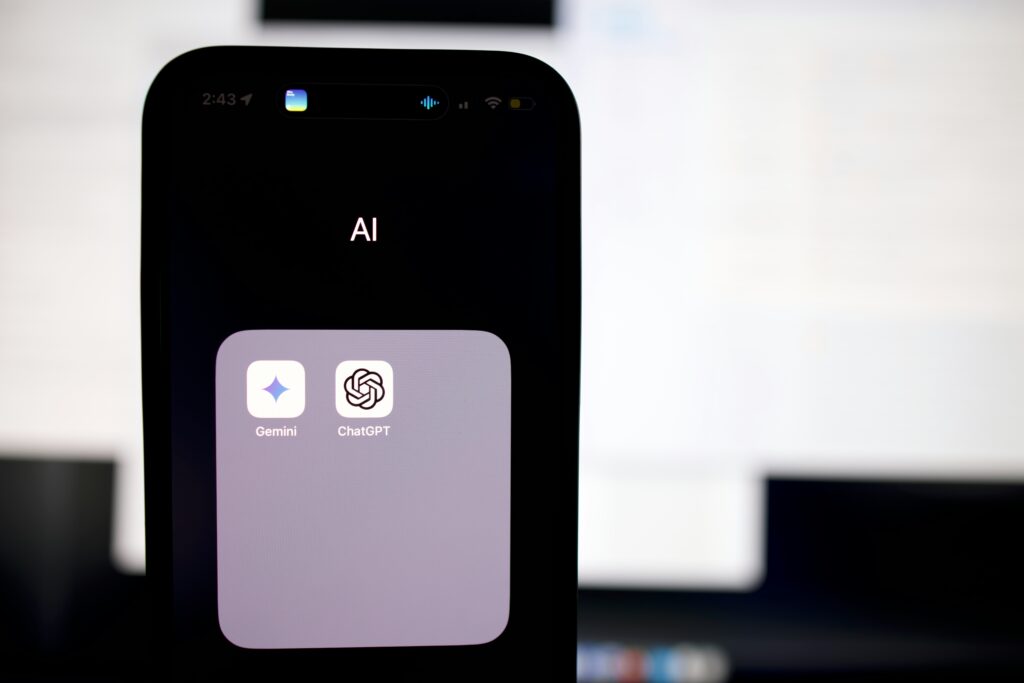
Google’s Gemini is a chatbot that talks to users by text or voice. It runs on large language models (LLMs), which can sift through huge amounts of text far faster than any human. As a result, they are “particularly effective at generating summaries of the latest news”.
From Budapest to Luxembourg
EU copyright law gives press publishers a special right over their content. Under the 2019 Directive on Copyright in the Digital Single Market, only they can reproduce their publications online or make them available to the public.
The dispute began in Hungary. Like Company, which runs several Hungarian news portals, took Google to the Budapest Regional Court and argues that it qualifies as a press publisher. It says Google continuously infringed its rights between 13 June 2023 and 31 May 2024. According to the publisher, Google used articles from its portals to train Gemini and reproduced parts of them in the chatbot’s answers.
The Hungarian court then sent four questions to the CJEU. Two concern training. The judges want to know whether copying web articles to train an AI model counts as reproduction, and whether the text and data mining (TDM) exception covers it. The other two concern the chatbot’s answers. Here the question is whether showing them to users amounts to reproduction or to ‘making available to the public’.
Rise of the bots
Gemini relies on a technique called retrieval-augmented generation (RAG), also known as ‘grounding’. It lets the chatbot pull information from the web in real time, so that its answers are more accurate and reliable. Training is a separate matter. Under EU copyright law, research organisations may use text and data mining freely for scientific research. Anyone else may do so too, including for commercial purposes, unless rights holders opt out. The AI Act confirms that the TDM exception also covers the training of AI models.
Mr Szpunar advises the Court to declare the two training questions inadmissible. In his view, nothing shows that Google used Like Company’s articles to train Gemini. He also argues that the questions are hypothetical “since the training of an LLM is not a form of ‘online use’ of press publications”. Even so, he adds a view for the sake of completeness. Using protected content to train an LLM is, as a rule, freely permitted under the TDM exception.
A Google spokesperson said: “European law’s Text and Data Mining exceptions are vital for Europe’s competitiveness and AI development, and we acknowledge the Advocate General’s opinion recognising that EU law permits AI training on publicly available information. Gemini learns linguistic patterns to create original outputs rather than replicating content, supported by extensive publisher controls that give rightsholders clear choice and the ability to opt out.”
When answers replace articles
Mr Szpunar wants the Court to focus on the questions about the chatbot’s answers instead, as these matter for the Hungarian case. Here, he finds that “the press publisher’s right may be infringed in certain circumstances”. However, he warns that the right does not protect the mere facts reported, only the specific form in which a publication expresses them. In other words, publishers have no monopoly over the news itself.
Two factors decide whether a chatbot crosses the line. The first is whether it accessed the article unlawfully, for instance by getting around a paywall or anti-scraping measures. The second is whether its answer merely reports the facts, or reuses the article’s form of expression so recognisably that the user no longer needs to read the original. The chatbot provider is liable if such use is built into its business model, or if it fails to counter it effectively.
Copyright law overhaul
The Advocate General’s opinion is not binding on the Court, but the judges follow such opinions in the majority of cases. It will also be very relevant as the European Commission looks at reforming the EU’s existing copyright framework to deal with generative AI.
The Commission launched a consultation on 29 September. It asks whether technological advances, in particular LLMs, mean the law needs to be beefed up with “potential additional measures”.
Gemini learns linguistic patterns to create original outputs rather than replicating content. — Google spokesperson
As AI companies increasingly depend on access to copyright-protected material, the TDM exception will be at the centre of debate. The AI Act puts copyright-compliance obligations on providers of general-purpose AI models, meaning they must identify and observe rights holders’ opt-outs. But making this work in practice is proving difficult.
The consultation will be open until 10 November, after the Commission extended the original deadline by a week. It invites feedback from copyright and related rights holders, generative AI providers, and “other relevant actors in the AI value chain”. Intermediaries, collective management organisations, research organisations, national authorities, consumer organisations, and non-governmental organisations can also take part.