European farmers could see differing levels of financial support based on their location. That is what proposals to revise the EU Common Agricultural Policy 2028-2034 amount to.
The European Commission would retain CAP’s first pillar, which provides direct payments to farmers. The proposal, however, would also alter the policy to replace the second pillar, which supports the rural development and the structural funds. A broader system offering more flexibility to national governments in how they spend EU funds would replace it. The proposal comes with pitfalls.
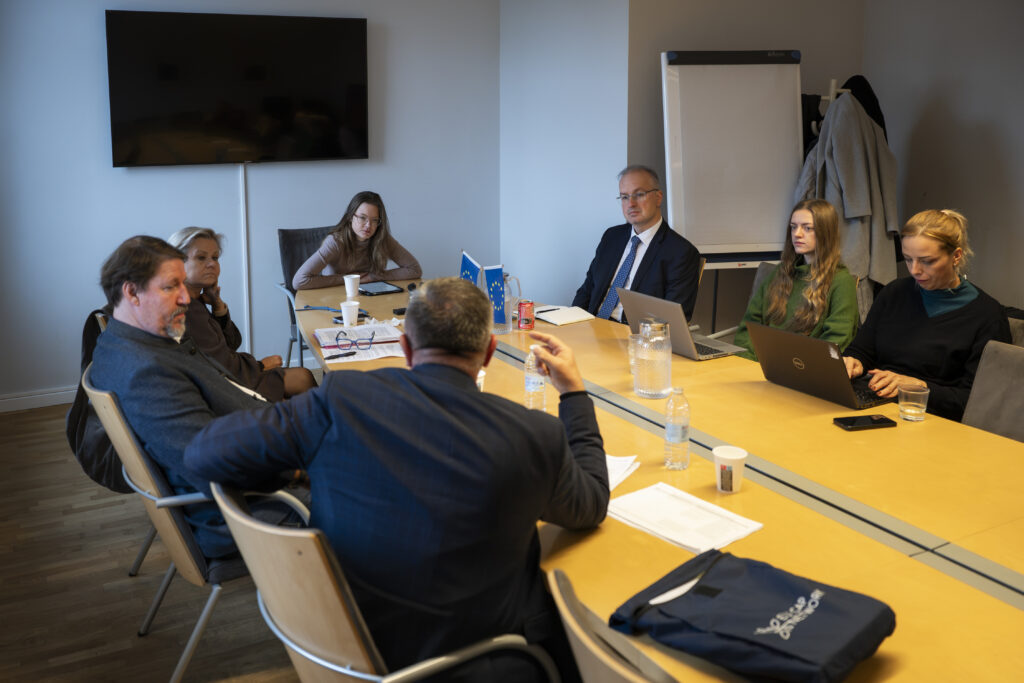
At an EU Perspectives roundtable, members of the European Parliament and farming representatives expressed concerns that rural development funding would decrease. It would also be uneven, creating unfair competition among farmers in various EU countries.
Why does the CAP structure matter?
The current CAP has two main parts. One of them provides income support to farmers; the other finances rural development, investment and environmental projects. Agricultural spending would become part of broader national and regional partnership programs, according to the proposal.
You might be interested

MEP Veronika Vrecionová, chair of the agriculture committee (AGRI), said this proposal was an “earthquake” for parliamentarians. She indicated that the Parliament wants to keep the main structures of the existing system. “We would like to keep it to this two pillar structure as close as possible,” she said.
We would like to keep it to this two pillar structure as close as possible. — MEP Veronika Vrecionová (ECR/CZE)
MEP Thomas Waitz (Greens-EFA/AUT) noted that eliminating the CAP’s separate budget could make the management of agricultural support more complicated. “(The fact) that common agriculture policy doesn’t have a separate budget anymore is going to cause a lot of troubles,” he noted.
Karl Bauer, member of the executive committee of Copa-Cogeca, an agriculture interest group, also expressed doubts as to whether the proposed model would offer enough security to farmers and rural communities.

Rural development funding under threat
What happens to rural development programs when funding becomes part of a larger spending framework is one concern. These programs help with agricultural and environmental spending and small food business development.
As Mr Waitz said, “Many member states will focus on the payments that go 100% from European budget.” That could adversely affect environmental protection and climate change adaptation and rural investment. He said rural development support helps local cheese makers and meat processors.
That’s what keeps our rural areas vital. That’s what creates short value chains that keep the money in the region. — MEP Thomas Waitz (Greens-EFA/AUT)
Mr Bauer also shared these concerns. “There is no dedicated budget for this so important rural development measures,” he said, commenting on the European Commission’s proposed funding framework. He noted the positive effects of rural development funding on local economies.
Could farmers face unfair competition?
Greater national flexibility could also create differences between farmers competing in the same European market. Ms Vrecionová warned that wealthier member states might provide more support than countries with smaller national budgets.
Mr Waitz described the problem with farmers in Austria, Slovenia, and Hungary, for instance, who sell livestock to the same slaughterhouse. “If we have three different subsidy schemes then we will have an unfair competition on the market,” he said.
If we have three different subsidy schemes then we will have an unfair competition on the market. — Thomas Waitz
The concern is that producers selling into the same market could receive different levels of public support based on their country.
Can greater flexibility benefit farmers?
Mr Vrecionová said there were a few good elements in the Commission proposal. She was in favor of more flexibility and simpler procedures to take into account various different farming conditions in Europe. “A little bit more flexibility is very important,” she explained.
Talking on the importance of more flexibility, the Czech MEP said, “Farming conditions in Sweden and in Czechia are completely different from conditions in Spain.” She was also in favour of the Commission proposal to end inspections of farms each year. “This is a positive proposal for the reduction of bureaucracy,” she said.
Mr Bauer was also in agreement with Ms Vrecionová, that the goal should be to have simpler agricultural policy rules. “Simplification within the CAP is possible, but simplification has to go much more beyond outside CAP regulations as well,” he maintained.
The challenge of turning reform into reality
Negotiations on the next CAP, which is to begin in 2028, are ongoing. Proposed reforms may complicate the transition to new rules. Mr Bauer said that previous reforms allowed for the continuation of current rules while new money became available. “We have had simple rules. We have the previous rules, and we have new money,” he said.
He expressed concerns about the CAP proposed funding structure for rural development. Mr Waitz said negotiators still don’t have key decisions for the new national and regional plans. “We need to have the decisions on NRPPs,” he stressed, referring to the proposed National and Regional Partnership Plans.
In general, the outcome of those decisions will be greater flexibility for national governments to adjust support for agriculture and rural development. Farmers want to know if a more flexible CAP will provide adequate protection and whether they will continue to have support or leave them competing under increasingly different conditions.