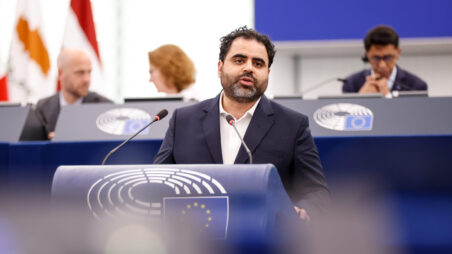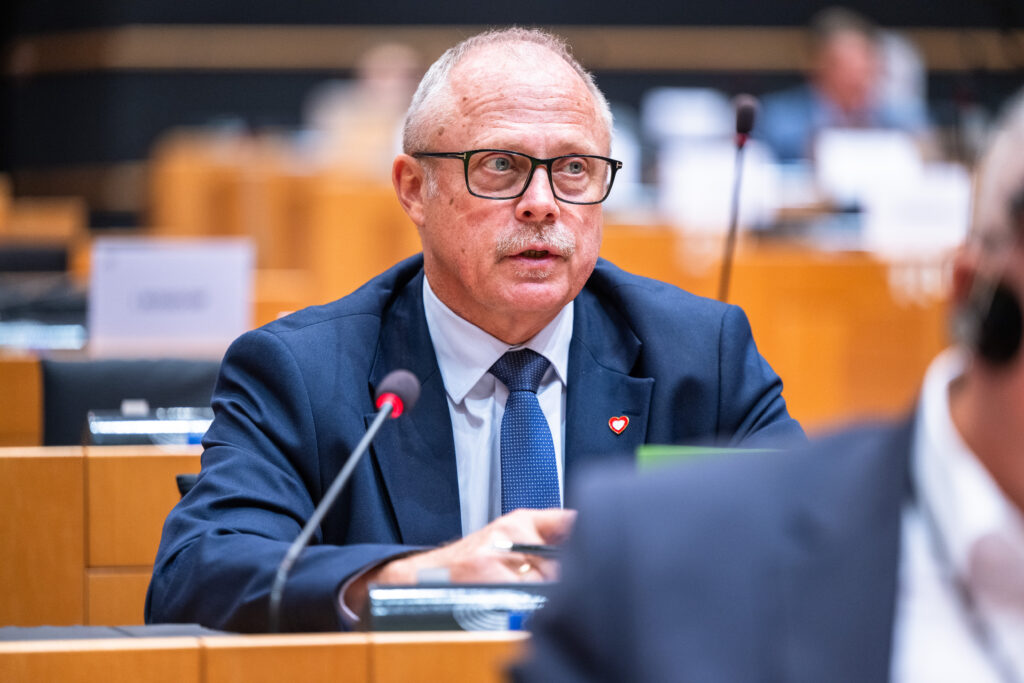
Russia’s war against Ukraine and growing security threats have put Europe’s eastern border regions under increasing pressure. But strengthening their resilience will require more than military investment. “Investing in the development of the EU’s eastern border regions is also an investment in Europe’s security as a whole,” says Jacek Protas (EPP/POL), the European Parliament’s rapporteur on support for the EU’s eastern border regions.
Where should the line be drawn between strengthening regional resilience and turning cohesion policy into another instrument of European defence?
We are not seeking to turn cohesion policy into another defence fund. Its primary objective remains to reduce economic, social and territorial disparities. However, we cannot ignore the fact that security has become one of the essential conditions for the development of border regions. That is why, in my report, I have placed particular emphasis on dual-use investments. These include roads, railway lines, energy infrastructure, hospitals, communication systems and logistics facilities that serve residents and businesses in their daily lives, but can also support civil protection and defence operations in times of crisis.
A well-connected region attracts investment, creates jobs and improves quality of life. At the same time, that very same infrastructure strengthens its resilience to security threats. The distinction is therefore clear: cohesion policy should finance regional development and strengthen resilience, not replace spending on weapons and military operations. There is no contradiction here. In today’s circumstances, investing in the development of the EU’s eastern border regions is also an investment in the security of Europe as a whole.
We must create new development opportunities for these regions that do not depend on economic cooperation with Russia and Belarus.
— MEP Jacek Protas (EPP/POL)
The next EU budget facing competing demands from defence, enlargement and social investment, where should this additional money realistically come from?
We must remember that negotiations on the EU budget for 2028–2034 are still ongoing: we do not yet know what its final size will be. That is why, at this stage, securing appropriate proportions and financing mechanisms is more important than putting forward specific amounts. In the report, we propose earmarking up to 10% of the budgets of relevant EU instruments for the eastern border regions. This concerns not only cohesion policy, but also funds supporting competitiveness, transport, infrastructure and business development. We also call for more favourable co-financing conditions, higher pre-financing rates and dedicated opportunities to access programmes managed directly by the European Commission. Regardless of the final size of the EU budget, we want additional support for the eastern border regions to be guaranteed within it.
Many of these regions were already among the EU’s less developed areas. Today, they are also bearing exceptional economic and social costs resulting from Russia’s aggression against Ukraine and hybrid threats. We cannot expect these regions to bear the costs of ensuring security for the whole of Europe by using funds that were originally intended to help them overcome decades of development gaps. European solidarity cannot stop at political declarations; it must be reflected in concrete budgetary decisions and additional financial resources.
Europe’s first line of resilience
Why should regions elsewhere in Europe, which are also struggling with poverty, depopulation and underinvestment, accept preferential treatment for the eastern flank?
That is precisely what European solidarity means: supporting those regions that, at a particular moment, are facing exceptional challenges.
I do not question the problems of poverty, unemployment or depopulation in southern Europe. But the regions along the EU’s eastern flank are now in an exceptional situation. They are directly exposed to the consequences of Russian aggression, military pressure and hybrid activities. They form the Union’s first line of resilience against these threats. Europe has repeatedly recognised that exceptional circumstances require specific solutions. A good example is the Canary Islands, Madeira and the Azores, which benefit from special treatment under cohesion policy because of their permanent geographical disadvantages. Similarly, the EU has introduced extraordinary support mechanisms for regions affected by natural disasters.
If we can show solidarity with regions affected by natural disasters or particular geographical disadvantages, we must also show solidarity with regions bearing the consequences of a war on our borders. Importantly, we are not proposing to take money away from poorer regions in southern or western Europe. Our report explicitly states that support for the eastern flank must be additional. This is not about creating competition between Europe’s less developed regions. It is about ensuring that the entire Union shares the costs of the security from which we all benefit.
Has the EU underestimated the long-term consequences of these decisions for its own border populations?
We need to understand the scale of the change that has taken place in Europe. For decades, we built economic development on the assumption that borders would become increasingly open and trade relations would continue to deepen. Instead, Russia launched the largest land war in Europe since the end of the Second World War. For many border regions, this meant losing markets, transport connections, tourists and opportunities for economic cooperation almost overnight. On top of that, they are facing cyberattacks, sabotage, the instrumentalisation of migration and other hybrid activities.
Some of these losses will have long-term consequences. That is why simply compensating for the costs already incurred is not enough. We must create new development opportunities for these regions that do not depend on economic cooperation with Russia and Belarus.
Poland is already investing in the security of its eastern border through the East Shield programme. Finland, which has the EU’s longest border with Russia, is also taking measures to strengthen security and help its regions adapt to the new reality. But the efforts of individual member states are not enough. We need a European response: new transport connections with the rest of the Union, investment in energy, technology, industry and local entrepreneurship, as well as stronger cooperation with Ukraine and Moldova.
These are precisely the kinds of solutions I propose in my report, including support for small and medium-sized enterprises, innovation and new supply chains. We do not want the future of these regions to depend on whether Russia decides to reopen its borders. We want their future to be firmly anchored in the European single market and the European economy.
Depopulation as a strategic security threat: what makes you confident that these investments will actually convince young people to stay or return?
Building a road or defence infrastructure alone will obviously not stop depopulation. And that is precisely why our report goes well beyond such investments. Young people leave primarily because they do not see sufficient professional and personal opportunities for themselves. They need well-paid jobs, access to education, housing, healthcare and the opportunity to start families.
Our report proposes concrete measures to address these needs. We want to invest in vocational education, skills development, youth entrepreneurship and cooperation between universities and local businesses. New investments in cybersecurity, digital technologies, energy, transport and dual-use industries can create jobs for engineers, IT specialists, technicians and other skilled professionals. Importantly, these are skills that are also needed in the civilian economy.
We also propose support for young farmers, improved access to housing and public services, and measures to encourage those who have left to return. Our report also calls for major investment projects to be linked to programmes supporting local skills development and employment.
We do not want the future of these regions to depend on whether Russia decides to reopen its borders.
— MEP Jacek Protas (EPP/POL)
Building modern infrastructure is not enough. We must ensure that people living in these regions can earn a living from it and benefit from the new opportunities it creates. I am not claiming that every investment will automatically stop emigration. But without new jobs, good public services and prospects for development, we certainly will not stop it. Our objective is not simply to secure the border. It is to create regions where young people want to live, work and raise their families.
Investments both in times of crisis and peace
Is the EU effectively preparing for a permanent confrontation with Russia?
Europe is not seeking confrontation with Russia. Europe is preparing to defend itself against a threat it did not create. It was Russia that invaded Ukraine. It was Russia that violated the fundamental principles of European security. And we must remember that its ambitions extend beyond Ukraine itself.
As early as December 2021, before the full-scale invasion, Moscow presented its demands concerning the future security order in Europe. Among other things, it demanded an end to NATO enlargement and the withdrawal of part of the Alliance’s military presence from Central and Eastern European countries. This demonstrates that the issue goes beyond the Russia–Ukraine conflict. It is also about an attempt to reshape the European security order and limit the sovereignty of countries in our part of Europe.
Of course, we all want peace. But peace must be lasting and just. It cannot mean accepting aggression or granting Russia the right to decide the future of its neighbours. We cannot build Europe’s security on the hope that Putin will keep his next promise. We must build it on our own strength, unity and capacity for deterrence. That is why supporting Ukraine is so important. A strong Ukraine, capable of defending itself, makes the whole of Europe safer.
And if the geopolitical situation eventually changes, how can Europe ensure that these regions are not locked into an economic model increasingly dependent on defence spending and geopolitical tensions?
I firmly reject the assumption that the development of the eastern border regions should be based on permanent confrontation and military spending. That is precisely why my report focuses on dual-use investments, innovation, transport, energy, education and entrepreneurship. These are investments that benefit local communities both in times of crisis and in times of peace.
We do not want to build an economy dependent on war. We want to build strong, modern regions that remain secure and competitive regardless of how the geopolitical situation develops. Our objective is not to prepare Europe for an endless war. Our objective is to create conditions in which aggression against Europe simply would not pay off.