When a handful of companies control access to artificial intelligence, decisions taken elsewhere can hurt businesses on both sides of the Atlantic. Brussels and Ottawa want to change that. As their summit opened in Montréal, the EU and Canada set out plans to share computing power and write common rules for AI.
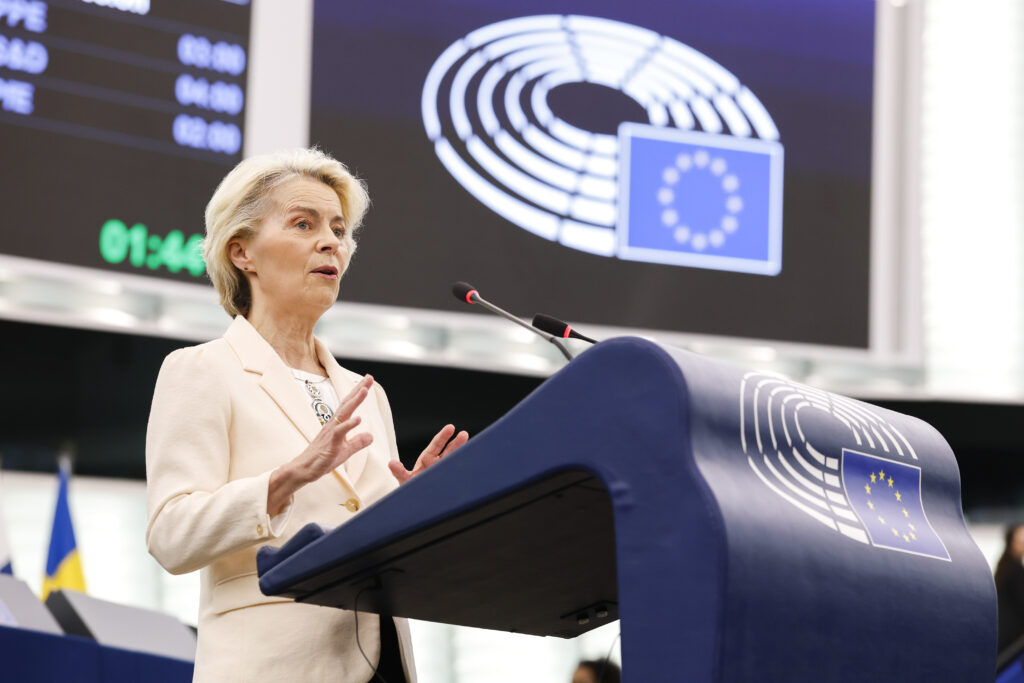
European Commission President Ursula von der Leyen spoke at the C.D. Howe Institute in Montréal on Thursday, the first day of the EU–Canada Summit. She said the two sides would finalise an agreement giving Canadian researchers and businesses access to European supercomputers. She also outlined plans to cooperate on AI safety, common standards, research, and investment. Leaders are expected to launch an “Alliance for the Future” spanning security, trade, and technology.
Her remarks follow her September State of the Union address, in which she proposed a technology alliance with Canada, called for more European computing capacity, and identified AI model safety as a priority for cooperation with like-minded partners.
Canada joins Europe’s supercomputer network
“Tomorrow, we will finalise our agreement to bring Canada into Europe’s infrastructure for supercomputing,” Ms von der Leyen said. The arrangement would allow Canadian industry, start-ups, and researchers to access European supercomputers and train AI models on them. She said Europe has 12 state-of-the-art supercomputers, describing the collaboration as an opportunity to combine European computing resources with Canada’s established AI industry.
Concentrating technological capabilities among a handful of major companies creates vulnerabilities, she warned, saying that “decisions taken elsewhere can put our businesses and essential services at risk”. The European bloc is highly dependent on the US and Asian markets for both cloud and chips. American technology giants Amazon, Microsoft, and Google control around 70 per cent of the European cloud market. European providers account for just 15 per cent. Similarly, the EU produces less than 10 per cent of the world’s semiconductors.
Beyond AI, Ms von der Leyen also proposed a common space for strategic supply chains, including semiconductors and critical raw materials. She highlighted Canada’s mining resources and Europe’s industrial capabilities, noting that EU imports of Canadian critical minerals increased by 62 per cent in value last year, reaching €3.3bn.
Common AI rules and a wider tech partnership
Alongside computing power, the Commission President pledged cooperation on AI safety and security, the development of common rules and standards, and international governance of advanced systems. “We will work together to tackle head on the safety and security issues of runaway AI,” she said. “We put human agency first.”
We will work together to tackle head on the safety and security issues of runaway AI. — Ursula von der Leyen, President of the European Commission
As an example of growing cooperation, she pointed to the merger between Canada’s Cohere and Germany’s Aleph Alpha. The companies signed a definitive agreement in September to create a transatlantic sovereign AI business. The deal still awaits regulatory approval.
Ms von der Leyen also framed technology cooperation within the broader proposal for Canada to become the EU’s first “associate member”, describing the idea as “association without accession”. She said closer policy alignment could include AI, while research ties could deepen through Canada’s stronger participation in the next Horizon Europe programme. However, member states have not agreed to the associate-membership proposal, and several, including Germany, have raised objections.