Europe wants more security, more research, and a stronger voice abroad. Its governments, however, are reluctant to pay for it. As they weigh a €141bn cut to the EU’s next seven-year budget, Parliament warns the savings could cost them the whole deal.
European lawmakers are drawing a red line over the EU’s next long-term budget. Parliament’s co-rapporteurs, its two lead negotiators on the budget, warned that further spending cuts could put Parliament’s approval at risk. They argued that Europe cannot afford to weaken its security and competitiveness.
Siegfried Mureșan (EPP/ROU) and Carla Tavares (S&D/PRT) criticised the direction of talks on the 2028–2034 Multiannual Financial Framework (MFF). In their view, the European Council is moving further away from Parliament’s position.
Widening gap between capitals and Brussels
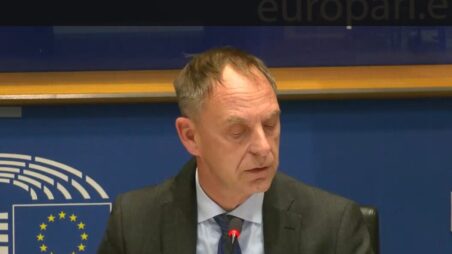
“If the European Council continues to ignore the legitimate position of the Parliament adopted by an absolute majority, then we will not be in position to advertise for the adoption of a budget which is insufficient and which would not serve Europe,” Mr Mureșan warned. Parliament adopted its negotiating position in April.
You might be interested
The gap between national and EU spending is striking. Figures presented by Mr Mureșan show that national government budgets grew by an average of 68 per cent between 2018 and 2025. Over the same period, the EU budget rose by just seven per cent. It did not even keep pace with inflation.
Priorities on the chopping block
The dispute follows a revised spending plan that the Irish Council presidency put forward on 10 October. It would cut €141bn, or eight per cent, from the European Commission’s proposal of nearly €1.8tn, measured in 2025 prices. EU leaders have yet to agree on the proposed spending framework.
The reductions have already drawn strong criticism from Parliament. In October, European Parliament President Roberta Metsola warned EU leaders that Parliament would not simply rubber-stamp their agreement. She pointed to proposed cuts of 35 per cent for civil protection, 10 per cent for Horizon Europe, the EU’s research programme, and 14 per cent for strategic infrastructure and defence.
Mr Mureșan accused national governments of inconsistency. He argued that they were declaring security, defence, and competitiveness priorities, yet seeking to cut funding for them at the same time.
Cost of going it alone
Both Mr Mureșan and Ms Tavares also questioned the economic logic of cutting EU-level spending. They argued that tackling shared challenges separately across 27 member states would cost more in the end than coordinating investment at European level.
Ms Tavares warned that major cuts to competitiveness and external action, the EU’s work abroad, would weaken the EU at a time of heightened geopolitical uncertainty. “They’re affecting competitiveness, external action, which is so vital now. The EU is seen as upholding democratic values. People turn to the EU for stability at such a difficult geopolitical juncture as this is. So there’s a real danger,” she said.
You can’t do more with less. You need to be ambitious. — Carla Tavares (S&D/PRT), co-rapporteur on the EU’s long-term budget
“It’s time for political courage,” Ms Tavares added. “You can’t do more with less. You need to be ambitious.”
Search for new revenue
Rather than focusing on further cuts, both lawmakers urged EU governments to explore additional sources of revenue to finance common priorities. Revenues that flow directly into the EU budget are known in Brussels as ‘own resources’.
Mr Mureșan pointed to Parliament’s proposals for new EU own resources. These include levies linked to cryptocurrency gains and online gaming and gambling. He said they could generate between €18bn and €32bn in additional revenue.
Ms Tavares stressed that adequate funding was essential for more than the next seven-year budget. She said it also mattered for the EU’s ability to respond to future challenges and meet citizens’ expectations.
The press conference followed the co-rapporteurs’ meeting with EU ambassadors on Tuesday. European Council President António Costa is expected to table a new compromise proposal on 21 November. The lawmakers indicated that Parliament would respond with a statement over the weekend.
The proposal is expected to set the stage for a special European Council meeting on 26–27 November. There, EU leaders are due to discuss the next long-term budget. Any final MFF deal needs Parliament’s consent. EU leaders will therefore have to balance demands for spending restraint against the risk of losing lawmakers’ support.