The average European worker misses almost three weeks of work a year through sickness. A new study puts the cost to the EU at up to €810bn annually, roughly four per cent of its GDP. Yet governments still pour most of their health budgets into treatment rather than prevention.
Europe is losing workers and economic potential to illnesses that could be prevented. Its ageing population adds to the strain on social security systems and public finances. That is why health experts and policymakers argue that governments need to look seriously at prevention, not just at ways to treat disease.
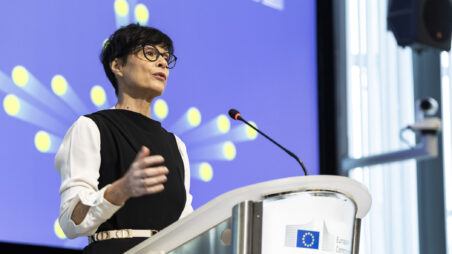
At a conference in the European Parliament, health experts and policymakers warned that governments do not collect all the data they need. Without it, they cannot calculate the full cost of preventable illness, including lost working days, early retirement, and reduced productivity. The real question is whether Europe can afford to keep treating prevention as a secondary issue.
Treatment first, prevention later
Vytenis Andriukaitis (S&D/LTU), a former EU health commissioner, said most national health budgets focus heavily on treatment. Governments, he explained, often see prevention only as an immediate cost. “We need to understand that economical mentality in the healthcare sector is very low,” Mr Andriukaitis said. He stressed that governments should recognise the wider economic costs of preventable illness.
You might be interested

We need to understand that economical mentality in the healthcare sector is very low. — Vytenis Andriukaitis (S&D/LTU), former EU health commissioner
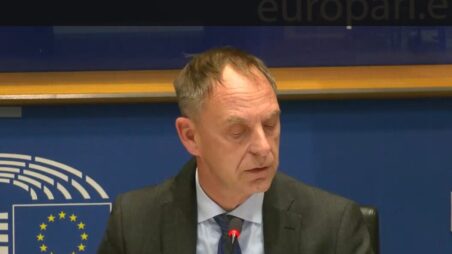
Aurelijus Veryga (ECR/LTU), a former Lithuanian health minister, shares that view. He believes political will for prevention is weak because its results are hard to measure. “Ministers of finances, ministers of economy, they need those numbers,” Mr Veryga said. Economic evidence, he stressed, is essential to securing political support.
The speakers argued that Europe must find a way to prove that prevention pays off. They want to show that money spent on it has a positive impact on national budgets and the wider economy.
Hidden cost of sickness absence
The discussion also turned to how illness hits Europe’s labour force. Speakers pointed to sick leave and to people leaving work early because of poor health. Premature deaths cost society too, hurting both businesses and the public purse. These losses will become more visible as Europe’s population ages.
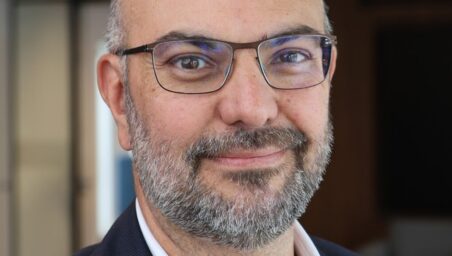
Swedish economist Adrian Mehic wrote the latest report by the Stockholm-based Environment and Public Health Institute (EPHI). According to The Hidden Cost of an Unhealthy Europe, the average full-time employee in the EU misses almost 15 working days a year through sickness. That costs the bloc around €540bn annually. Once knock-on effects on productivity are included, the bill rises to €675–810bn. “The true costs are even higher,” Mr Mehic said. He pointed to people who leave the labour market entirely because of illness.
Mr Mehic also cautioned that differences in national welfare systems make direct comparisons difficult. Norway records the most sick leave in the report, at 5.7 weeks per full-time employee a year. Greece records just 0.2 weeks. Yet a low level of recorded sick leave does not necessarily mean a country’s workforce is healthier.
Missing numbers
Mr Andriukaitis called for more European data on preventable diseases and their impact on economies. “We need aggregated data. We need data,” he said. He wants the figures to be comparable across the EU.
He also proposed a European prevention strategy. It would come with common methods for collecting health data.
Mr Veryga agreed. He said data on workers’ health should be linked with labour market data. That would help policymakers see how health, employment, productivity, and healthcare spending affect one another.
Health at the back of the queue
The EU’s next long-term budget, the Multiannual Financial Framework (MFF) for 2028–2034, adds to the unease. The Commission’s proposal folds the standalone EU4Health programme into a new European Competitiveness Fund. Health would share a funding window there with biotech, agriculture, and the bioeconomy.
It is always priority in words, not in money. — Aurelijus Veryga (ECR/LTU), former Lithuanian health minister
Mr Veryga warned that health often loses out to other, stronger priorities. “It is always priority in words, not in money,” he said. He wants dedicated health funding in the next MFF.
Mr Andriukaitis also doubted that the MFF would provide enough money for European health priorities. Yet healthcare remains mainly a national responsibility. That limits how much the EU itself can spend on it.
From data to action
The speakers agreed that stronger evidence could help governments make a clearer economic case for prevention. Yet numbers alone are not enough, they stressed. Data must lead to practical change.
Mr Veryga pointed to Lithuania’s experience. The country has offered lifestyle advice to people who want to improve their health. “We have to provide the tools for them to change the behaviour,” he explained.
For policymakers, the challenge is to link health investment with the wider costs of sickness absence, early retirement, and workforce shortages. As Europe’s population ages, the debate is increasingly about whether governments can afford to keep prevention at the bottom of their spending list.